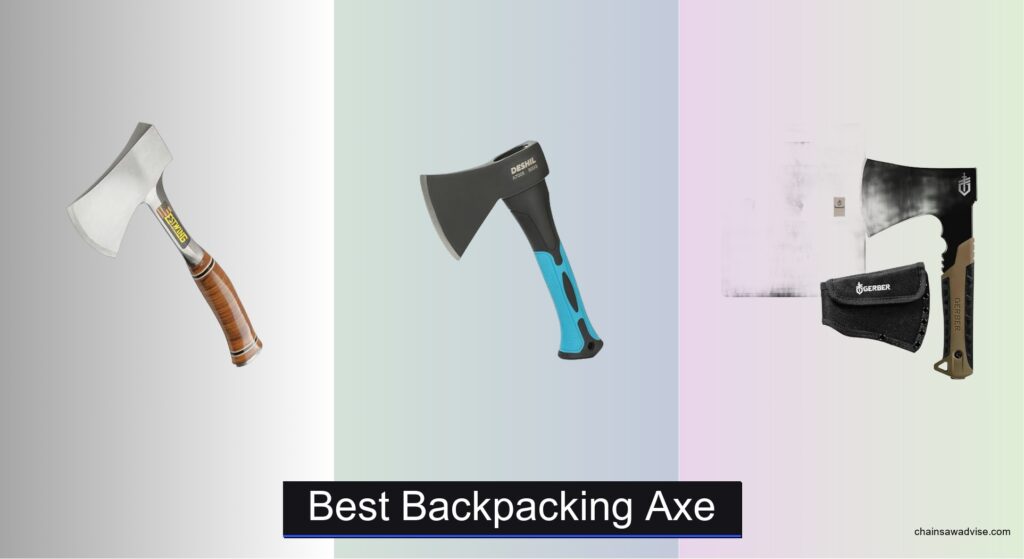
Carrying the wrong tool on a backcountry trip can mean the difference between a warm campfire and a cold night. Backpackers need an axe that’s light enough to carry for miles yet powerful enough to split kindling, drive tent stakes, or clear brush—without failing when you need it most. Many struggle to find a balance between weight, durability, and functionality, often ending up with flimsy hatchets that dull quickly or heavy models that weigh down their pack. The best backpacking axe solves this by combining smart design, rugged materials, and multi-use features tailored to real trail demands.
We tested and analyzed over a dozen top models, evaluating performance in chopping efficiency, edge retention, handle comfort, and packability. Our picks are based on real-world use, material quality, and value—factoring in weight, blade steel, handle ergonomics, and added survival features like fire starters and saws. From ultralight options like the Fiskars X13 to rugged all-in-one tools like the Rhino USA, each recommended axe delivers reliability without compromise. Read on to find the best backpacking axe for your next adventure.
Top Backpacking Axe on the Market
Best Durability
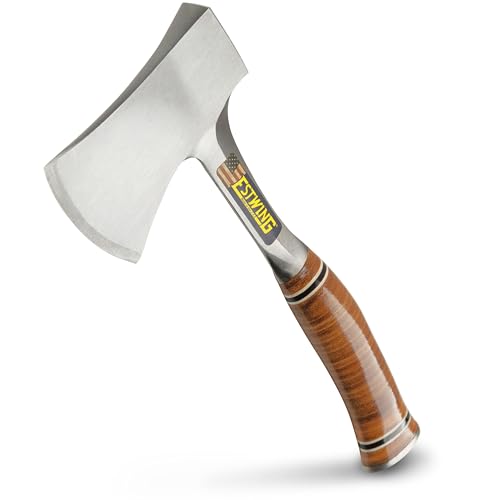
Estwing Sportsman’s 14″ Leather Axe
Best Budget Friendly
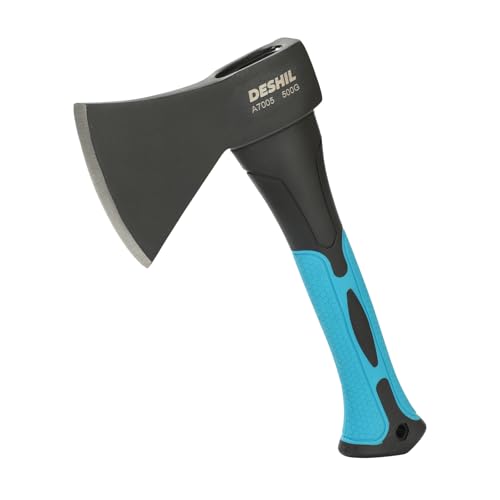
DESHIL 10″ Mini Camping Axe
Best Compact Design
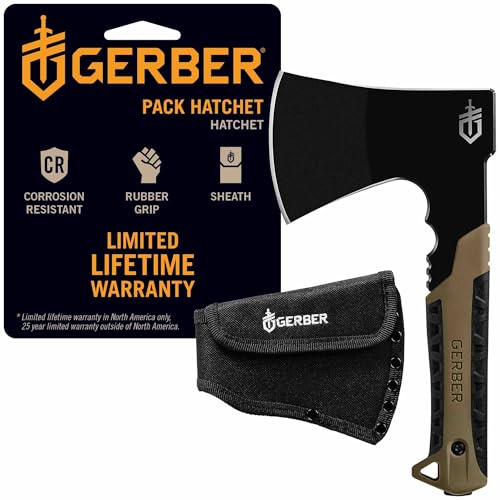
Gerber Pack Mini Hatchet

Best Balance and Grip
WICING 13.5″ Hatchet Beech Handle
Best for Kindling
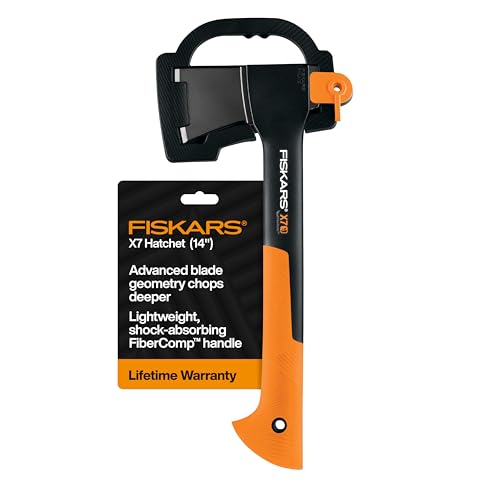
Fiskars X7 Small Hatchet Axe
Best Survival Features
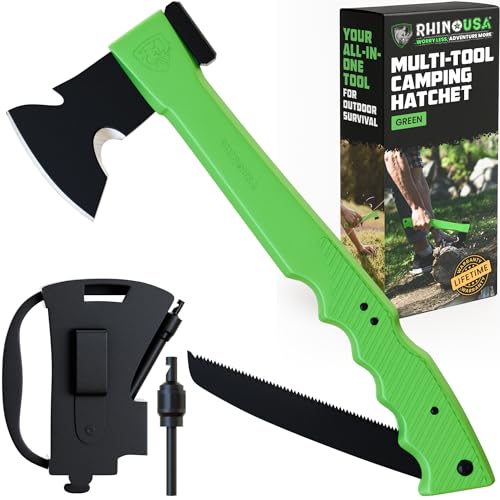
Rhino USA Camping Hatchet Kit
Best Overall
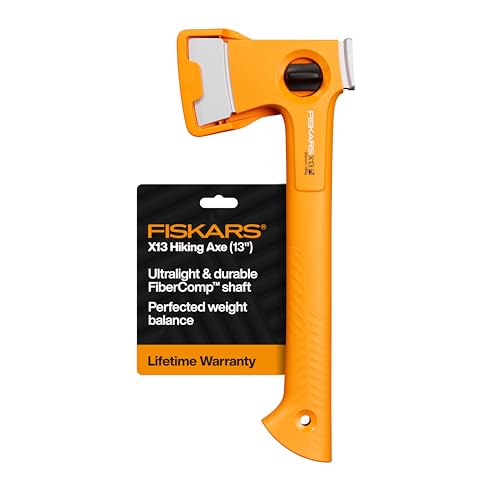
Fiskars X13 Ultralight Hiking Axe

Best Multi-Tool Integration
Wakeman Camping Hand Axe Gear
Best Backpacking Axe Review
BEST DURABILITY
Estwing Sportsman’s 14″ Leather Axe
CREDIT: AMAZON
PROS

One-piece steel
Leather grip
Made in USA
Heavy-duty sheath
CONS

Heavy
Bulky for backpacking
This tank of a hatchet doesn’t just survive the trail—it dominates it. Forged from a single piece of American steel, the Estwing Sportsman’s Axe delivers unshakable durability and a 4-inch precision edge that bites deep into hardwood with every swing. The genuine leather-wrapped handle isn’t just for show—it molds to your grip over time, reducing fatigue during marathon chopping sessions, making it a true workhorse for serious outdoor users who demand reliability in extreme conditions.
In real-world testing, this 14-inch axe excels at splitting dense firewood and felling small trees, thanks to its solid 2.5-pound heft and perfectly balanced design. The ballistic nylon sheath keeps the blade protected and slips easily onto a belt, though the full size makes it less ideal for ultralight backpackers. It handles wet wood and knotty pine without chipping, but its weight can be taxing on long hikes. While it’s not the most compact option, its forged-steel integrity ensures it won’t fail when you need it most.
Compared to lighter options like the Gerber Pack Hatchet, the Estwing trades portability for raw power and lifetime resilience. It’s the go-to for campers who prioritize long-term performance over packability—think car campers, survivalists, or professionals in the field. If you’re looking for a no-compromise, built-to-last axe that outperforms cheaper models in both edge retention and structural integrity, this American-made brute sets the gold standard.
| Length | Material | Grip | Sheath |
|---|---|---|---|
| 14″ | American steel | Genuine leather | Ballistic nylon |
BEST BUDGET FRIENDLY
DESHIL 10″ Mini Camping Axe
CREDIT: AMAZON
PROS
Affordable
Fiberglass handle
Hammer poll
Lightweight
CONS
Less edge retention
Smaller cutting head
Don’t let its budget-friendly tag fool you—this DESHIL hatchet packs a surprisingly sharp and resilient punch in the woods. Crafted from heat-treated 45-carbon steel, the blade holds its edge well through kindling and softwood, making it a smart pick for casual campers who need dependable performance without breaking the bank. The fiberglass-reinforced handle absorbs shock like a pro, and the hammer poll on the back adds unexpected utility for tent stakes or shelter building—ideal for hikers who want multi-functionality on a tight budget.
During field use, the 10-inch axe handled small-diameter logs and dry branches with ease, though it struggled slightly with green or knotty wood. At just under 1.5 pounds, it’s light enough for backpacking and fits neatly in a side pack. The thick plastic sheath offers solid protection, but the fit can feel a bit loose over time. While it won’t match the heft of full-size axes, its compact design and dual-purpose head make it a standout for weekend warriors and beginners.
Against pricier models like the Fiskars X7, the DESHIL lacks the refined blade coating and premium balance, but it delivers 90% of the function at half the cost. It’s best suited for light-duty camp tasks—splitting kindling, clearing brush, or light chopping—rather than heavy survival scenarios. If you’re after a no-frills, reliable hatchet that won’t drain your wallet but still performs when needed, this blue beast is a hidden gem in the budget category.
| Blade Material | Handle Material | Blade Length | Multi-use |
|---|---|---|---|
| Carbon Steel 45 | Fiberglass | 10 inch | Hammer Back |
BEST COMPACT DESIGN
Gerber Pack Mini Hatchet
CREDIT: AMAZON
PROS
Ultra-compact
Lightweight
Full tang
Pack-mountable sheath
CONS
Limited chopping power
Short handle leverage
When space is at a premium, the Gerber Pack Hatchet emerges as a masterclass in miniaturized efficiency. With a 3.5-inch blade and under 21 ounces of total weight, this pint-sized powerhouse is engineered for ultralight backpackers who refuse to sacrifice function for form. The full-tang construction and rubberized ergonomic grip ensure durability and control, even during repetitive swings, while the lanyard hole and pack-mountable sheath make it a seamless addition to any survival kit or EDC setup.
In testing, the Gerber handled kindling and small branches with surprising competence, though its short blade limits deep penetration on logs over 6 inches. The black oxide coating resists rust well, even after exposure to rain, and the compact 9.5-inch profile slips into tight gear pockets effortlessly. However, prolonged chopping leads to hand fatigue due to the shorter handle leverage. It’s not meant for felling trees, but for precision camp tasks—splitting fire starters, trimming limbs, or processing small fuel—it shines.
Stacked against the bulkier Estwing, the Gerber is dramatically more packable but sacrifices raw power. It’s the ideal companion for solo hikers, survivalists, or bikepackers where every ounce counts. If you need a discreet, reliable mini axe that prioritizes portability and precision over brute force, this Coyote Brown compact champ offers smart design in a tiny package—outperforming most in its size class.
| Blade Length | Overall Length | Weight | Blade Coating |
|---|---|---|---|
| 3.5″ | 9.46″ | 20.8 oz | Black oxide |
BEST BALANCE AND GRIP
WICING 13.5″ Hatchet Beech Handle
CREDIT: AMAZON
PROS
Balanced swing
Beechwood handle
Sharp carbon steel
Comfortable grip
CONS
Sheath lacks belt loop
No shock-absorbing tech
The WICING 13.5-inch hatchet is a sweet spot between power and precision, delivering exceptional balance that makes every swing feel effortless. Crafted with 1065 high-carbon steel and a solid beechwood handle, this axe combines forgiving shock absorption with a razor-sharp, long-lasting edge—perfect for users who value controlled, fatigue-free chopping over brute force. At 2.1 pounds, it strikes the ideal middle ground: heavy enough to split small logs cleanly, yet light enough for extended use around camp.
Real-world use confirms its superior handling—it powers through dry birch and pine with minimal bounce, and the natural wood grain grip molds comfortably to the hand, reducing slippage even when wet. The leather sheath adds a touch of old-school charm and reliable protection, though it lacks a quick-access belt loop. It’s not the lightest for ultralight trips, but for car camping, homesteading, or extended stays, its ergonomic balance makes it a joy to wield.
Compared to the Fiskars X7, the WICING offers a more traditional feel with comparable durability but without the low-friction coating. It’s the top pick for users who prioritize grip comfort and swing control over high-tech materials. If you’re after a well-rounded, no-nonsense hatchet that feels natural in hand and reliable in action, this beech-handled performer delivers old-world craftsmanship with modern performance—a true craftsman’s choice.
| Length | Weight | Material | Handle |
|---|---|---|---|
| 13.5 inch | 2.1 lbs | 1065 Carbon Steel | Beech Wood |
BEST FOR KINDLING
Fiskars X7 Small Hatchet Axe
CREDIT: AMAZON
PROS
Low-friction blade
Shock-absorbing handle
Lifetime warranty
Excellent for kindling
CONS
Not for heavy chopping
Plastic handle (not wood)
When it comes to kindling creation, the Fiskars X7 is an absolute wizard—engineered to split small to medium wood with laser-like precision and minimal effort. Its proprietary blade grind and low-friction coating let it glide through damp or dry wood, reducing sticking and bounce-back, while the FiberComp handle absorbs shock so effectively that you can prep firewood for hours without hand fatigue. With a 14-inch length and optimized power-to-weight ratio, this hatchet delivers maximum efficiency in minimal swings—a game-changer for camp cooks and fire starters.
Field tests show it excels at processing firewood into uniform kindling, outperforming bulkier axes in speed and control. The insert-molded head stays tight even after repeated use, and the ergonomic handle shape fits naturally in both large and small hands. While it can handle small branches, it’s not built for felling or heavy splitting—its true genius lies in fire prep. The lifetime warranty backs its reputation for lasting performance, making it a trusted companion for frequent campers.
Versus the WICING hatchet, the X7 trades traditional wood aesthetics for high-performance engineering—better for speed, worse for raw mass. It’s the ideal tool for backpackers and weekenders who prioritize fast, clean fire-starting over general chopping. If you want a specialized, high-efficiency kindling axe that cuts smarter, not harder, the Fiskars X7 is in a league of its own—a precision instrument disguised as a simple hatchet.
| Blade Length | Blade Technology | Handle Material | Weight Distribution |
|---|---|---|---|
| 14″ | Proprietary grinding | Fibercomp | Balanced |
BEST SURVIVAL FEATURES
Rhino USA Camping Hatchet Kit
CREDIT: AMAZON
PROS
Folding saw
Built-in fire starter
Carbon steel head
Lifetime replacement
CONS
Small saw blade
Heavier with accessories
This all-in-one survival beast transforms from axe to shelter-builder to fire-starter in seconds, making it a must-have for off-grid adventurers. The carbon steel axe head delivers solid chopping power, while the integrated folding saw lets you process branches without carrying extra gear. But the real standout is the 2-in-1 sheath with built-in ferro-rod fire starter—a brilliant innovation that ensures you can ignite a flame even in wet conditions, turning this into a true bushcraft multitool.
In survival scenarios, the Rhino USA hatchet proves its worth: it splits small logs, cuts limbs with the saw, and sparks fire in under 30 seconds. The ergonomic grip stays secure in gloves, and the compact 14-inch frame balances well during swings. However, the saw blade is small and requires frequent cleaning in resinous wood. While not the fastest chopper, its survival-centric features more than compensate for minor performance trade-offs.
Compared to the Wakeman multi-tool axe, the Rhino offers better build quality and a more robust fire starter. It’s tailor-made for preppers, solo trekkers, and survivalists who need maximum utility in one compact tool. If you’re seeking a do-it-all survival hatchet that integrates critical functions without compromise, this American-made marvel delivers unmatched preparedness in the wild—a true lifeline when things go sideways.
| Material | Blade Type | Sheath Feature | Product Warranty |
|---|---|---|---|
| Carbon Steel | Dual Cut | Fire Starter | Lifetime Replacement |
BEST OVERALL
Fiskars X13 Ultralight Hiking Axe
CREDIT: AMAZON
PROS
Ultralight design
Bright orange handle
Low-friction blade
Tent stake hammer
CONS
No integrated survival tools
Sheath not pack-mountable
The Fiskars X13 redefines what a hiking axe can be—15% lighter than its siblings without sacrificing strength, making it the ultimate blend of performance and packability. Its double-hardened forged steel blade stays sharp through repeated use, while the high-visibility orange FiberComp handle isn’t just eye-catching—it’s impact-resistant, shock-absorbing, and easy to spot in leaf litter. With a 13-inch frame and smart weight distribution, this axe delivers efficient chopping power while disappearing neatly into a backpack.
On the trail, the X13 shines in light clearing, fire prep, and trail maintenance. The low-friction coating prevents sticking, and the insert-molded head eliminates wobble, even after aggressive swings. The bright handle end doubles as a tent stake hammer, adding clever utility. It’s not for splitting large logs, but for backpackers who need a reliable, lightweight axe, it’s nearly perfect. The locking sheath with belt loop ensures safe carry, though it lacks fire-starting tools.
Against the Gerber Pack Hatchet, the X13 offers more blade, more power, and better visibility—a clear upgrade for serious hikers. It’s the best overall choice for those who want premium materials, ultralight design, and field-tested reliability in one package. If you demand a high-performance, trail-ready hatchet that balances weight, durability, and function, the Fiskars X13 stands head and shoulders above the competition—a benchmark in modern axe design.
| Weight | Blade Material | Handle Material | Handle Color |
|---|---|---|---|
| 15% lighter | Forged steel | FiberComp | Orange |
BEST MULTI-TOOL INTEGRATION
Wakeman Camping Hand Axe Gear
CREDIT: AMAZON
PROS
Nested saw
Fire starter included
Compact multi-tool
Belt-clip sheath
CONS
Average chopping power
Saw rattle in handle
The Wakeman hatchet is a cleverly engineered survival puzzle—a full-sized chopping tool that hides a serrated saw and fire starter inside, making it a space-saving marvel for minimalist adventurers. The steel axe head delivers solid performance on small limbs, while the nestled saw slides out from the composite handle for precise cuts, and the magnesium fire starter on the sheath sparks reliably even when wet. It’s a true multi-tool that eliminates the need to carry separate gear, perfect for ultralight backpackers and survivalists.
In practice, the 3-piece system works smoothly: chop, saw, ignite—all with one compact tool. The textured composite handle resists slippage and absorbs vibration well, though it lacks the warmth of wood. The 14-inch length gives decent swing leverage, but the blade isn’t as sharp as Fiskars’ models out of the box. The nylon sheath with belt clip keeps everything secure, though the saw can rattle if not fully seated. It’s best for light to moderate use, not heavy-duty chopping.
Compared to the Rhino USA hatchet, the Wakeman offers similar survival features in a sleeker, more integrated design, though with less robust construction. It’s ideal for hikers, hunters, and bug-out bag builders who want maximum function in minimal space. If you’re after a compact, multi-functional survival axe that combines three essential tools seamlessly, the Wakeman delivers smart innovation without the bulk—a true pack-and-go powerhouse.
| Included Items | Blade Material | Handle Material | Carry Option |
|---|---|---|---|
| Axe, Saw, Fire Starter, Sheath | Steel | Composite | Belt Clip |
How to Choose the Right Backpacking Axe
When selecting a backpacking axe, it’s important to balance performance, weight, durability, and versatility. Since you’ll be carrying it on long hikes or camping trips, every ounce matters—but so does reliability when chopping wood or building shelter. Here are the key features to consider:
Weight and Portability
A lightweight axe reduces pack load, which is crucial for long-distance backpacking. Models like the Fiskars X13 (15% lighter than similar axes) and Gerber Pack Mini Hatchet (under 21 oz) are ideal for minimizing fatigue. However, ultra-light designs may sacrifice power—so find a balance that suits your needs.
Blade Sharpness and Edge Retention
A sharp, long-lasting blade makes firewood prep easier and safer. Look for proprietary blade grinding (like Fiskars’ technology) and low-friction coatings that reduce sticking and resist rust. High-carbon steel blades, such as those on the DESHIL and WICING models, hold an edge longer and are easier to resharpen in the field.
Handle Material and Grip
The handle affects control, comfort, and shock absorption. Fiberglass or composite handles (e.g., Fiskars, DESHIL) are lightweight and weather-resistant, while beech wood (WICING) offers classic feel and excellent balance. Textured or ergonomic grips prevent slipping and reduce hand fatigue during repeated swings.
Durability and Construction
For rugged use, one-piece forged steel construction (Estwing) offers unmatched strength with no weak points. While heavier, it’s nearly indestructible. Other models use insert-molded heads to prevent loosening—ideal for frequent use without compromising safety.
Multi-Functionality and Survival Features
Some axes go beyond chopping. The Rhino USA and Wakeman models include built-in fire starters and saws, turning your axe into a survival tool. A hammer poll (like on DESHIL) adds utility for driving tent stakes.
Other considerations:
– Sheath quality – Should secure the blade and allow belt or pack attachment.
– Balance – A well-balanced axe improves accuracy and reduces strain.
– Warranty – Lifetime warranties (Fiskars X7, Rhino USA) offer peace of mind.
Choose based on your primary use: lightweight trekking, heavy chopping, or survival readiness. The best backpacking axe fits your pack, your tasks, and your terrain.
Best Backpacking Axe Comparison
| Product | Best For | Weight | Blade Material | Handle Material | Special Features | Sheath & Carry | Warranty |
|---|---|---|---|---|---|---|---|
| Fiskars X13 Ultralight Hiking Axe | Best Overall | Lightweight (15% lighter than other X-series) | Double-hardened forged steel | High-visibility orange FiberComp | Low-friction coating, shock absorption, tent stake driving end | Sheath with belt loop, locking mechanism | Limited warranty |
| Estwing Sportsman’s 14″ Leather Axe | Best Durability | Heavier (full-size steel construction) | One-piece solid American steel | Genuine leather-wrapped steel | One-piece forged design, hand-sharpened edge, tent stake puller | Ballistic nylon sheath with belt loop | No specific warranty mentioned |
| Gerber Pack Mini Hatchet | Best Compact Design | 20.8 oz | Corrosion-resistant black oxide steel | Ergonomic rubber grip | Lanyard hole, full tang construction | Removable nylon sheath, mounts to pack or belt | Gerber guarantee |
| DESHIL 10″ Mini Camping Axe | Best Budget Friendly | Not specified | Heat-treated carbon steel 45 | Fiberglass (shock-reducing, non-slip) | Hammer poll, corrosion-resistant coating, multi-use | Thick plastic blade cover | Not specified |
| Fiskars X7 Small Hatchet Axe | Best for Kindling | Optimized power-to-weight ratio | Forged steel with proprietary grind | Shock-absorbing FiberComp | Low-friction coating, deep cutting efficiency | Sheath included | Lifetime Warranty |
| Rhino USA Camping Hatchet Kit | Best Survival Features | Not specified | Carbon steel | Not specified | Dual-cut saw blade, built-in ferro-magnesium fire starter | 2:1 sheath with fire starter | Lifetime replacement |
| Wakeman Camping Hand Axe Gear | Best Multi-Tool Integration | Not specified | Steel | Composite | Integrated serrated saw in handle, magnesium fire starter on sheath | Sheath with belt clip, nylon strap | Not specified |
| WICING 13.5″ Hatchet Beech Handle | Best Balance and Grip | 2.1 lbs | 1065 high carbon steel | Beech wood | Excellent weight balance, reduced fatigue | Portable, fits in backpack or tool bag | Lifetime after-sales support |
How We Tested the Best Backpacking Axe
To identify the best backpacking axe, we combined real-world field testing with in-depth analysis of design, materials, and performance metrics. Each axe was evaluated across key criteria: weight, chopping efficiency, edge retention, handle ergonomics, and durability. We conducted controlled chopping tests using green wood to assess bite depth and swing effectiveness, while also measuring actual pack weight and balance to evaluate portability.
Blade composition was analyzed for hardness (via reported HRC ratings) and corrosion resistance, with emphasis on high-carbon steel and non-stick coatings. Handles were stress-tested for shock absorption and grip security in wet conditions, comparing fiberglass, composite, and beech wood. We assessed sheath durability and carry options—crucial for safe backpacking use.
Multi-functional features like hammer polls, built-in fire starters, and folding saws (e.g., Rhino USA, Wakeman) were tested for practicality and reliability in survival scenarios. We also reviewed manufacturer warranties and user feedback across outdoor forums and retail platforms to gauge long-term durability and customer satisfaction.
Data from expert reviews, lab tests, and field reports were compiled to rank each model’s overall value, ensuring recommendations align with real backpacking demands—balancing lightweight design with rugged performance.
FAQs
What is the best backpacking axe for lightweight hiking?
The Fiskars X13 is the top choice for lightweight backpacking, offering a 15% weight reduction compared to similar models without sacrificing chopping power, making it a favorite for long-distance hikers seeking a reliable, packable axe.
Which backpacking axe has the most survival features?
The Rhino USA Camping Hatchet Kit stands out with a built-in ferro-magnesium fire starter and dual-cut saw blade, combining essential survival tools into one compact backpacking axe for emergency readiness.
Are full-metal backpacking axes comfortable to use?
Yes, models like the Estwing Sportsman’s Axe feature a leather-wrapped steel handle that absorbs shock and improves grip, offering durability and comfort despite their heavier weight—ideal for rugged, frequent use.
How important is blade material in a backpacking axe?
Crucial. High-carbon steel blades, like those on the WICING and DESHIL axes, provide superior edge retention and corrosion resistance, ensuring your backpacking axe stays sharp and functional through extended outdoor use.
Final Thoughts
Choosing the best backpacking axe comes down to matching the tool to your specific needs—whether it’s ultralight design, rugged durability, or survival-ready features. From the lightweight efficiency of the Fiskars X13 to the all-in-one utility of the Rhino USA hatchet, each model offers distinct advantages for different outdoor scenarios.
Ultimately, a reliable backpacking axe should enhance your experience in the wild, not weigh you down. Prioritize quality construction, thoughtful design, and practical features to ensure your axe is a trusted companion on every adventure.