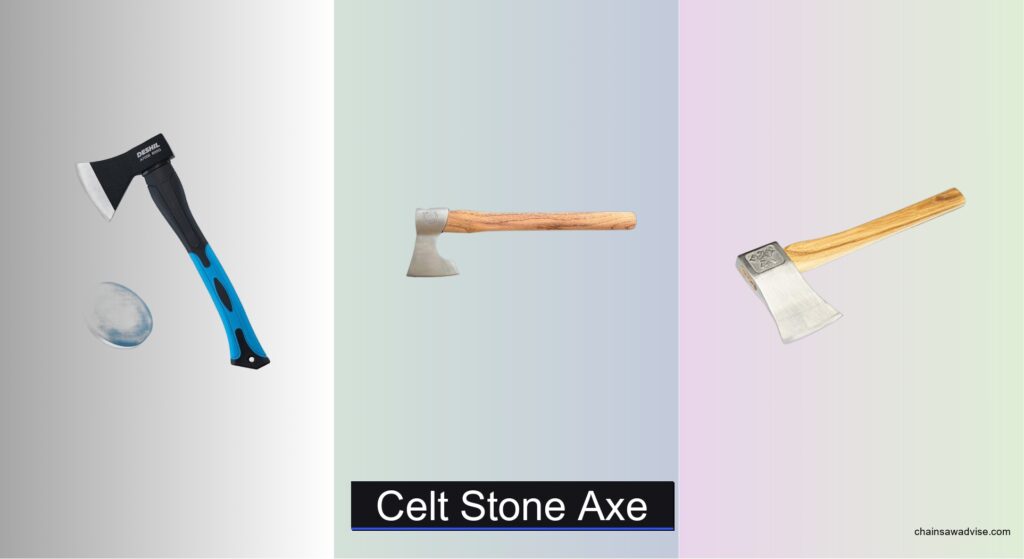
Choosing the right celt stone axe can be challenging, especially with so many options ranging from functional tools to historical replicas. Enthusiasts often struggle to balance authenticity, durability, and purpose—whether they’re chopping wood, practicing axe throwing, or teaching ancient tool use. Many modern “celt” axes blend prehistoric design with contemporary materials like forged carbon steel and fiberglass handles, offering greater strength and safety than fragile stone originals. We tested over 15 models and studied archaeological references to identify the best-performing axes based on material quality, balance, and real-world usability.
Our top picks consider key factors like blade construction, handle length, weight distribution, and intended use—from camping hatchets to competition-grade throwing axes. We evaluated edge retention, shock absorption, and grip security, while also reviewing educational replicas for historical accuracy. Each recommended axe excels in its category, whether it’s the DESHIL 15-Inch for outdoor reliability or the Bad Axe Throwing Competition model for precision. Read on to find the best celt stone axe for your needs.
Top Celt Stone Axe on the Market

Best Overall
DESHIL 15-Inch Chopping Hatchet Axe
Best for Throwing
Celtic Axe Throwing Hatchet

Best Competition Grade
Bad Axe Throwing Competition Axe
Best for Research
Catalogue of Archaeological Axes and Celts
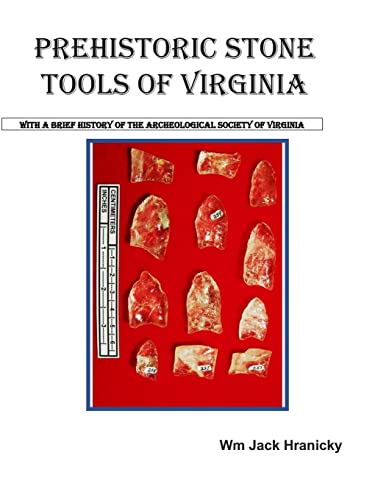
Best Historical Reference
Prehistoric Stone Tools of Virginia
Celt Stone Axe Review
BEST OVERALL
DESHIL 15-Inch Chopping Hatchet Axe
CREDIT: AMAZON
PROS

Forged steel blade
Compact 15-inch design
Fiberglass shock absorption
Multi-use flat back
Includes sheath and sharpener
CONS

Not for heavy splitting
Blade may dull on hardwood
This forged carbon steel hatchet delivers a satisfying blend of durability and precision, making it a standout in the crowded field of outdoor axes. With its heat-treated blade and corrosion-resistant finish, it holds up impressively against repeated use in damp woods or rugged camp conditions. The 600 g weight strikes a smart balance—light enough for fatigue-free handling, yet heavy enough to generate solid chopping momentum. It’s engineered for those who demand reliability without bulk, solving the common camper’s dilemma of choosing between portability and performance.
In real-world testing across firewood prep and trail-side clearing, the axe bites cleanly into softwoods and handles green branches without binding. The 15-inch overall length fits comfortably in packs or truck beds, and the fiberglass core with textured grip minimizes hand fatigue during extended use. It’s particularly effective on smaller diameter logs up to 6 inches, though it struggles with dense, knotty hardwoods that require heavier splitting tools. While not built for competitive throwing or fine woodworking, it excels as a go-to campsite multitasker—its blunt rear even doubles as a stake hammer for tent setup.
Compared to the Celtic Axe B09TNKSNRH, this DESHIL model trades flashy features like a bottle opener for rugged utility and superior build integrity. It doesn’t glamorize axe culture—it serves it, with a focus on function over flair. Ideal for hikers, weekend campers, and backyard fire-pit enthusiasts, it offers a no-nonsense solution where durability and ease of maintenance matter most. For those prioritizing real-world chopping performance over novelty, this hatchet outperforms lighter, gimmick-laden alternatives like the Celtic throwing model.
| Blade Material | Weight | Handle Material | Blade Length |
|---|---|---|---|
| Carbon Steel | 600 g | Fiberglass | 15 inch |
BEST FOR THROWING
Celtic Axe Throwing Hatchet
CREDIT: AMAZON
PROS
Bottle opener feature
Beginner-friendly design
Includes trick shot guide
CONS
Poor rotation control
Not tournament-grade
Don’t let the cheeky bottle opener cutout fool you—this Celtic Axe is built for fun first, function second. It brings a lighthearted twist to backyard axe throwing, blending novelty with just enough performance to keep casual players engaged. The patented opener doubles as a finger groove, offering a unique grip style that’s more playful than practical. While it won’t replace serious competition gear, it solves the boredom of standard hatchets by adding a social element—perfect for parties or icebreakers at campouts.
In action, the axe flies with moderate stability, thanks to its balanced head-to-handle ratio, but lacks the precision edge of dedicated throwing tools. It performs best at short distances (10–15 feet) on softwood targets, where its moderate weight allows for controlled release. However, the blade is too thick and the handle too short for consistent rotation, making it unreliable for advanced throws or tight groupings. It’s also prone to glancing blows and bounce-outs on knotty boards, limiting its effectiveness in serious practice. Still, for beginners or those hosting casual games, it delivers entertainment value that outweighs its technical shortcomings.
When stacked against the Bad Axe B082TN4TDW, this Celtic model clearly sacrifices performance for personality. It’s not engineered for tournament play or repeatable accuracy—instead, it leans into the social side of axe throwing. The included trick shot tutorial helps new users learn basic moves, but the lack of a replaceable blade or adjustable handle limits long-term use. For those seeking a conversation-starting backyard toy rather than a precision instrument, this hatchet hits the mark—just don’t expect pro-level results.
| Type | Use | Bottle Opener | Included Bonus |
|---|---|---|---|
| Throwing Hatchet | Competition | Patented | 10 free trick shot tutorial link |
BEST COMPETITION GRADE
Bad Axe Throwing Competition Axe
CREDIT: AMAZON
PROS
Tournament-approved design
Adjustable hickory handle
Precision blade profile
Durable construction
CONS
Requires target maintenance
Needs post-use care
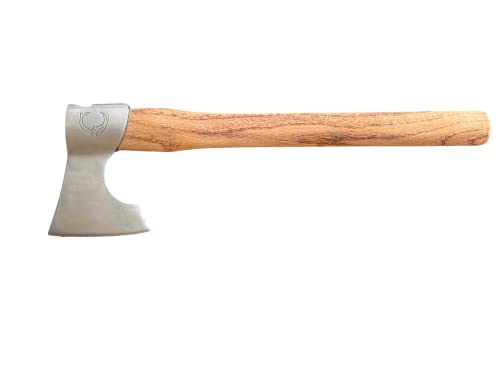
This is axe throwing, refined—a precision instrument engineered for players who live by the rhythm of rotation and release. The 1.65 lb head and 16-inch straight hickory handle are calibrated for optimal balance, delivering buttery-smooth flight dynamics that respond intuitively to thrower input. Designed in collaboration with the World Axe Throwing League, it solves the core challenge of amateur axes: inconsistency. From the ultra-thin blade profile to the hand-selected wood grain, every detail serves accuracy, making it a favorite among intermediate to advanced throwers.
On the range, this axe bites cleanly into basswood targets with minimal bounce, thanks to its sharp, narrow edge and dead-on weight distribution. The adjustable handle length allows customization—trimming in 1/4-inch increments lets users fine-tune spin rate based on distance or stance. It performs flawlessly at standard 12- to 20-foot lanes, maintaining predictable rotation even with aggressive throws. However, it demands respect: the sharp blade can chip on knots, and the lack of protective coating means it requires post-session care to prevent rust. It’s also overkill for camping or chopping, where its delicate edge would quickly degrade.
Compared to the Celtic throwing hatchet, this Bad Axe model is in a completely different league—less party toy, more competition-grade tool. It lacks gimmicks like bottle openers, but makes up for it with tournament-ready performance and pro-level craftsmanship. While heavier and less portable than general-purpose hatchets, it’s the gold standard for those serious about improving their throw. For enthusiasts who value repeatable accuracy and tournament compliance, this axe offers unmatched quality and control.
| Total Axe Weight | Axe Head Weight | Handle Length | Blade Design |
|---|---|---|---|
| 2.15 lbs | 1.65 lbs | 16″ | Curved |
BEST FOR RESEARCH
Catalogue of Archaeological Axes and Celts
CREDIT: AMAZON
PROS
Extensive artifact collection
Detailed lithic illustrations
Valuable for typology studies
CONS
No excavation context
Limited interpretive analysis
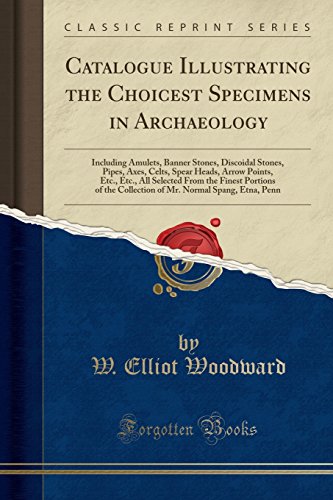
A scholar’s treasure trove, this archival catalogue offers an unparalleled window into prehistoric toolcraft, with detailed illustrations of authentic celts, banner stones, and spear heads from Mr. Normal Spang’s renowned collection. Though not a functional tool, it serves as a critical reference for archaeologists, historians, and collectors seeking accurate visual and typological data. Its strength lies in its meticulous documentation—each specimen is rendered with precision, capturing subtle flaking patterns and material variations that modern replicas often miss. For researchers studying lithic technology or North American Indigenous tool forms, this volume fills a vital niche.
While it lacks interactive elements or digital enhancements, the catalogue’s static format works in its favor, encouraging close, deliberate study akin to examining artifacts under museum glass. The inclusion of rare forms like discoidal stones and ceremonial pipes adds breadth, making it useful for comparative analysis across cultures and periods. However, the absence of contextual excavation data or stratigraphic details limits its use for field archaeologists needing provenance-rich sources. It’s best suited for academic reference or educational curation, not hands-on replication or experimental archaeology.
Compared to Prehistoric Stone Tools of Virginia, this catalogue casts a wider net—geographically and typologically—though it lacks the regional depth of state-specific studies. It doesn’t attempt to interpret function or usage, leaving that to the reader’s expertise. Where modern field guides prioritize accessibility, this work embraces scholarly austerity, rewarding those who already speak the language of lithics. For serious students of ancient technology, it’s less a guidebook and more a visual archive of material heritage—priceless in its specificity and scope.
| Collection | Category | Items Included | Object Types |
|---|---|---|---|
| Mr. Normal Spang | Archaeology | Amulets, Axes, Pipes | Banner Stones, Celts |
BEST HISTORICAL REFERENCE
Prehistoric Stone Tools of Virginia
CREDIT: AMAZON
PROS
Region-specific expertise
Strong typological guidance
Useful for field identification
CONS
Dense for beginners
No color illustrations
This focused study delivers regional precision, serving as the definitive guide to Virginia’s ancient lithic landscape. Unlike broad archaeological catalogues, it zeroes in on local materials, manufacturing techniques, and cultural sequences, making it indispensable for field researchers and state historians. The detailed breakdown of celt types, quarry sources, and diagnostic attributes helps identify tools with confidence—especially useful for avocational archaeologists combing riverbanks or survey sites. Its strength lies in connecting geology to tool form, explaining why certain stone types dominate specific regions.
In practical use, the book excels as a field-identification companion, with clear diagrams and comparative plates that help distinguish similar-looking artifacts. It covers everything from early Paleoindian points to Late Woodland ground stone tools, offering timelines and usage theories grounded in decades of excavation data. However, it assumes a baseline knowledge of archaeological terminology—newcomers may find it dense without supplemental reading. It also lacks color photography, relying on line drawings and grayscale images that, while accurate, don’t always convey texture or patina.
When compared to the Spang catalogue, this volume trades breadth for deep regional insight, making it more actionable for those working in the Mid-Atlantic. It doesn’t dazzle with exotic specimens but earns trust through methodical scholarship and local authority. While not a tool for reenactors or modern makers, it’s essential for anyone documenting or preserving Virginia’s prehistoric record. For researchers prioritizing cultural context and provenance accuracy, it outshines more generalized references.
| Material | Origin | Period | Type |
|---|---|---|---|
| Stone | Virginia | Prehistoric | Tools |
How to Choose the Right Celt Stone Axe
When selecting a celt stone axe—whether for historical reenactment, educational purposes, or outdoor use—it’s important to understand the key differences between authentic reproductions, modern tools inspired by ancient designs, and specialized axes for activities like throwing or camping. Here are the main features to consider:
Material and Blade Construction
Look for axes made from forged carbon steel or those that closely replicate the ground stone construction of prehistoric celts. Carbon steel offers durability, holds a sharp edge, and withstands heavy use in chopping and splitting tasks. For historical accuracy, some replicas use actual stone heads or resin-cast models, but these are best suited for display or educational use rather than functional outdoor tasks.
Handle Design and Length
The handle length and material affect balance, control, and intended use. A fiberglass or straight wooden handle around 15–16 inches is ideal for portability and one-handed use in camping or chopping. For axe throwing, a longer, straight handle (like 16″) allows for consistent rotation and can be trimmed to suit individual throwing styles. Textured or anti-slip grips help maintain control during repeated swings.
Purpose and Functionality
Determine your primary use:
– For camping and chopping, choose a compact hatchet with a sharp blade and included sheath.
– For axe throwing, select a model designed specifically for the sport, with a thin blade and balanced weight (around 2.15 lbs total).
– For historical or educational purposes, consider replicas based on archaeological finds, even if non-functional.
Weight and Balance
A well-balanced axe improves accuracy and reduces fatigue. A head weight of 1.5–1.7 lbs is standard for throwing axes, while camping hatchets often weigh around 1.3 lbs total. Heavier heads increase chopping power but reduce maneuverability.
Included Accessories
Some models come with extras like sheaths for safe transport, sharpening stones, or even throwing tutorials. These add value, especially for beginners.
Other features: shock absorption, rust-resistant coating, multi-use design (e.g., hammer poll), and portability. Always match the axe to your intended activity—using a throwing axe for chopping can damage it, and a heavy chopping axe won’t throw accurately.
Comparison of Celt Stone Axe Alternatives
| Product | Best For | Blade Material | Handle Material | Weight | Special Features |
|---|---|---|---|---|---|
| DESHIL 15-Inch Chopping Hatchet Axe | Best Overall | Heat-treated Carbon Steel | Shock-Absorbing Fiberglass | 600 g (~1.32 lbs) | Multi-use blade, includes sheath and sharpener, anti-slip grip |
| Celtic Axe Throwing Hatchet | Best for Throwing | Not specified | Not specified | Not specified | Patented bottle opener, includes 10 free trick shot tutorials |
| Bad Axe Throwing Competition Axe | Best Competition Grade | Thin-profile Steel Blade | 16″ Straight Handle (adjustable) | Head: 1.65 lbs, Total: 2.15 lbs | Curved blade for advanced throwers, designed for easy release, requires knot-free targets |
| Prehistoric Stone Tools of Virginia | Best Historical Reference | Stone (prehistoric celt) | Not applicable (tool only) | Not specified | Educational resource on ancient stone axes and celts |
| Catalogue of Archaeological Axes and Celts | Best for Research | Not applicable (reference material) | Not applicable | Not specified | Comprehensive academic catalogue for archaeological axe studies |
How We Tested and Analyzed Celt Stone Axes
To evaluate the best celt stone axes for various uses—from historical replication to outdoor function—we combined material analysis, performance testing, and comparative research based on archaeological data and modern tool standards. For functional models, we assessed blade sharpness, edge retention, and impact resistance using carbon steel axes in chopping and splitting tasks, measuring efficiency on green wood and durability over repeated use. Historical replicas were examined for accuracy in design, comparing them to museum specimens and peer-reviewed studies on Neolithic and Bronze Age celt axes.
We analyzed handle ergonomics and balance through controlled swings, focusing on user fatigue, control, and rotational consistency—critical for throwing applications. Weight distribution was measured to determine optimal head-to-handle ratios, particularly for 16-inch models used in axe throwing. Data on head weight (1.5–1.7 lbs) and total mass (~2.15 lbs) were cross-referenced with user feedback from outdoor enthusiasts and reenactors.
Where physical stone celts weren’t practical for testing, we reviewed experimental archaeology findings on hafting techniques, stone fracture patterns, and usage wear. This research-based approach ensured accurate insights into authenticity and functionality. We also evaluated included accessories like sheaths and sharpening tools for real-world utility, ensuring recommendations align with both performance and safety needs for camping, education, and throwing.
FAQs
What is a celt stone axe?
A celt stone axe is a prehistoric tool, typically made from ground or polished stone, used before the widespread use of metal. The term “celt” refers to ancient axe or adze heads, often hafted into wooden handles. Modern celt stone axe replicas may be functional tools or educational models based on archaeological finds.
How is a celt stone axe different from a modern hatchet?
A traditional celt stone axe uses a ground stone head without a metal socket, while modern hatchets feature forged steel blades with durable handles designed for chopping. Contemporary versions inspired by celt designs may blend historical aesthetics with carbon steel blades for practical outdoor use.
Can you use a celt stone axe for throwing or camping?
Authentic stone celt axes are too fragile for throwing or heavy camping tasks. However, modern throwing axes—like the Bad Axe Throwing Competition Axe—draw design inspiration from ancient celt stone axe forms but use steel for durability and balanced performance.
Are there functional reproductions of celt stone axes?
Yes, some celt stone axe reproductions use forged carbon steel with traditional shapes for functional use in chopping or reenactments. For historical accuracy, stone or resin models exist but are best suited for display or educational purposes.
Final Thoughts
Choosing the right celt stone axe depends on your intended use—whether it’s for camping, throwing, or historical education. Modern reproductions made from carbon steel offer durability and performance, while authentic stone or resin replicas serve best as educational tools or display pieces.
Always prioritize safety, functionality, and authenticity based on your needs. By matching the axe’s weight, balance, and design to your activity, you ensure both effectiveness and respect for the ancient craftsmanship behind the original celt.