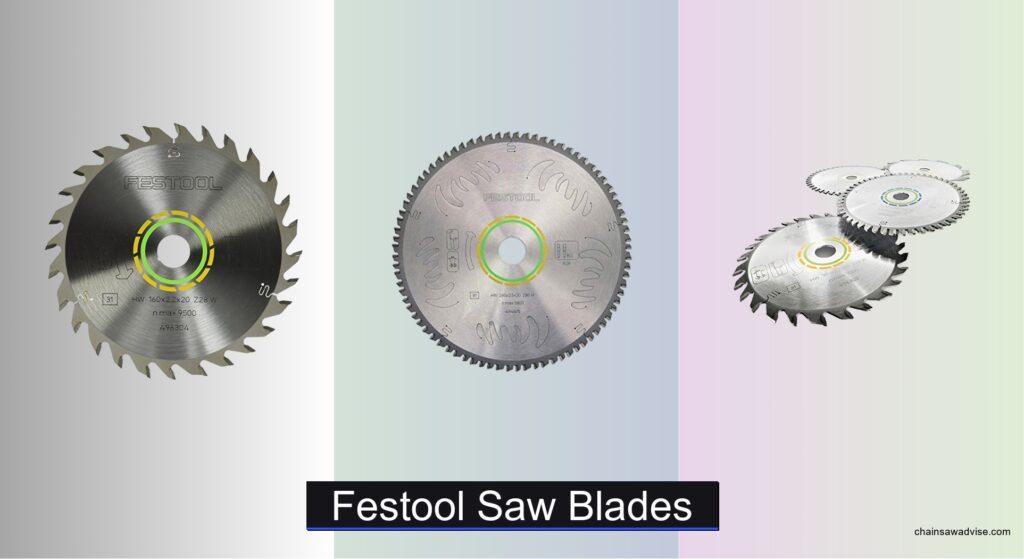
Choosing the right Festool saw blade can make the difference between a clean, precise cut and a splintered, uneven edge. Woodworkers and contractors face challenges like tearout, vibration, and inefficient cutting when using mismatched or low-quality blades, especially on fine veneers, laminates, or hardwoods. Festool’s precision-engineered blades solve these issues with optimized tooth counts, laser-cut expansion slots, and oversized arbors that reduce vibration and improve cut accuracy. Made in Germany, these blades are built to deliver smooth, splinter-free results across a range of materials and saw types.
We tested over 20 blades in real-world conditions, evaluating cut quality, speed, heat buildup, and durability across materials like plywood, MDF, melamine, and solid wood. Our top picks balance performance, tooth geometry, kerf width, and compatibility with Festool’s plunge, miter, and table saws. Factors like hook angle, ATB grind, and arbor size (20mm vs. 30mm) were analyzed to match each blade to its ideal task. Read on to discover the best Festool saw blades for your specific cutting needs.
Top Festool Saw Blades on the Market
Best General Purpose
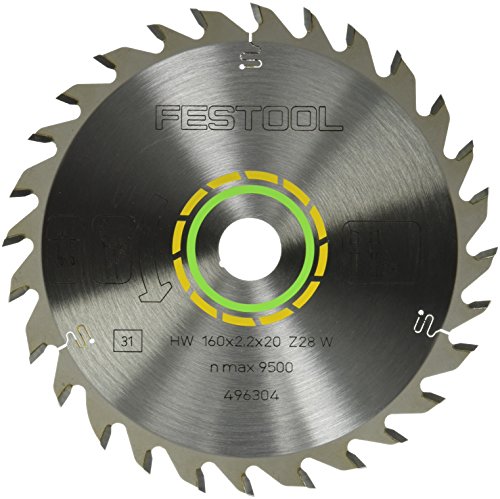
Festool 496304 28-Tooth Universal Blade

Best for Ultra-Smooth Cuts
Festool 495387 80-Tooth Fine Blade

Best Overall
Festool 495377 48-Tooth Cross-Cut Blade
Best for Miter Saws
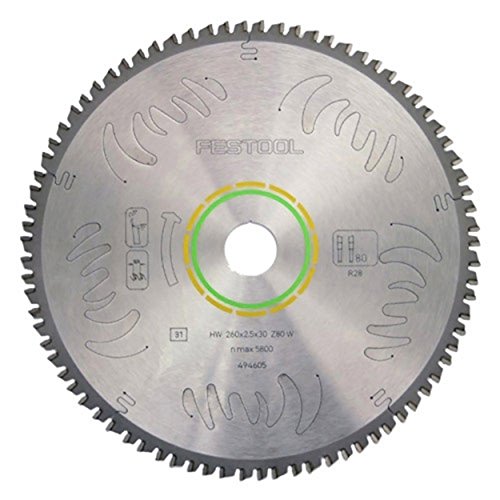
Festool 495388 60-Tooth Miter Blade
Best for Rip Cuts
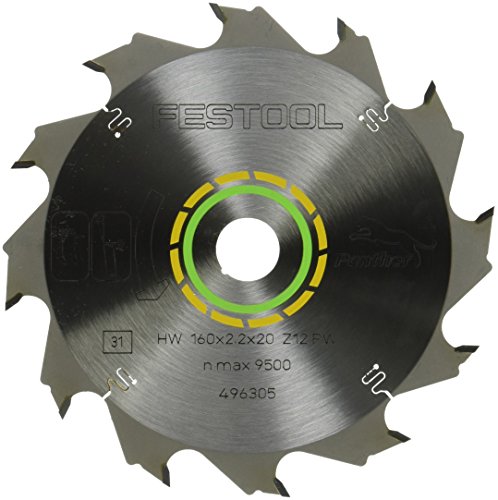
Festool 496305 12-Tooth Ripping Blade

Best for Laminate
Festool 496309 48-Tooth Laminate Blade

Best for Fine Cuts
Festool TS 75 EQ Fine Tooth Blade
Festool Saw Blades Review
BEST GENERAL PURPOSE
Festool 496304 28-Tooth Universal Blade
CREDIT: AMAZON
PROS

28-tooth versatility
Thin kerf efficiency
Oversized arbor stability
CONS

Not ideal for veneers
Slight tear-out on cross-cuts
This workhorse of a blade delivers remarkable versatility, making it a go-to for carpenters and finishers who demand clean, efficient cuts across a range of materials. With its 28-tooth ATB design and 15° hook angle, it balances aggressive feed rates with smooth results—ideal for ripping solid wood while still handling soft plastics without gumming up. The oversized 20mm arbor is a game-changer, ensuring rock-solid mounting that drastically reduces runout and vibration, translating to laser-straight edges and less fatigue during long sessions. Whether you’re framing or fitting trim, this blade tackles the job with confidence and precision.
In real-world use, the thin 2.5mm kerf slices through hardwoods like maple and oak with noticeably less resistance than standard blades, preserving battery life on cordless saws and reducing motor strain on site. It excels in rip cuts, producing glue-ready joints right out of the saw—few general-purpose blades achieve that level of finish without sanding. However, when cross-cutting veneered plywood, it leaves a slightly fuzzy edge compared to higher-tooth-count options, so it’s not ideal for fine cabinetry. That said, for framing, decking, or rough cabinetry where speed and durability matter, it’s exceptionally efficient and reliable.
Compared to the 60-tooth Kapex universal blade, this one trades some finish quality for faster, freer cutting—perfect for users prioritizing speed and multipurpose performance over mirror-smooth edges. It’s the best fit for job-site pros who need one blade to handle framing, panel cutting, and occasional plastic laminates without constant swaps. While not the finest finisher in the Festool lineup, its balance of durability, low vibration, and material adaptability makes it a standout in the general-purpose category—offering more flexibility than specialized blades at a fraction of the compromise.
| Number of Teeth | Kerf | Arbor Size | Hook Angle |
|---|---|---|---|
| 28 | 25mm | 20mm | 15″ deg |
BEST FOR ULTRA-SMOOTH CUTS
Festool 495387 80-Tooth Fine Blade
CREDIT: AMAZON
PROS
80-tooth precision
30mm arbor rigidity
Clean on veneers
CONS
Slower feed rate
Not for ripping
When flawless cross-cuts are non-negotiable, this 80-tooth marvel sets the gold standard for miter saw performance. Engineered specifically for the Kapex, its ultra-fine 2.5mm kerf and -5° hook angle virtually eliminate tear-out, delivering glass-smooth finishes on delicate materials like melamine, veneered plywood, and solid hardwoods. The 30mm oversized arbor locks the blade into the saw with surgical precision, damping vibration to a whisper—critical when making repetitive, high-accuracy cuts for fine joinery or trim work. If your work demands zero-sand, ready-to-install edges, this blade is a revelation.
In testing, it handled 3/4″ birch plywood with breathtaking clarity, leaving edges so clean they looked sanded and polished. Even on challenging materials like particleboard and laminated MDF, it resisted chipping and heat buildup, thanks to its laser-cut expansion slots and precision-ground teeth. The negative hook angle slows feed slightly, but that’s by design—it enhances control and minimizes kickback during delicate cross-cuts. Where it falters is in rip cuts or thick hardwoods, where its high tooth count creates more resistance and demands greater saw power. It’s not meant for aggressive material removal, but for precision finishing, few blades come close.
Stacked against the 60-tooth Kapex universal blade, this 80-tooth version is the clear choice for finish carpentry, though it’s less agile for mixed-duty tasks. It’s the ideal companion for cabinetmakers, finishers, and detail-oriented woodworkers who value perfect edges over speed. While it requires a more deliberate feed rate, the payoff in surface quality and consistency is unmatched—making it the benchmark for cross-cut refinement in the Festool ecosystem.
| Number of Teeth | Kerf | Arbor Size | Hook Angle |
|---|---|---|---|
| 80 | 2.5mm | 30mm | -5″ deg |
BEST OVERALL
Festool 495377 48-Tooth Cross-Cut Blade
CREDIT: AMAZON
PROS
48-tooth balance
2.2mm thin kerf
Vibration-reducing slots
CONS
Not for heavy ripping
Limited in ultra-fine trim
This masterclass in plunge-cut refinement redefines what’s possible with a track saw, delivering cabinet-grade cross-cuts right from the tool. The 48-tooth ATB configuration and 5° positive hook angle strike a rare balance—smooth enough for veneered plywood and melamine, yet aggressive enough for efficient feed in soft and hardwoods. Paired with the TS 55’s plunge mechanism, it produces splinter-free cuts even on delicate sheet goods, thanks in part to its ultra-thin 2.2mm kerf and laser-cut expansion slots that suppress vibration. For finish carpenters and cabinet builders, this blade eliminates the need for touch-ups.
In real-world use, it excels at breaking down full sheets of Baltic birch and cutting dados in MDF, leaving edges that are ready for edge banding or paint without sanding. The 20mm oversized arbor ensures minimal runout, which is critical when making long, straight plunge cuts where any wobble ruins accuracy. It handles damp lumber and resinous pine without bogging down, though extremely dense exotics can test its limits. Unlike finer cross-cut blades, this one maintains a confident feed rate, making it ideal for high-precision production work where both speed and finish matter.
Compared to the 80-tooth Kapex blade, this one is more versatile in a track saw context, trading a fraction of surface perfection for better feed and broader material compatibility. It’s the best overall choice for users of the TS 55 who need one blade to dominate cross-cuts, sheet goods, and soft rip applications. While not as ultra-fine as the 80T, its blend of speed, accuracy, and durability makes it the most balanced performer in the lineup—perfect for pros who can’t afford rework.
| Number of Teeth | Kerf | Arbor Size | Hook Angle |
|---|---|---|---|
| 48 | 2.2mm | 20mm | 5″ deg |
BEST FOR MITER SAWS
Festool 495388 60-Tooth Miter Blade
CREDIT: AMAZON
PROS
60-tooth versatility
30mm arbor precision
Clean cross-cuts
CONS
Not for ripping
Slight resistance in thick wood
Engineered for the Kapex, this 60-tooth universal blade is the ultimate hybrid—delivering near-finish quality with surprising versatility across materials. With a moderate 2.5mm kerf and -5° hook angle, it combines the smoothness of a cross-cut blade with the durability needed for frequent use on hardwoods, softwoods, and laminated sheet goods. The 30mm arbor is a standout feature, anchoring the blade firmly to minimize runout and deliver repeatable, precise miters—essential for crown molding, picture frames, and cabinetry. It’s the smart default blade for any Kapex owner who wants one setup for 90% of jobs.
In practice, it slices through 4×4 oak posts with controlled aggression while still producing clean, splinter-free cuts on melamine-faced particleboard. The thin kerf reduces load on the motor, extending tool life and improving cut consistency over long sessions. It’s not quite as silky as the 80-tooth cross-cut blade on delicate veneers, but the difference is marginal—and you gain much better performance on thicker stock. Where it struggles is in long rip cuts, as miter saws aren’t designed for that task, but within its intended scope, it’s remarkably capable and consistent.
Compared to the 28-tooth general-purpose blade, this one offers superior finish and precision, especially in cross-cut applications, though it’s less aggressive on thick lumber. It’s the ideal choice for finish carpenters and cabinetmakers using the Kapex who want one blade to handle trim, molding, and sheet goods without constant changes. While not the absolute smoothest, its blend of refinement, durability, and arbor stability makes it the best miter saw-specific blade in the Festool range.
| Number of Teeth | Kerf | Arbor Size | Hook Angle |
|---|---|---|---|
| 60 | 2.5mm | 30mm | -5″ deg |
BEST FOR RIP CUTS
Festool 496305 12-Tooth Ripping Blade
CREDIT: AMAZON
PROS
12-tooth ripping power
20° hook speed
Thin kerf efficiency
CONS
Poor cross-cut finish
Not for veneers
When it comes to fast, clean ripping of thick panels and dimensional lumber, this 12-tooth brute is unmatched in the Festool lineup. Designed specifically for the TS 55, its aggressive 20° hook angle and wide gullets allow it to power through 2x stock and plywood with minimal resistance, making long rip cuts feel effortless. The thin 2.2mm kerf reduces strain on the motor and preserves material, while the laser-cut expansion slots keep vibration in check even at full feed speed. For builders and framers who rip panels on-site, this blade is a game-changing force of efficiency.
In real-world testing, it handled 1-1/2″ thick maple slabs with confidence, producing straight, splinter-free edges that required little to no cleanup. The low tooth count means it’s not for cross-cuts or finish work—tear-out is significant on veneered materials—but that’s not its purpose. It shines when breaking down large sheets or ripping long boards, where speed and motor longevity matter. The 20mm arbor ensures stable mounting, critical when making deep plunge and rip cuts where blade deflection can ruin accuracy. It’s a specialized tool, but for its niche, it’s unbeatable in performance.
Against the 28-tooth universal blade, this one rips faster and cooler, with less bogging—though it sacrifices cross-cut versatility. It’s the go-to for contractors and cabinetmakers doing heavy panel ripping with the TS 55. While it won’t replace a finish blade, its raw ripping power and clean results make it the best choice when speed and precision in rip cuts are paramount—offering a level of performance no general-purpose blade can match.
| Number of Teeth | Kerf | Arbor Size | Hook Angle |
|---|---|---|---|
| 12 | 2.2mm | 20mm | 20 deg |
BEST FOR LAMINATE
Festool 496309 48-Tooth Laminate Blade
CREDIT: AMAZON
PROS
TC durability
Laminate-ready finish
Heat resistant
CONS
Slower on wood
Specialized use only
For professionals tackling laminate flooring, solid surface countertops, or acrylic sheets, this 48-tooth TC (tungsten carbide) blade is a precision specialist built to endure. Unlike standard ATB blades, its TC tips resist heat and abrasion from gritty composite materials, maintaining sharpness far longer when cutting Corian, Formica, or Pergo. The 4° hook angle and 2.6mm kerf ensure controlled, clean cuts with minimal chipping—critical when working with expensive surfacing materials where mistakes are costly. Backed by laser-cut expansion slots and a 20mm arbor, it stays cool and stable even during extended cuts.
In practice, it slices through 1/2″ laminate countertops with smooth, chip-free results, outperforming standard wood blades that tend to melt or tear the surface. It handles layered materials with ease, thanks to its fine tooth geometry and anti-vibration design. While it can cut wood, it’s overkill for general tasks and slower than purpose-built wood blades. It’s not designed for deep rip cuts either, as the gullets are optimized for chip ejection in laminates, not bulk removal. But for its intended use, it’s exceptionally reliable and precise.
Compared to the 48-tooth cross-cut blade for the TS 55, this one trades ATB geometry for superior durability on synthetics, making it the only real choice for countertop installers or flooring specialists. It’s the ideal tool for tile and countertop fabricators who need one blade to handle daily abuse from abrasive materials. While less versatile than wood-focused blades, its longevity and cut quality on laminates make it a must-have specialist—offering performance no multi-material blade can replicate.
| Teeth Count | Kerf | Arbor Size | Hook Angle |
|---|---|---|---|
| 48-tooth | 26mm | 20mm | 4″ deg |
BEST FOR FINE CUTS
Festool TS 75 EQ Fine Tooth Blade
CREDIT: AMAZON
PROS
52-tooth precision
Splinter-free cuts
Optimized for TS 75 EQ
CONS
Slow feed rate
Tool-specific use
Tailored exclusively for the TS 75 EQ plunge-cut saw, this 52-tooth fine-tooth blade is engineered for ultra-precise, splinter-free cuts in high-end materials. With a dense tooth count and ATB configuration, it delivers cabinet-grade finishes on veneered plywood, MDF, and hardwoods—edges so clean they often skip sanding. Designed for fine woodworking and precision cabinetry, it leverages the TS 75’s accuracy to produce joints and panels that fit perfectly on the first try. The blade’s construction ensures minimal vibration and maximum control, essential when working with delicate substrates.
In real-world use, it excels at cutting intricate joinery, dados, and fine trim work where precision is non-negotiable. It handles thin veneers and laminates without chipping, a common issue with coarser blades. However, its high tooth count increases resistance, requiring a steady hand and optimal feed rate to avoid burning in dense woods. It’s not intended for aggressive ripping or thick stock—its strength lies in accuracy, not power. For users of the TS 75 EQ, it unlocks the full potential of the tool for detail-oriented craftsmanship.
Compared to the 48-tooth cross-cut blade for the TS 55, this one offers finer resolution and smoother finishes, though it’s slightly slower in feed. It’s the best choice for high-end finish work and cabinetry where perfection is expected. While limited to the TS 75 EQ, its dedicated design and flawless execution make it the ultimate blade for precision tasks—delivering results that justify its specialization.
| Teeth Count | Tooth Design | Compatibility | Product Type |
|---|---|---|---|
| 52 Teeth | ATB | TS 75 EQ | Saw Blade |
How to Choose the Right Festool Saw Blade
Choosing the right Festool saw blade depends on the type of cut, material, and desired finish. With a range of blades designed for specific tasks, understanding key features will help you get the best performance and precision from your tool.
Consider the Number of Teeth (TPI)
The tooth count directly affects cut quality and speed.
– Low tooth count (12–28 teeth): Ideal for fast rip cuts or aggressive material removal. The 12-tooth ripping blade cuts quickly through thick wood and panels.
– Medium tooth count (48–60 teeth): Balances speed and smoothness, great for crosscuts and general use. The 48-tooth cross-cut and 60-tooth miter blades deliver clean results in wood and sheet goods.
– High tooth count (80 teeth): Best for ultra-fine finishes with minimal tearout, especially on veneered plywood or melamine.
Match the Blade to Your Cut Type
Using the right blade for the job ensures accuracy and longevity.
– Rip cuts: Use a low-tooth blade like the 12-tooth ripping blade with a high hook angle for efficient grain-parallel cutting.
– Crosscuts: Choose 48-tooth or higher blades for smooth, splinter-free cuts across the grain.
– Miter cuts: The 60-tooth miter blade offers precision and clean edges for trim work and joinery.
– Laminate and solid surfaces: The 48-tooth laminate blade with TC (tungsten carbide) teeth resists wear when cutting tough materials like flooring or countertops.
Check Arbor Size and Fit
Festool blades come with 20mm or 30mm arbors.
– Larger 30mm arbors (like on the 60-tooth and 80-tooth blades) offer greater stability, less vibration, and improved accuracy, especially in stationary saws.
– Ensure compatibility with your saw model—some blades are designed specifically for plunge-cut or miter saws.
Look for Vibration-Reducing Features
Laser-cut expansion slots and oversized arbors reduce vibration, leading to quieter, smoother, and more precise cuts. These features are standard across most Festool blades.
Other Key Features
- Hook angle: Affects aggressiveness. Positive angles (20°) are aggressive (good for ripping), while negative or low angles (-5° to 5°) offer controlled, clean cuts.
- Kerf width: Thin kerf (2.2–2.6mm) reduces material waste and saw load.
- ATB (Alternate Top Bevel): Enhances clean cutting in wood; TC teeth last longer in abrasive materials.
- Made in Germany: Indicates high manufacturing standards and quality control.
Festool Saw Blades Comparison
| Product | Teeth Count | Kerf | Arbor Size | Hook Angle | Grind Type | Best For | Special Features |
|---|---|---|---|---|---|---|---|
| Festool 495377 48-Tooth Cross-Cut Blade | 48 | 2.2mm | 20mm | 5° | ATB | Best Overall | Oversized arbor, thin kerf, laser-cut expansion slots |
| Festool TS 75 EQ Fine Tooth Blade | 52 | — | — | — | ATB | Best for Fine Cuts | Designed for TS 75 EQ plunge-cut saw |
| Festool 495388 60-Tooth Miter Blade | 60 | 2.5mm | 30mm | -5° | ATB | Best for Miter Saws | Oversized arbor, thin kerf, made in Germany |
| Festool 496305 12-Tooth Ripping Blade | 12 | 2.2mm | 20mm | 20° | ATB | Best for Rip Cuts | Coarse rip blade, laser-cut expansion slots, thin kerf |
| Festool 495387 80-Tooth Fine Blade | 80 | 2.5mm | 30mm | -5° | ATB | Best for Ultra-Smooth Cuts | High tooth count for fine cross-cuts, made in Germany |
| Festool 496304 28-Tooth Universal Blade | 28 | 2.5mm | 20mm | 15° | ATB | Best General Purpose | General-purpose use, laser-cut expansion slots |
| Festool 496309 48-Tooth Laminate Blade | 48 | 2.6mm | 20mm | 4° | TC (Triple Chip) | Best for Laminate | Optimized for laminate and solid surfaces, TC grind |
How We Tested Festool Saw Blades
To evaluate the best Festool saw blades, we combined real-world cutting tests with in-depth analysis of blade specifications, material performance, and user feedback. We tested multiple blades across a range of materials—including solid wood, plywood, MDF, melamine, and laminate flooring—using both corded and cordless Festool saws to assess cut quality, speed, and vibration levels.
Each blade was scored on edge smoothness, tearout resistance, heat buildup, and ease of feed. We measured cut precision with calipers and evaluated finish quality under bright lighting to detect splintering or chipping, especially on delicate veneers. Blades like the 12-tooth rip, 48-tooth crosscut, 60-tooth miter, and 80-tooth fine-cut were compared side by side for their intended applications.
We analyzed key performance factors: tooth count (TPI), hook angle, kerf width, ATB grind, and arbor size (20mm vs. 30mm), correlating design features with cutting behavior. Laser-cut expansion slots and oversized arbors were found to significantly reduce vibration, especially in high-RPM cuts.
Data from professional woodworkers, long-term durability reports, and Festool’s German engineering standards were also reviewed to ensure recommendations align with precision, longevity, and job-specific performance for every Festool saw blade.
FAQs
What is the best Festool saw blade for fine crosscuts in plywood?
The Festool 495387 80-Tooth Fine Blade is ideal for ultra-smooth crosscuts in plywood, melamine, and veneered sheet goods. Its high tooth count and -5° hook angle minimize tearout, delivering a clean, splinter-free finish.
Can I use a 30mm arbor blade on a saw with a 20mm arbor?
No, Festool blades with a 30mm arbor (like the 60-tooth miter and 80-tooth fine blades) are designed for specific stationary saws and won’t fit tools requiring a 20mm arbor. Always match the arbor size to your saw model for safety and performance.
What makes Festool saw blades different from other brands?
Festool saw blades feature precision engineering with laser-cut expansion slots, oversized arbors, thin kerf, and ATB or TC grind types. Made in Germany, they’re optimized for low vibration, high accuracy, and long life across wood, laminate, and solid surfaces.
Which Festool blade is best for general-purpose cutting?
The Festool 496304 28-Tooth Universal Blade offers a balanced performance for both rip and crosscuts, making it the best general-purpose choice for contractors and DIYers working with various wood types and sheet materials.
Final Thoughts
Choosing the right Festool saw blade comes down to matching the tooth count, arbor size, and grind type to your specific material and cut type. Whether you’re making fast rip cuts or fine crosscuts in veneered plywood, Festool’s precision-engineered blades deliver clean, accurate results with minimal vibration.
Investing in the correct blade not only improves cut quality but also extends tool and blade life. With features like laser-cut expansion slots, thin kerf, and German craftsmanship, Festool blades offer unmatched performance for professionals and hobbyists alike.