If your chainsaw sits unused for weeks or months, improper storage can lead to fuel breakdown, oil leaks, rust, and costly repairs. Knowing how to store a chainsaw correctly ensures it starts quickly when you need it, performs reliably, and lasts for years. Whether you own a STIHL, Husqvarna, Makita, or another model, the core principles remain the same: clean it, protect it, and position it safely. This guide walks you through every step from fuel management to DIY storage racks so your chainsaw stays in top condition no matter the season.
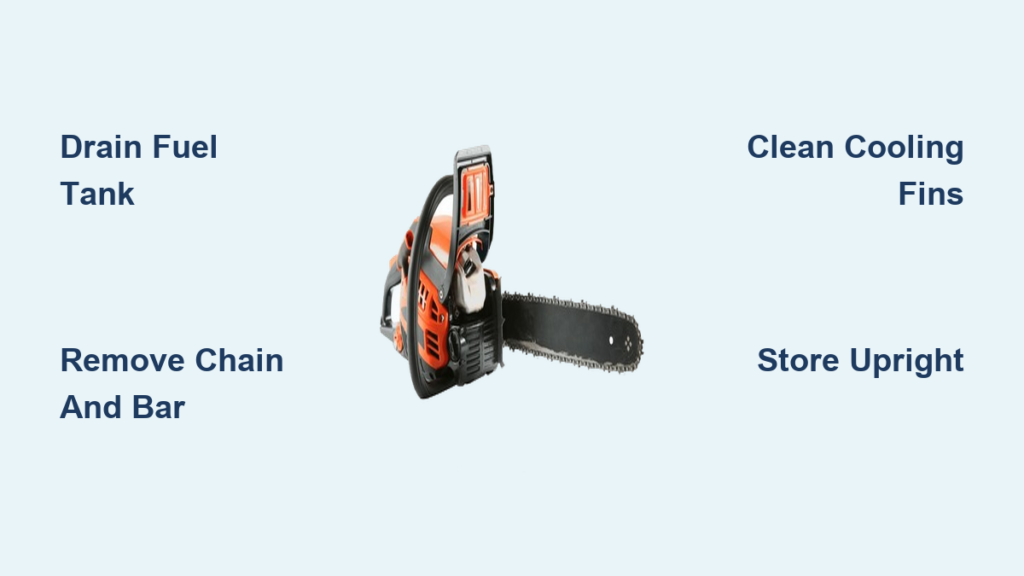
Drain the Fuel Tank Completely
Stale fuel is one of the top causes of chainsaw failure after storage. Gasoline with ethanol breaks down in as little as 30 days, leaving varnish that clogs the carburetor and damages engine components.
Run the Engine Dry
Start the chainsaw and let it idle until it shuts off on its own. This clears fuel from the carburetor and fuel lines. STIHL recommends this method to prevent diaphragm sticking during long-term storage.
Alternative: Drain Fuel Safely
In a well-ventilated area, siphon or drain remaining fuel into an approved container. Never store gasoline indoors or near ignition sources. Dispose of old fuel at a hazardous waste facility, not down drains.
Pro Tip: Use ethanol-free fuel like STIHL MotoMix for short breaks of one to two days. It resists degradation and eliminates the need to drain the tank.
Manage the Chain Oil Reservoir
Bar oil can leak during storage, especially in warm environments. How you handle the oil tank depends on the oil type you use.
Fill or Leave Based on Oil Type
Vegetable-based oils require topping off the reservoir to prevent oxidation and gumming. Semi-synthetic oils like STIHL SynthPlus can be left as-is without refilling. This difference matters because the wrong approach leads to thickened oil that clogs the oiler system.
Expect Minor Dripping
A small amount of oil seepage down the guide bar is normal during storage. It may even help lubricate the chain during downtime. Excessive leakage indicates worn cap gaskets or failing seals that need replacement.
Remove and Protect the Chain and Guide Bar

Leaving the chain and bar attached during storage risks warping, rust, and premature wear. Taking a few extra minutes to remove these components pays off in extended tool life.
Clean and Remove Both Components
Unscrew the sprocket cover and take off the chain and bar. Scrub off pitch and sawdust with a stiff brush and solvent if needed. Wipe everything clean with a dry cloth before storage.
Prevent Rust and Corrosion
Spray both chain and bar with light machine oil or a rust inhibitor. Store the chain in a sealed container or dry toolbox. Wrap the bar in oiled paper or place in a protective sleeve to keep moisture out.
Warning: Always loosen the chain before removal. As metal cools, it contracts and can stress the bar and sprocket if left tight.
Clean Critical Components

A dirty chainsaw performs poorly. Cleaning before storage prevents buildup that affects cooling, airflow, and overall function.
Focus on Key Areas
Cylinder cooling fins need debris removed with a brush or compressed air. Clogged fins cause overheating during next use. Remove the air filter and clean with mild soap and water if washable, then let it dry completely. Clear sawdust from the clutch and sprocket cover grooves to prevent binding.
Visual Cue: If fins look clogged or the filter appears dark and stiff, it needs cleaning before storage proceeds.
Choose the Right Storage Position
How you position your chainsaw affects oil leaks, bar warping, and overall safety. The right orientation depends on your specific setup.
Store Upright (Manufacturer Recommended)
Keeping the chainsaw upright keeps fuel from pooling near seals and reduces leak risk through fuel cap vents. This position works best when using cases or wall mounts and is ideal when fuel tanks are drained.
On Its Side: Bar Down, Caps Up
Some users prefer storing on the side with the bar facing down and oil/fuel caps facing up to minimize cap leakage. This may increase oil seepage down the bar in hot climates. Ensure caps face upward regardless of orientation.
Hang It on a Wall Rack
Wall racks save floor space and keep saws organized. Design the rack so weight rests on the bumper spikes and body, not the bar. Avoid hanging by the guide bar because this causes bending over time.
Avoid These Positions
Never store on the chain because it damages the cutting edge. Do not rest on the bar tip as it warps the guide rail. Avoid upside down because it stresses the carburetor and fuel lines.
Optimize Your Storage Environment
Where you store your chainsaw matters as much as how you prepare it. The environment directly impacts component longevity.
Keep It Dry and Ventilated
Store indoors in a shed, garage, or tool cabinet. Moisture causes rust on metal parts and degrades plastic housing. Use a dehumidifier or silica gel packs in damp areas to protect sensitive components.
Shield from Sunlight and Heat
UV rays break down plastic and rubber components over time. High temperatures thin bar oil and increase leaks significantly. Never leave a chainsaw in a hot truck bed or in direct sunlight.
Secure from Unauthorized Use
Keep the chainsaw out of reach of children and untrained users. Lock it in a cabinet or use a chainsaw cover with a lock loop. Consider a chainsaw lock or cable through the handle for added security.
Build a DIY Storage Rack
Save money and space with a simple, sturdy rack made from scrap materials. A well-designed rack keeps your saw accessible while protecting its components.
Simple Wooden Wall Rack
Gather two by four lumber, three-eighths inch plywood backing, screws and wall anchors, and a gutter section for a drip tray. Cut two vertical two by fours to desired height and attach securely to wall studs. Space them wide enough for the chainsaw body to rest between while the guide bar slides through. Add a horizontal crossbar at the front to prevent inward tilting. Mount a gutter section beneath to catch oil and sawdust.
Pro Tip: Position the fuel tank side against the wall to reduce protrusion and save space.
Alternative: Freestanding Floor Stand
Use a broken shelf or patio board to create a cradle. Angle supports so the chainsaw leans slightly backward for stability. Reinforce with metal brackets for durability and long-term use.
Prevent and Manage Oil Leaks
All chainsaws may drip a little oil during storage. Smart storage choices reduce mess, waste, and cleanup time.
Use a Drip Tray
Place a cookie sheet, metal tray, or gutter section under the bar. This catches oil and sawdust for easy cleanup. A drip tray is essential in hot environments where oil flows more freely.
Upgrade Seals and Caps
Replace worn O-rings on oil and fuel caps annually. Consider caps with compression seals because they seal better and last longer than traditional O-rings. Check gaskets for cracks or brittleness before each storage period.
User Insight: Tilting the saw 45 degrees toward the flywheel side may reduce seepage. This simple test is worth trying if leaks persist despite other measures.
Choose the Right Fuel and Oil
Smart lubricant and fuel choices make storage easier, safer, and less expensive over time.
Best Fuel for Storage: Ethanol-Free
STIHL MotoMix is an alkylate fuel that is ethanol-free and stable for years. It will not gum up carburetors or damage seals. This fuel can be left in the tank for short breaks of one to two days without concern.
Avoid Standard Gasoline with Ethanol
Standard gasoline with ethanol degrades quickly and forms varnish in the carburetor. It also attracts moisture that causes rust inside fuel lines. This fuel is not suitable for storage beyond 30 days even with stabilizer added.
Pick the Right Bar Oil
Use high-quality chainsaw-specific oil for best results. Semi-synthetic oils resist gumming and can stay in the tank safely. Vegetable-based oils need full reservoirs to prevent thickening and oxidation during storage.
Follow Manufacturer Guidelines
While most chainsaws follow similar storage rules, always check your manual for model-specific recommendations.
STIHL’s Storage Protocol
STIHL recommends draining fuel and running the engine dry before long-term storage. Clean the air filter, cooling fins, and exterior thoroughly. Remove the chain and bar, then clean and oil them before storage. Loosen the chain to prevent tension damage. Store upright in a dry, shaded place. Use STIHL carry cases for protection during storage.
Expert Note: STIHL technicians stress loosening the chain after every use. This simple step prevents long-term bar damage and extends guide bar life significantly.
Maintain Readiness for Next Use
A well-stored chainsaw should be ready to go with minimal preparation when you need it again.
Pre-Storage Sharpening
Sharpen the chain immediately after use so it is ready for next time. A sharp chain is safer and cuts faster with less strain on the motor. Store with proper tension and tighten just before the next use.
Keep Spare Parts Handy
Stock extra chains, air filters, bar oil, and spark plugs for quick repairs. Label and date spare chains by use such as firewood or storm cleanup. This organization saves time during emergency cutting situations.
Quick Start Check After Storage
Reinstall the chain and bar, then check tension and lubrication. Refuel with fresh, appropriate fuel mixture. Pull the starter. The saw should start in two to three pulls if stored properly.
Key Takeaways for Storing Your Chainsaw
Proper how to store a chainsaw habits save time, money, and frustration whether you are storing for a week or an entire winter. The most critical steps involve managing fuel properly, cleaning components thoroughly, and choosing the right storage position and environment. Building a dedicated storage rack keeps your chainsaw organized and protected while preventing accidental damage. Using quality ethanol-free fuel and appropriate bar oil prevents degradation that leads to costly repairs. Following manufacturer guidelines specific to your model ensures you do not void warranties or cause preventable damage. A few minutes of preparation before storage rewards you with years of reliable, powerful cutting performance whenever you need your chainsaw next.
Frequently Asked Questions About Storing a Chainsaw
How long can you store a chainsaw without draining the fuel?
You should drain the fuel or use ethanol-free fuel for storage beyond 30 days. Standard gasoline with ethanol degrades quickly and can damage the carburetor. For short breaks of one to two days, ethanol-free fuel like STIHL MotoMix can remain in the tank.
Should I store my chainsaw upright or on its side?
Manufacturers recommend storing chainsaws upright to prevent fuel from pooling near seals and to reduce leak risk. If storing on the side, keep the bar facing down and caps facing up. Never store on the chain or bar tip.
How do I prevent rust on my chainsaw during storage?
Remove the chain and guide bar, clean them thoroughly, and spray with light machine oil or rust inhibitor. Store in a dry, ventilated area away from moisture. Use silica gel packs or a dehumidifier in damp environments.
Does bar oil leak during storage?
Minor oil seepage down the guide bar is normal during storage, especially in warm temperatures. Use a drip tray to catch any leakage. Excessive leaking may indicate worn seals or gaskets that need replacement.
Should I loosen the chain before storing my chainsaw?
Yes, always loosen the chain after use. As the chain cools, metal contracts and can exert pressure on the sprocket and bar, potentially causing warping or premature wear. STIHL technicians specifically recommend this step.
What is the best fuel to leave in a chainsaw for storage?
Ethanol-free alkylate fuel like STIHL MotoMix is best for storage. It resists degradation for years and will not gum up the carburetor. Standard gasoline with ethanol should be drained completely before storage.