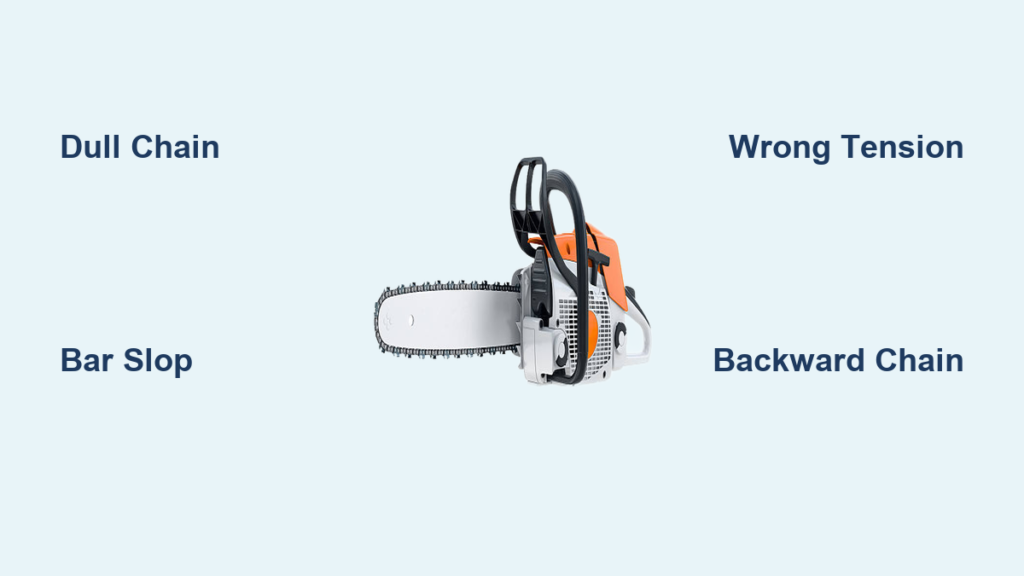
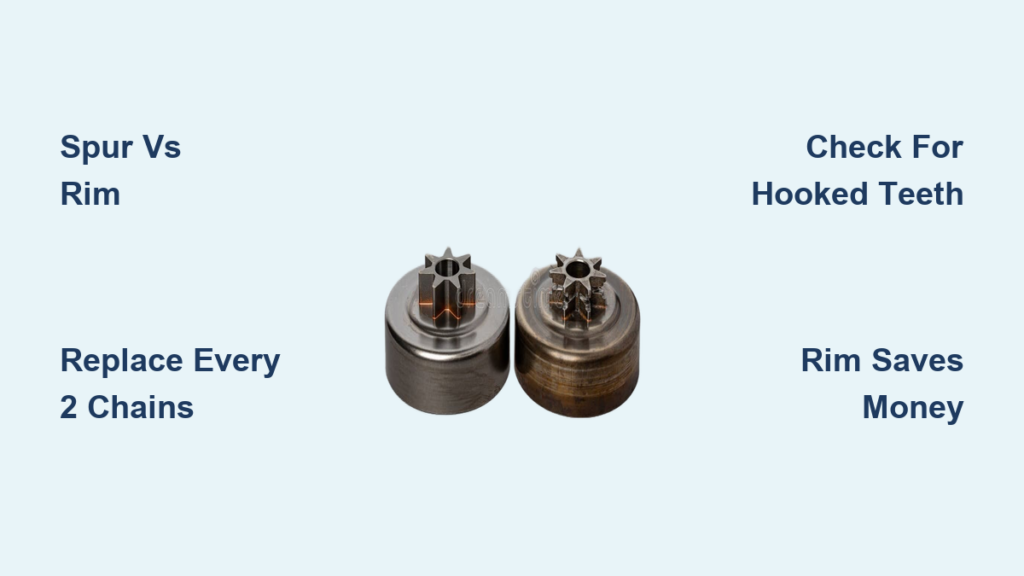
Your chainsaw chain jumps or the cut feels sluggish, and the culprit is often a worn drive sprocket. Many owners overlook this small gear, yet selecting the correct chainsaw sprocket types directly impacts cutting speed and safety.
This guide explains the difference between spur and rim designs to help you choose the right part. You will learn which option saves money, how to identify your current setup, and when to perform a replacement.
Spur vs Rim Sprocket Design Differences
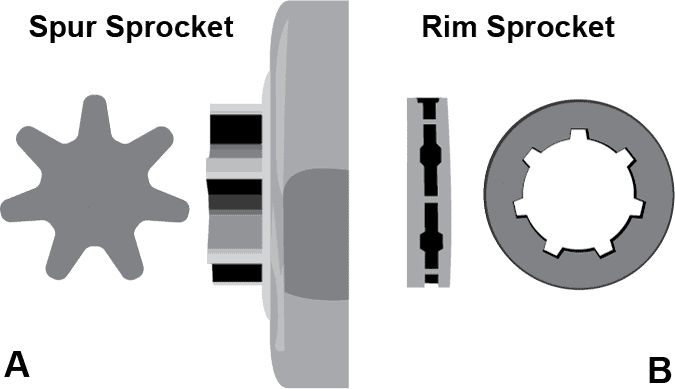
The core difference lies in how the gear connects to the clutch assembly. A spur sprocket integrates the gear teeth directly into the clutch cover as one solid piece. This monolithic design transfers power immediately but requires replacing the entire cover when teeth wear down.
A rim sprocket features a removable gear ring that floats on a splined hub. This modular approach allows you to swap only the gear ring while keeping the clutch cover intact. Understanding these structural differences helps you predict maintenance costs.
How a Spur Sprocket Works
A spur sprocket acts as a single unit where the star-shaped gear is molded or machined into the cover itself. The chain engages directly with these fixed teeth, usually numbering between six and eight points.
Because the gear cannot move independently, any misalignment in the bar groove transfers stress directly to the engine shaft. This design is common in entry-level saws or specific heavy-duty applications where simplicity is prioritized over serviceability.
How a Rim Sprocket Functions
The rim sprocket sits loosely on a splined hub, held in place by a washer and an E-clip. Power flows from the engine to the hub, which then rotates the free-floating gear ring.
This floating action allows the sprocket to self-align with the chain and bar groove. The separation of the gear ring from the cover means you can change pitch or tooth count without buying a new clutch assembly.
Why Rim Sprockets Offer Better Value
Most professional loggers and frequent users prefer rim sprockets for their economic and practical advantages. The ability to replace just the gear ring significantly reduces long-term ownership costs compared to replacing a full clutch cover.
Lower Replacement Costs
Replacing a worn spur sprocket forces you to buy a complete clutch cover assembly. In contrast, a rim sprocket replacement involves purchasing only the small gear ring.
- Rim Sprocket Cost: Typically $15 to $30 per unit.
- Spur Sprocket Cost: Often $80 to $150 for the full cover assembly.
- Savings: Over the life of the saw, rim users save hundreds of dollars.
Superior Chain Alignment
The free-floating nature of the rim design allows slight lateral movement. This flexibility helps the chain drivers align perfectly with the guide bar groove, even if the bar is slightly worn or dirty.
Better alignment reduces friction and heat buildup. It also minimizes the risk of the chain derailing during aggressive cutting or when working with uneven wood grain.
Enhanced Field Repair Capability
Carrying a spare rim sprocket takes up minimal space in a felling kit. If you damage a tooth or lose a piece of the gear in the woods, a five-minute swap gets you back to work.
Users with spur sprockets must carry a bulky clutch cover or face a trip back to the truck. The compact size of the rim gear makes it the superior choice for remote operations.
Adaptability to Different Bars
Rim sprockets adapt easily to different guide bar thicknesses and lengths. Since the gear ring floats, it accommodates slight variations in bar profile without binding.
Spur sprockets have a fixed wear groove that may not match a new or different bar. This mismatch can cause premature wear on both the bar and the chain.
When a Spur Sprocket Is the Right Choice
While rim sprockets dominate the market for general use, spur sprockets have specific niches where their rigid construction offers benefits. Knowing when to use a spur design prevents unnecessary upgrades.
Extreme Durability Requirements
The solid construction of a spur sprocket makes it incredibly robust. With no E-clips to pop out or floating parts to shift, it handles extreme torque loads without failure.
This makes them suitable for specialized machinery like firewood processors or stump grinders. In these high-vibration, continuous-load environments, the simplicity of the spur design reduces mechanical failure points.
Simplified Chain Installation
Installing a chain on a spur sprocket often requires less slackening of the tension. Since the gear is fixed, the chain does not need to lift over a raised rim edge.
This feature speeds up routine chain changes for users who prioritize speed over component cost. It eliminates the need to manipulate the E-clip during every chain swap.
Reduced Mechanical Complexity
Fewer parts mean fewer things can go wrong. There is no risk of losing the retaining washer or having the E-clip fail during operation.
For operators who prefer a “set it and forget it” approach, the monolithic nature of the spur sprocket provides peace of mind. It is an ideal setup for saws dedicated to a single task with minimal configuration changes.
Can You Switch from Spur to Rim?
Converting a saw from a spur setup to a rim setup depends entirely on the clutch cover design. You cannot simply swap the parts unless your specific model supports it.
Checking Hub Compatibility
A rim sprocket requires a splined hub to function. If your current clutch cover has the gear molded directly into it without a separate hub, you cannot install a rim sprocket.
Some manufacturers offer aftermarket clutch covers that convert spur-based saws to rim-based systems. Always verify compatibility with your specific make and model before purchasing parts.
Timing Your Upgrade
There is no need to replace a functioning spur sprocket immediately. Wait until the current unit wears out or the clutch cover needs replacement.
Optimal times to switch include:
* When the original clutch cover is damaged.
* During a major saw overhaul.
* When upgrading to a professional-grade bar and chain combo.
How to Identify Your Sprocket Type
Identifying your chainsaw sprocket types is a quick visual process that saves confusion when ordering parts. A simple inspection reveals whether you have a fixed or floating gear.
Visual Inspection Steps
- Remove the guide bar and chain from the saw.
- Look at the drive gear located behind the bar mount.
- Check for a central retaining clip or washer.
If you see an E-clip holding a separate disc in place, you have a rim sprocket. If the teeth are part of the large metal cover with no separate retaining clip, it is a spur sprocket.
The Removal Test
Try to wiggle the gear gently. A rim sprocket will have slight play and can be removed by taking out the E-clip. A spur sprocket is immovable without removing the entire clutch assembly.
Replacement Intervals and Wear Signs
Ignoring a worn sprocket accelerates wear on your expensive chain and guide bar. Proper maintenance ensures optimal performance and safety.
The Two-Chain Rule
A general best practice is to replace the drive sprocket every time you wear through two chains. A worn sprocket has hooked teeth that do not mesh correctly with a new chain.
Using a new chain on an old sprocket causes rapid stretching and potential breakage.同步 replacement ensures all components wear evenly.
Signs of Sprocket Wear
Inspect your sprocket regularly for the following indicators:
* Hooked Teeth: The tips of the teeth curve forward like a hook.
* Uneven Wear: One side of the teeth is more worn than the other.
* Chain Skipping: The chain jumps or slips under load.
* Excessive Vibration: The saw vibrates more than usual during cuts.
Does Sprocket Tooth Count Matter?
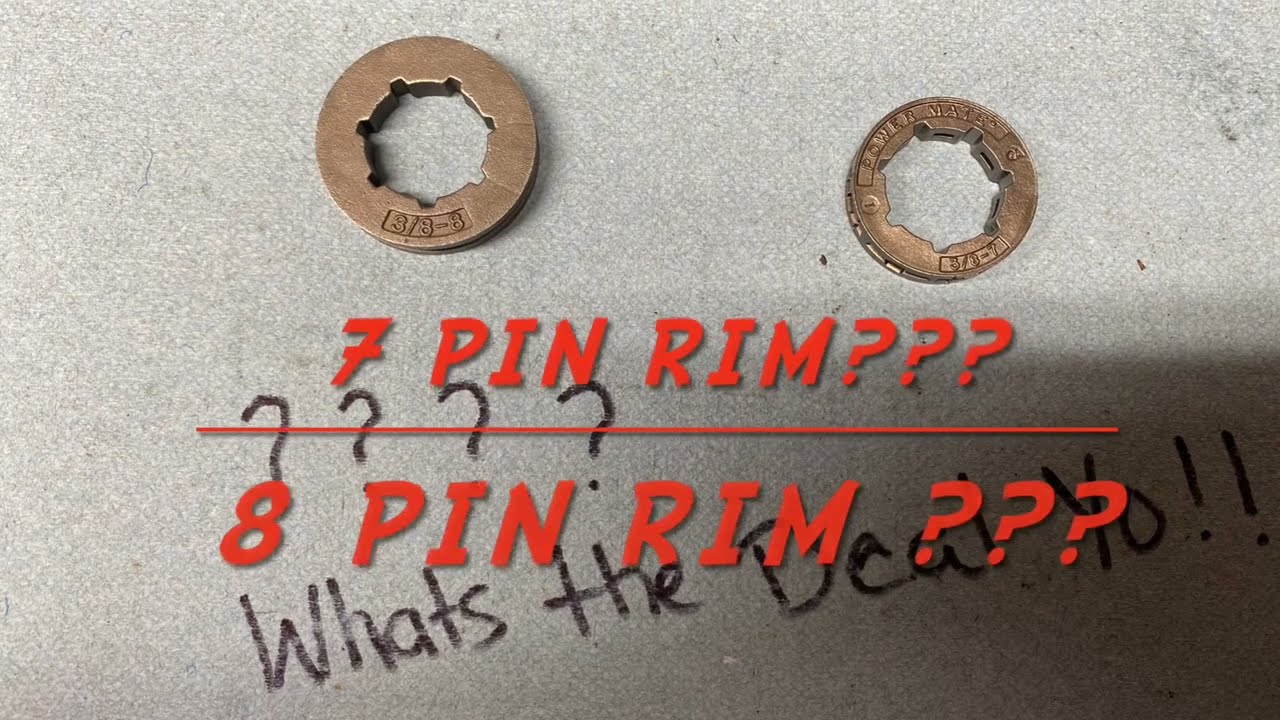
The number of teeth on your sprocket influences the speed and torque of your cut. Factory settings are usually optimal, but changes can benefit specific tasks.
Impact on Performance
A higher tooth count (7-8 teeth) increases chain speed, making it ideal for long bars and ripping logs. A lower count (5-6 teeth) provides more torque per tooth, which is better for short bars and pruning.
Expert Note: Changing tooth count alters the engine load. Stick to the factory recommendation unless you have a specific reason to modify performance.
Frequently Asked Questions About Chainsaw Sprocket Types
Can I put a rim sprocket on any chainsaw?
No, you can only install a rim sprocket if your chainsaw has a clutch cover with a splined hub. Most saws are designed for one type, though some aftermarket covers allow conversion.
How often should I replace my drive sprocket?
Replace the drive sprocket after wearing out two full chains. If you notice hooked teeth or chain skipping, replace it immediately to prevent damage to the new chain.
Why is my chain jumping off the bar?
Chain jumping often results from a worn sprocket with hooked teeth or misalignment. Check if your sprocket is worn out or if the bar groove is dirty and causing binding.
Which sprocket type is cheaper to maintain?
Rim sprockets are significantly cheaper to maintain because you only replace the gear ring. Spur sprockets require replacing the entire clutch cover assembly, which costs much more.
Does tooth count affect cutting speed?
Yes, a higher tooth count generally increases chain speed, while a lower count increases torque. Always consult your manual before changing the factory tooth count configuration.
Key Takeaways for Selecting Chainsaw Sprocket Types
Choosing the right chainsaw sprocket types balances cost, durability, and maintenance needs. Rim sprockets offer superior value for most users due to lower replacement costs and better alignment, while spur sprockets excel in extreme durability scenarios.
Regularly inspect your sprocket for hooked teeth and replace it every two chains to protect your investment. Identify your current setup today and plan your next maintenance interval to ensure safe, efficient cutting.