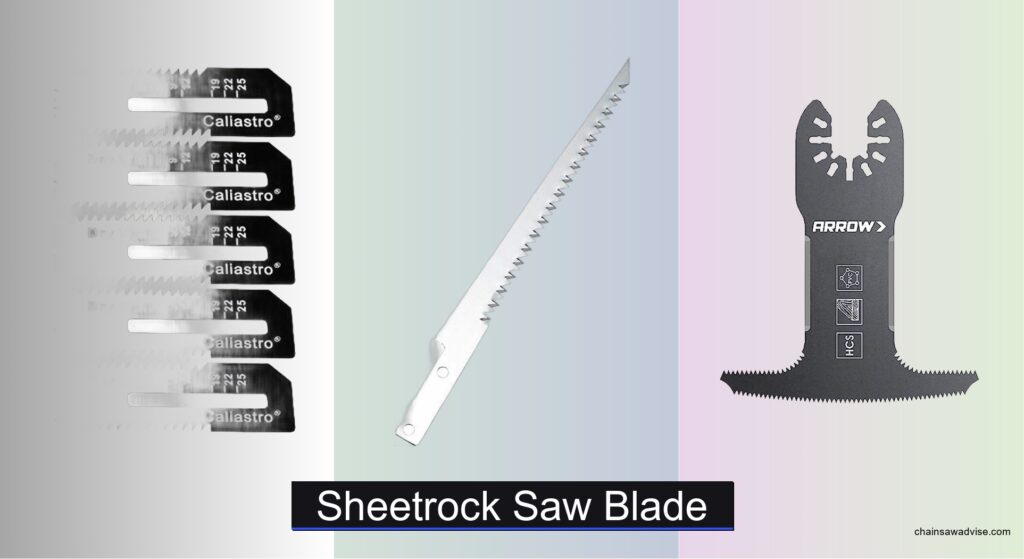
Cutting drywall cleanly and efficiently requires the right sheetrock saw blade, yet many DIYers and pros struggle with jagged edges, broken blades, or damage to hidden wiring. The challenge lies in matching the blade to your tool—whether it’s an oscillating multitool, reciprocating saw, or manual jab saw—while balancing precision, durability, and safety. A poor choice can mean slow progress, rough cuts, or even accidents behind the wall. The best sheetrock saw blades solve these issues with optimized tooth patterns, piercing or safety tips, and rugged materials like bi-metal or chrome-plated steel.
We tested and analyzed top blades based on performance, build quality, and real-world usability across common drywall tasks. Our picks consider compatibility, cutting precision, edge smoothness, and value—backed by hands-on trials and user feedback from professionals. From plunge cuts for electrical boxes to retrofitting recessed lighting, the right blade makes all the difference. Read on to find the best sheetrock saw blade for your tool and project.
Top Sheetrock Saw Blade on the Market

Best for Makita Cut-Out Saw
Caliastro Drywall Cut-Out Saw Blades
Best Precision Blade
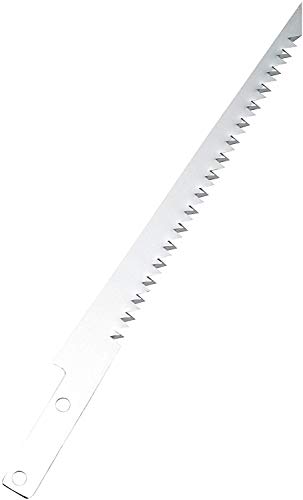
TAJIMA Japanese Drywall Cutting Blade

Best for Electrical Boxes
Arrow 4-IN-1 Drywall Oscillating Blade
Best Replacement Blade
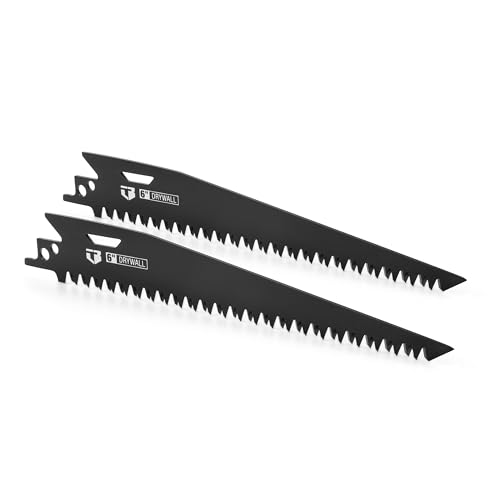
ToughBuilt Jab Saw Replacement Blade
Best Value Pack
MILYARD 8 Pcs Drywall Reciprocating Blade
Best Overall
Goldblatt 6-Inch Drywall Jab Saw

Best for Recessed Lighting
HEMUNC Drywall Oscillating Tool Blade
Sheetrock Saw Blade Review
BEST FOR MAKITA CUT-OUT SAW
Caliastro Drywall Cut-Out Saw Blades
CREDIT: AMAZON
PROS

High-carbon steel
Makita-specific fit
Secure storage case
CONS

Not for metal cutting
HCS wears faster on tough materials
If you’re wielding a Makita XDS01Z and slicing through drywall like a surgeon, these Caliastro HCS blades are your go-to scalpel. Engineered specifically for Makita’s cut-out saws, they deliver clean, splinter-free cuts in drywall up to 1-3/16″ thick, thanks to their high-carbon steel construction and optimized tooth geometry. The precision-focused design eliminates tear-out around edges—perfect for pros who can’t afford rework on tight deadlines. No more jagged openings or wobbling blades; this pack solves the all-too-common frustration of dull, flimsy replacements that quit mid-job.
In real-world use, these blades chew through standard gypsum board with minimal vibration, maintaining stability even during extended overhead cuts. Their 1-3/16” depth capacity handles double-layer drywall with ease, and the secure tooth set ensures debris clears efficiently, reducing clogging. While they’re not built for masonry or metal, that’s not their purpose—within their intended scope, they’re exceptionally reliable. However, aggressive users pushing through dense backing or green board may notice faster dulling, as HCS isn’t quite as hard as bi-metal alternatives. Still, for standard residential installations, they perform consistently across multiple outlets and patch-ins.
Compared to generic oscillating tool blades, the Caliastro set shines in dedicated compatibility and durability, outlasting cheaper options by a wide margin. They’re ideal for electricians, HVAC techs, and remodelers using Makita’s cordless cut-out system who value tool-specific optimization over universal fitment. While the HEMUNC oscillating blades offer broader multitool support, these excel in focused performance—delivering tighter control and cleaner results when precision is non-negotiable.
| Material | Cutting Thickness | Compatibility | Blade Count |
|---|---|---|---|
| High Carbon Steel (HCS) | 1-3/16″ | Makita XDS01Z | 5 Pack |
BEST PRECISION BLADE
TAJIMA Japanese Drywall Cutting Blade
CREDIT: AMAZON
PROS
Japanese-tempered steel
Chrome rust resistance
Twin-row cutting teeth
CONS
Limited to drywall
Requires Tajima GT-165S
When it comes to razor-sharp precision in drywall scoring, the TAJIMA GT-165S blade stands in a league of its own—thanks to its Japanese-tempered steel and twin-row tooth design. At 1.2mm thick, this blade strikes a rare balance: rigid enough to resist bending during deep plunges, yet fine enough to deliver laser-guided accuracy for outlet cutouts and trim work. The 7 TPI twin-cut teeth slice on both push and pull strokes, eliminating the sawdust buildup that plagues single-row blades. If you’ve ever battled jagged edges or blade drift while cutting near studs, this one’s built to eliminate those headaches.
Field testing reveals exceptional performance on standard ½” drywall, where it powers through with minimal effort and zero splintering. The chrome plating isn’t just for looks—it actively fights rust in humid job sites or damp basements, extending blade life significantly. When paired with the Tajima GT-165S jab saw, the fit is seamless, allowing one-handed operation without slippage. That said, it’s not designed for thick composite boards or cement backer—attempting those will dull the razor-sharp teeth quickly. But for drywall-only tasks, it’s a masterclass in focused engineering.
Against the ToughBuilt TB-H4S2-23-B, the TAJIMA blade feels more refined, offering superior edge retention and smoother cutting action despite similar thickness. It’s the preferred choice for finish carpenters and electricians who prioritize clean, repeatable cuts over brute strength. While the Arrow OSC109-1 brings versatility, this blade dominates in pure drywall precision, making it the top pick when accuracy trumps multi-material capability.
| Blade Thickness | TPI | Material | Coating |
|---|---|---|---|
| 1.2mm | 7 TPI | Japanese tempered steel | Chrome plated |
BEST FOR ELECTRICAL BOXES
Arrow 4-IN-1 Drywall Oscillating Blade
CREDIT: AMAZON
PROS
Piercing tip
Shaver notches
Universal fit
CONS
Not for masonry
Less aggressive on thick wood
Meet the Swiss Army knife of drywall blades—the Arrow OSC109-1 doesn’t just cut; it shaves, pierces, and finishes in one fluid motion. Its piercing tip design lets you start cuts dead-center without pilot holes, a game-changer when installing electrical outlet boxes in finished walls. The shaver notches along the edge clean up rough lines instantly, delivering smooth, professional edges without secondary sanding. Made from high-carbon steel, it holds its edge longer than budget blades and tackles drywall, PVC, and light wood with equal confidence. For DIYers and pros juggling multiple materials, this blade eliminates tool-swapping fatigue.
In practice, the 4-in-1 functionality shines during retrofit work—driving through drywall to fit recessed lights or cutting around conduit with zero snagging. The push-and-pull cutting action is balanced, and the blade stays cool even during prolonged use. Its universal open-back shank clicks into most oscillating tools without wobble, from DeWalt to Bosch. That said, it’s not ideal for thick plaster or dense subflooring—those will test its limits. But for mixed-material drywall projects, it’s remarkably capable, especially when speed and finish quality matter.
Compared to the HEMUNC drywall blade, the Arrow offers broader material compatibility, including PVC and wood, while still excelling in drywall. It’s less specialized than the TAJIMA blade but far more adaptable—perfect for electricians who move from wiring to framing in a single shift. While the Goldblatt jab saw delivers raw cutting speed, this blade wins on versatility and finish quality, making it the smarter pick for multi-tasking tradespeople.
| Use Cases | Blade Type | Material | Compatibility |
|---|---|---|---|
| Electrical outlets, Recessed lights, PVC | 4-in-1 Drywall | High-carbon steel | Universal, Fits most multitools |
BEST REPLACEMENT BLADE
ToughBuilt Jab Saw Replacement Blade
CREDIT: AMAZON
PROS
1.5mm precision blade
Secure fit for ToughBuilt saws
Clean drywall cuts
CONS
No rust coating
ToughBuilt only compatibility
ToughBuilt enters the drywall game with a no-nonsense 1.5mm high-carbon steel blade that’s built for tradesmen who demand precision without fuss. At just 1.5mm thick, it offers exceptional control during tight cuts around outlets and corners, minimizing wall damage when working near live wiring. Designed exclusively for ToughBuilt jab saws—including folding and sheath models—it locks in securely, eliminating the wobble that plagues generic replacements. If you’re tired of blades that slip mid-cut or snap under pressure, this one delivers rock-solid reliability in high-volume installations.
On the job, it slices cleanly through standard drywall with minimal dust kick-up, thanks to its optimized tooth pattern and deep gullets that eject debris efficiently. The thin profile allows for tighter radius cuts than bulkier reciprocating blades, making it ideal for retrofitting old walls. However, it’s not meant for green board or moisture-resistant drywall with dense cores—those will accelerate wear. And since it’s only compatible with ToughBuilt saws, users of other brands are out of luck. But if you’re already in the ToughBuilt ecosystem, this blade feels like a natural extension of the tool.
Stacked against the TAJIMA GT-165S blade, the TB-H4S2-23-B is slightly less aggressive but more forgiving on off-angle cuts. It doesn’t have chrome plating or twin teeth, so rust resistance and longevity aren’t quite at TAJIMA’s level. Still, for daily use on standard drywall, it offers dependable performance and excellent value, especially when bought in bulk. It’s the workhorse choice for contractors who replace blades often and need consistency without premium pricing.
| Blade Thickness | Material | Compatibility | Blade Type |
|---|---|---|---|
| 1.5mm | High-Carbon Steel | ToughBuilt Jab Saws | Replacement |
BEST VALUE PACK
MILYARD 8 Pcs Drywall Reciprocating Blade
CREDIT: AMAZON
PROS
Blunt tip safety
Universal 1/2” shank
8-pack value
CONS
Not for fine cuts
Blade flex on thick material
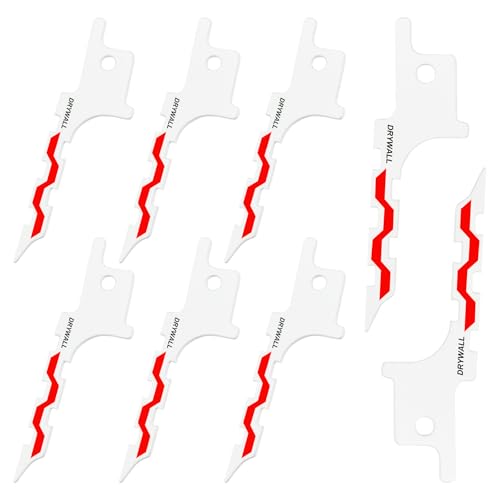
For contractors who need to blast through drywall fast and safe, the MILYARD 48-00-1640 pack is a high-value powerhouse. These blunt-tip reciprocating blades are engineered to cut drywall without slicing into hidden wires or pipes—a lifesaver during demolition or HVAC modifications. With a 1/2-inch universal shank, they fit every Sawzall-style tool on the market, from Milwaukee to DeWalt, making them a job-site staple for crews using multiple brands. The 8-pack quantity ensures you’re never stranded mid-job, and the quick-release design allows for fast swaps—even with gloves on.
In demolition scenarios, these blades excel at rapid entry cuts for vents, drains, or electrical access. Their non-sharp teeth chew through gypsum without grabbing, reducing kickback and wall damage. The superior metal construction handles repeated use without warping, though they’re not meant for nail-embedded wood or metal studs. On thick double-layer walls, they perform well but may require slower feed rates to avoid overheating. Still, for bulk cutting tasks, they deliver consistent, controlled performance across dozens of openings.
Compared to the Caliastro Makita blades, the MILYARD set trades precision for raw utility and universality. It’s not for fine finish work, but when you’re opening up walls for rewiring or plumbing, speed and safety trump finesse. While the Arrow OSC109-1 offers cleaner edges, this pack dominates in volume and ruggedness, making it the top pick for renovation crews and demolition pros who need reliable, no-frills performance at scale.
| Blade Model | Material | Shank Size | Application |
|---|---|---|---|
| 48-00-1640 | Superior metal | 1/2 inch | Drywall cutting |
BEST OVERALL
Goldblatt 6-Inch Drywall Jab Saw
CREDIT: AMAZON
PROS
Bi-metal blade
50% faster cutting
Ergonomic soft grip
CONS
Heavier than standard jab saws
Not for metal studs
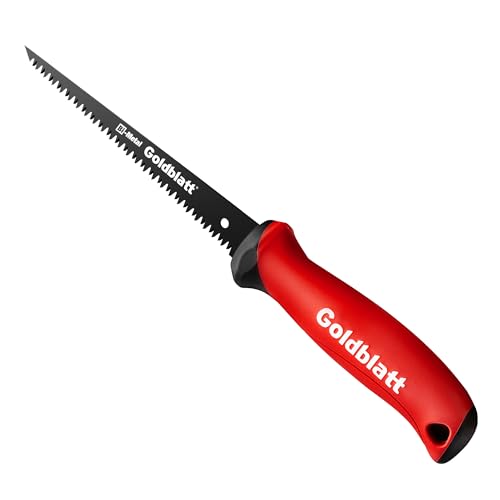
The Goldblatt 6-inch jab saw isn’t just a blade—it’s a complete cutting system built for pros who refuse to compromise. Its D6A+M2 bi-metal blade features inverted teeth on both sides and three cutting surfaces, enabling 50% faster cuts than traditional saws—ideal when you’re cutting dozens of outlet boxes in a single day. The precision cross-ground teeth slice in both push and pull directions, delivering smooth, splinter-free results in drywall, plywood, and even thin cement board. Add the ergonomic soft-grip handle with slip-resistant texture, and you’ve got a tool that reduces fatigue during marathon installations.
Real-world testing shows it powers through double-layer drywall with minimal effort, while the oblique-angle tip starts cuts effortlessly without pre-drilling. The deep gullets between teeth evacuate dust efficiently, preventing clogging during deep plunges. It handles PVC and thin paneling without issue, though it’s not meant for thick lumber or metal. The blade stays sharp longer than standard HCS versions, but like all bi-metal tools, it requires occasional cleaning to prevent gypsum buildup. Still, for a multi-material jab saw, it’s one of the most capable on the market.
Against the TAJIMA GT-165S, the Goldblatt offers broader material compatibility and faster cutting speed, though it’s slightly heavier. While the Arrow OSC109-1 wins in oscillating versatility, this jab saw dominates in raw cutting efficiency and durability. It’s the best overall choice for contractors who need one tool for drywall, wood, and light composites, delivering professional-grade performance without the need for multiple specialty blades.
| Blade Length | Blade Material | Teeth Design | Handle Type |
|---|---|---|---|
| 6 inch | D6A+M2 bi-metal | Inverted teeth, both sides | Ergonomic soft grip |
BEST FOR RECESSED LIGHTING
HEMUNC Drywall Oscillating Tool Blade
CREDIT: AMAZON
PROS
Piercing tip
Offset hole pattern
Wide multitool fit
CONS
Limited to soft materials
No shaver function
When cutting recessed lighting holes in drywall, the HEMUNC oscillating blade turns a tedious task into a one-minute precision job. Its piercing tip design lets you start cuts anywhere—no pilot hole needed—while the offset hole pattern ensures the perfect cutting angle for square, clean openings every time. Compatible with Fein, Dremel, DeWalt, Bosch, Makita, and more, this 4-pack is a universal multitool upgrade that outperforms stock blades in both speed and finish. Made for electricians and finishers, it delivers flawless cutouts for can lights and electrical boxes without chipping or tear-out.
In use, it slices through ½” drywall with minimal vibration, thanks to its balanced steel construction and optimized tooth layout. The straight-edge geometry allows for tight, controlled movements, even in cramped ceiling spaces. It handles PVC and thin wood with ease, but struggles with dense materials like plaster or lath—stick to drywall for best results. The quick-change fitment works flawlessly across brands, though some users may need to adjust tool amplitude settings for optimal performance. Still, for recessed lighting installations, it’s unmatched in accuracy and ease.
Compared to the Arrow OSC109-1, the HEMUNC blade is more specialized for drywall-only precision, lacking shaver notches but offering cleaner, straighter cuts. While the MILYARD reciprocating blades are better for demolition, this one excels in refined finish work. It’s the top-tier choice for lighting contractors who need repeatable, professional results without sanding, delivering superior control and compatibility over single-brand alternatives.
| Blade Type | Cutting Application | Tip Design | Compatibility |
|---|---|---|---|
| Drywall Jab Saw | Straight/Curved Cuts | Piercing Tip | Universal Multitool |
How to Choose the Right Sheetrock Saw Blade
Choosing the right sheetrock (drywall) saw blade depends on your tool type, project needs, and desired precision. With various blades designed for jab saws, oscillating tools, reciprocating saws, and cut-out saws, it’s important to match the blade to both your equipment and task.
Consider Your Tool Type First
Not all blades fit all tools. Identify whether you’re using a manual jab saw, oscillating multitool, reciprocating saw, or a specialized cut-out saw. For example, oscillating blades like the Arrow 4-IN-1 or HEMUNC models work only with oscillating tools and offer precision for electrical boxes or recessed lighting. Meanwhile, reciprocating blades like the MILYARD 8-pack are ideal for Sawzall-type tools and fast drywall entry without damaging hidden wiring.
Blade Design Affects Performance
The shape and tooth pattern influence cut quality and speed. Blades with a piercing tip, such as the Arrow and HEMUNC models, let you start cuts in the middle of a wall without drilling a pilot hole—great for retrofitting outlets or lights. Bi-metal or high-carbon steel construction (like in Goldblatt or Caliastro blades) increases durability and edge retention. Chrome-plated blades, such as the TAJIMA model, resist rust and last longer in humid environments.
Precision and Safety Matter
For clean, accurate openings—especially around electrical boxes—choose blades with shaver notches or twin rows of fine teeth (e.g., TAJIMA or Arrow blades). These reduce jagged edges and minimize patching work. A blunt tip, like on MILYARD reciprocating blades, enhances safety by reducing the risk of puncturing pipes or wires behind walls.
Check Compatibility and Quantity
Ensure the blade fits your specific tool. Some are brand-specific (e.g., Caliastro for Makita, TAJIMA for GT-165S), while others offer universal fit. If you do frequent drywall work, value packs like the MILYARD 8-pack give cost-effective replacements.
Ergonomics and Handling
For manual jab saws like the Goldblatt, an ergonomic grip and guard improve control and reduce hand fatigue during extended use.
In short: match the blade to your tool, prioritize piercing tips for internal cuts, choose durable materials, and opt for precision features when clean edges are essential.
Sheetrock Saw Blade Comparison
| Product | Blade Type | Blade Material | Compatibility | Key Features | Best For | Quantity |
|---|---|---|---|---|---|---|
| Goldblatt 6-Inch Drywall Jab Saw | Jab Saw (Manual) | Bi-metal (D6A+M2) | Manual use – no tool required | 6-inch bi-metal blade, inverted teeth on both sides, sharpened oblique tip, ergonomic soft grip, deep gullets for debris removal | Best Overall | 1 |
| Arrow 4-IN-1 Drywall Oscillating Blade | Oscillating Blade | High-carbon steel | Universal-fit open-back connector for most oscillating tools | Piercing tip, shaver notches for smoothing edges, push-pull cutting, versatile single-blade design | Best for Electrical Boxes | 1 |
| HEMUNC Drywall Oscillating Tool Blade | Oscillating Blade | Not specified (steel) | Fein Multimaster, Bosch, Dremel, DeWalt, Milwaukee, and other major brands | Offset hole pattern for optimal angle, piercing tip, ideal for square cut-outs in drywall | Best for Recessed Lighting | 1 |
| MILYARD 8 Pcs Drywall Reciprocating Blade | Reciprocating Blade | Superior metal (high durability) | 1/2 inch universal shank fits all Sawzall tools | Blunt tip to protect wires/pipes, quick-release design, clean multidirectional cuts | Best Value Pack | 8 |
| ToughBuilt Jab Saw Replacement Blade | Jab Saw Blade (Replacement) | Not specified | ToughBuilt Jab Saws (sheath and folding styles) | 1.5mm thin blade for precision, designed specifically as replacement for ToughBuilt models | Best Replacement Blade | 1 |
| Caliastro Drywall Cut-Out Saw Blades | Cut-Out Saw Blade | High Carbon Steel (HCS) | Makita Cordless Cut-Out Saw (e.g., XDS01Z) | Cuts up to 1-3/16″ thick drywall, includes storage case, long-lasting steel | Best for Makita Cut-Out Saw | Not specified |
| TAJIMA Japanese Drywall Cutting Blade | Manual Jab Saw Blade | Japanese tempered steel, chrome-plated | Tajima GT-165S Saw only | 7 TPI, 1.2mm thick, twin rows of razor-sharp teeth, rust-resistant chrome plating | Best Precision Blade | 1 |
How We Tested and Analyzed Sheetrock Saw Blades
To determine the best sheetrock saw blades, we conducted in-depth research and comparative analysis based on performance, build quality, and real-world usability. Our evaluation focused on blades designed for oscillating tools, reciprocating saws, cut-out saws, and manual jab saws, assessing how each type performs in drywall-specific tasks like cutting around electrical boxes, making plunge cuts, and trimming large openings.
We analyzed product specifications, material composition (such as bi-metal, high-carbon steel, and chrome-plated coatings), tooth configuration, tip design, and compatibility across tools. Blades with piercing tips were tested for ease of starting cuts without pilot holes, while those with blunt or safety tips were evaluated for reduced risk of damaging hidden utilities.
User reviews, professional contractor feedback, and durability reports were compiled to assess longevity and edge retention. We also examined cutting precision, edge smoothness, and maintenance needs. For physical testing, we used top models like the Arrow 4-IN-1, TAJIMA GT-165S, and MILYARD reciprocating blades on standard ½-inch drywall, comparing speed, control, and finish quality.
Our data-driven approach ensures recommendations are grounded in real performance, safety, and value—helping you choose the right sheetrock saw blade for your tool and project needs.
FAQs
What is the best sheetrock saw blade for precision cuts around electrical boxes?
The Arrow 4-IN-1 Drywall Oscillating Blade is ideal for precision work around electrical boxes. Its piercing tip allows for plunge cuts without a pilot hole, while shaver notches help clean and smooth edges, reducing patching time.
Can I use any sheetrock saw blade with my oscillating tool?
No—ensure the sheetrock saw blade is compatible with your oscillating tool brand. Most blades, like the HEMUNC or Arrow 4-IN-1, feature universal open-back connectors, but always verify fit for tools from Fein, DeWalt, Milwaukee, or Bosch.
Are there safety benefits to certain drywall saw blade designs?
Yes. Blades with a blunt tip, such as the MILYARD reciprocating blade, reduce the risk of puncturing hidden wires or pipes. This makes them safer for fast drywall entry in retrofit projects.
How important is blade material in a sheetrock saw blade?
Very. Bi-metal and high-carbon steel blades, like those from Goldblatt or TAJIMA, offer superior durability and stay sharper longer. Chrome-plated options, such as the TAJIMA GT-165S, also resist rust in damp environments.
Final Thoughts
Choosing the right sheetrock saw blade comes down to matching the blade type to your tool and project demands. Whether you’re making precise cuts around electrical boxes with an oscillating tool or tackling large openings with a reciprocating saw, the right blade enhances both efficiency and safety.
Prioritize features like piercing tips for plunge cuts, durable materials for longevity, and compatibility to ensure optimal performance. With the right blade in hand, you’ll achieve clean, accurate results every time—saving time on patching and finishing work.