Choosing the right chainsaw bar length directly impacts your saw’s performance, safety, and lifespan. The bar length determines the maximum diameter you can cut in a single pass, typically about 2 inches less than the bar length itself. Using a bar too long for your saw’s engine power causes stalling, overheating, and premature wear, while a bar that’s too short limits your cutting capability. This comprehensive chainsaw bar length chart provides exact specifications for matching bar size to engine displacement, ensuring optimal results for every task from pruning to professional logging.
This guide covers engine-to-bar length recommendations from 25cc up to 116cc+ saws, measurement techniques, chain compatibility rules, and maintenance tips from leading manufacturers like Cannon Bar Works, Husqvarna, and Oregon. Whether you’re replacing a worn bar, upgrading for larger jobs, or purchasing your first chainsaw, you’ll find everything needed to make an informed decision.
Engine Size to Bar Length Guide
.png)
Matching bar length to your chainsaw’s engine displacement ensures peak efficiency and prevents mechanical damage. The following chart provides general recommendations for selecting the appropriate bar size based on cubic centimeter ratings.
25cc and Under: 10 to 12 Inch Bars
Saws under 25cc are typically electric or small cordless models designed for light-duty tasks. Use 10 to 12 inch bars to avoid overloading the motor. These bars are ideal for pruning, trimming branches, and small yard jobs. A longer bar will strain the motor and significantly reduce chain speed, potentially causing damage over time.
26 to 35cc: 12 to 16 Inch Bars
Mid-size homeowner saws in this range handle light firewood cutting and storm cleanup. A 12 to 16 inch bar offers the best balance of reach and control. Avoid exceeding 16 inches unless your owner’s manual explicitly allows it, as this can stress the engine and reduce the saw’s operational lifespan.
36 to 45cc: 14 to 20 Inch Bars
This range represents the sweet spot for general-purpose gas saws. A 16 to 18 inch bar is standard for cutting firewood and felling medium trees up to 16 inches in diameter. Always ensure the chain and sprocket match the bar’s pitch and gauge specifications for proper operation.
46 to 60cc: 16 to 24 Inch Bars
Powerful homeowner or entry-level professional saws in this class thrive with 18 to 20 inch bars. These handle large logs and routine tree felling effectively. Some models support up to 24 inches for heavy-duty jobs, but you must verify OEM specifications first to avoid voiding your warranty or causing mechanical failure.
60 to 75cc: 18 to 28 Inch Bars
Professionals and serious users with high-torque saws can safely use 20 to 24 inch bars. This range is ideal for forest clearing and large timber work. Bars up to 28 inches are possible but require excellent cutting technique and consistent maintenance to prevent binding and overheating.
76 to 90cc: 20 to 32 Inch Bars
High-output saws in this class power 24 to 30 inch bars for commercial logging and big-tree felling. Chain drive and oiling systems must be robust to handle the increased stress. Always stick to manufacturer-recommended limits to prevent clutch or bar damage during extended use.
91 to 100cc: 24 to 36 Inch Bars
These heavy-duty saws support 28 to 36 inch bars for large-scale felling and milling preparation. Use only with professional-grade chains and bars designed for high-stress applications. Kickback risk increases significantly with longer bars, making full protective gear absolutely essential.
100 to 115cc: 26 to 50 Inch Bars
Industrial saws in this range can run 36 to 50 inch bars for firewood processors or storm cleanup operations. This setup requires extreme caution and precise chain tension adjustment. Only experienced users with proper training should attempt these configurations.
116cc and Larger: 28 to 84 Inch Bars
Saw models like the Husqvarna 3120 or Echo CS-1300 support 50 to 84 inch bars for competitive cutting or milling applications. These are specialty setups with extremely high kickback and mechanical stress. Use only OEM-approved configurations and wear complete protective equipment.
Pro Tip: Always check your owner’s manual before upgrading bar length. Exceeding manufacturer recommendations can void your warranty and cause serious damage to the clutch, sprocket, or engine.
How to Measure Chainsaw Bar Length
Getting the correct replacement size requires a simple measurement technique. Follow these steps to determine your exact bar length for accurate replacement ordering.
Step-by-Step Measurement Process
Remove the bar from your chainsaw for the most accurate measurement. Lay the bar flat on a stable work bench with the nose pointing upward. Measure from the mounting end, where the bar inserts into the saw housing, directly to the tip of the nose. Round this measurement up to the nearest even inch to determine the standard bar size.
For example, a measurement of 16.3 inches rounds up to an 18-inch bar, while 19.1 inches becomes a 20-inch bar. This rounded value represents the standardized size used in all sales and specifications.
Quick Identification Methods
Many bars have the size stamped directly on the bar tail near the mounting location. Look for numbers like “16” or “18” embossed in the steel. If markings are worn, count the drive links on your current chain, as the number correlates directly with bar length and pitch specifications.
Bar Length by Use Case

Matching bar length to your specific application ensures the best results. Different jobs require different capabilities, and selecting appropriately improves both safety and efficiency.
10 to 12 Inch: Pruning and Light Trimming
Best for electric or 25cc cordless saws, these short bars cut branches up to 8 inches in diameter. They’re lightweight and easy to control, making them ideal for overhead work and hedge trimming. Common chain specifications include 3/8″ Low Profile pitch with 0.043″ to 0.050″ gauge and 44 to 49 drive links.
14 Inch: Yard Work and Small Firewood
Perfect for 40 to 50cc saws, the 14-inch bar handles storm debris and logs up to 12 inches in diameter. This size offers compact maneuverability and works great for beginners learning proper cutting techniques. Chain specs typically include 3/8″ LP pitch, 0.050″ gauge, and 52 to 56 drive links.
16 Inch: General-Purpose Homeowner Use
The most common bar size works well with 45 to 55cc saws and cuts logs up to 16 inches in diameter. This length provides balanced weight and reach for firewood preparation and moderate tree felling. Chain options include 0.325″ or 3/8″ pitch with 0.050″ gauge and 56 to 60 drive links.
18 Inch: Tree Felling and Property Clearing
Standard on many prosumer saws with 55 to 65cc engines, this bar fells trees up to 20 inches in diameter. The increased length requires good technique due to higher weight and leverage. Chain specifications typically include 0.325″ or 3/8″ pitch with 0.050″ or 0.063″ gauge and 62 to 72 drive links.
20 Inch: Heavy-Duty Cutting
Designed for 60cc and larger saws, the 20-inch bar handles large logs and storm cleanup effectively. Best reserved for experienced users, as it can be fatiguing during overhead cutting positions. Chain options include 0.325″ or 3/8″ pitch with 0.050″ to 0.063″ gauge and 70 to 78 drive links.
24 Inches and Larger: Professional Logging and Milling
Used with 70cc and larger saws, these bars cut timber over 24 inches in diameter. Common in forestry and Alaskan mill setups, they require high-torque engines and heavy-duty chains. Chain specs typically include 3/8″ pitch, 0.063″ gauge, and 80 or more drive links.
Note: Maximum cut diameter equals bar length minus 2 inches due to the bar insertion depth within the saw housing.
Chain and Bar Compatibility Rules
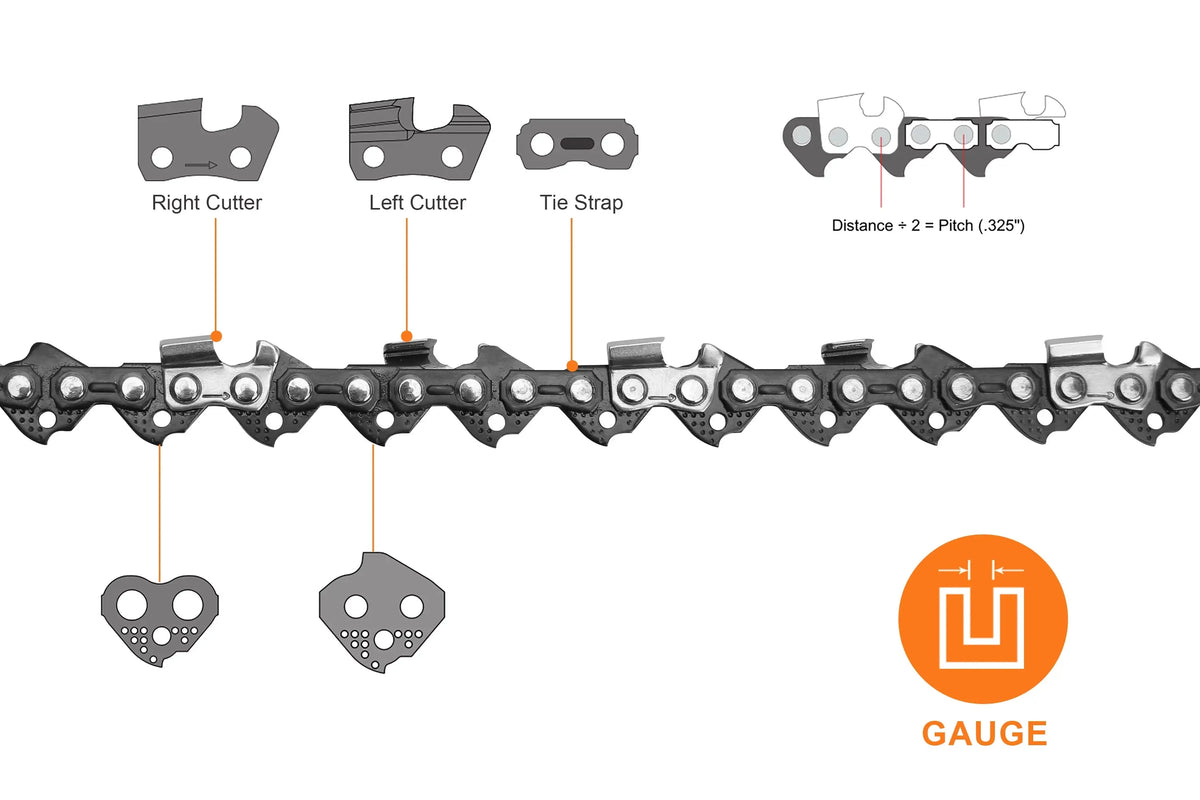
Your chain must match the bar in three critical specifications. Failing to match these dimensions causes poor tracking, excessive wear, and potential chain derailment during operation.
Pitch: Matching Rivet Spacing
Pitch is half the distance between three consecutive rivets on the chain. Common pitch types include 3/8″ Low Profile for light chainsaws under 50cc, 0.325″ for a balance of speed and durability, 3/8″ Standard for heavy-duty professional use, and .404″ for aggressive cutting with high kickback risk. Mismatched pitch causes poor tracking and accelerated sprocket wear.
Gauge: Link Thickness Matters
Gauge is the thickness of the drive links that fit into the bar groove. It must match the bar groove exactly to prevent wobble and derailment. Common gauge sizes include 0.043″ for mini bars and small electric saws, 0.050″ for most common applications with 14 to 20 inch bars, 0.058″ for older or industrial bars, and 0.063″ for heavy-duty large bars over 24 inches.
Drive Link Count: Size-Specific Numbers
The number of drive links depends on both bar length and pitch. A 16-inch bar typically requires 56 to 60 links, while a 20-inch bar needs 70 to 78 links. Always count your existing chain’s drive links when ordering a replacement to ensure proper fit.
Bar Materials: Full Steel vs Laminated
Choosing between full steel and laminated bars depends on your primary use case, weight preferences, and durability requirements. Each material offers distinct advantages for different applications.
Full Steel Bars
Full steel bars offer superior durability and heat resistance, making them ideal for milling, heavy felling, and industrial use. They withstand dropped impacts better than laminated options and maintain structural integrity over many hours of hard use. The main drawback is increased weight, which causes faster user fatigue during extended cutting sessions. Cannon Full Steel Bars represent the professional standard for demanding applications.
Laminated Lightweight Bars
Laminated bars use steel outer layers with a lightweight core to reduce overall weight. They’re easier to handle and cause less user strain during all-day use, making them popular among arborists and anyone doing extended cutting. The trade-off is slightly less impact resistance if dropped. Oregon PowerCut and AdvanceCut lines offer excellent lightweight options for professional and homeowner use alike.
Oregon Bar and Chain Combos by Length
Oregon offers pre-matched bar and chain combinations optimized for reliable performance. Understanding available options helps you select the right setup for your needs.
12 to 14 Inch: Light-Duty Use
Oregon provides chains S45, S49, and S52 for this range. Common specifications include 3/8″ LP pitch, 0.050″ gauge, and 45 to 52 drive links. These combinations work well for electric saws and small gas units.
16 Inch: Most Popular Size
With 21 combinations available, the 16-inch bar offers the best selection. Chain options include D59, D60, S54, and S56 with 54 to 60 drive links. Pitch options include 0.325″ and 3/8″ with 0.050″ gauge. This size represents the most versatile option for general firewood cutting and moderate property work.
18 to 20 Inch: Prosumer Choice
Both 18-inch and 20-inch bars offer 17 combinations each. Available chains include H72, D66, D70, and E72 with 60 to 72 drive links. Pitch options include 0.325″ and 3/8″ with gauge options of 0.050″ or 0.063″ for heavy-duty applications.
Safety Note: 54 of 66 Oregon bar and chain combinations are Low Kickback rated and ANSI compliant, making them ideal choices for homeowners and novice operators.
Professional Bar Brands and Features
Cannon Bar Works has handcrafted professional-grade bars in Canada since 1955, earning a reputation for exceptional durability and performance. Their bars feature laser-cut precision to minimize warping, replaceable nose tips to extend bar life, and both full steel and laminated options for any job requirement. Cross-compatibility guides help users find fits for Stihl, Husqvarna, Echo, and other major brands.
Specialized Bar Types
Beyond standard lengths, niche applications require specialized bar designs for optimal performance.
Carving Bars
Short precision bars ranging from 6 to 12 inches enable detailed artistic wood carving. Cannon and other manufacturers offer custom lengths for these specialized applications.
Double-Ended Milling Bars
Used with Alaskan mill attachments, these bars provide extended cutting depth for lumber production. They support 24 to 50 inch configurations for professional milling operations.
Rescue and Carpenter Bars
Rescue bars typically run 12 to 16 inches for emergency extrication work. Carpenter bars feature narrow profiles suited for overhead and detail work where precision matters more than speed.
Firewood Processing Bars
Reinforced rails withstand repeated splitting and high-wear scenarios common in firewood production operations.
Maintaining Your Bar for Long Life
Proper care prevents warping, uneven wear, and premature replacement. Regular maintenance significantly extends bar service life and maintains cutting accuracy.
Clean the Groove Regularly
After each use, scrape sawdust and resin from the groove using a flat tool or RatchetScrench. Clogged grooves cause poor lubrication and chain drag, accelerating wear on both the bar and chain. Clean thoroughly before storing your saw.
Lubricate Properly
Use high-quality bar oil and check oil flow before each cut. Under-lubrication ruins bars quickly by allowing metal-to-metal contact. Ensure the oil pump is functioning correctly and the oil holes are clear.
Rotate and Flip the Bar
Rotate the bar end-to-end every time you refuel or sharpen the chain to promote even rail wear. Flip the bar top to bottom occasionally to ensure both sides wear uniformly. This simple practice significantly extends service life.
Check for Damage
Inspect regularly for warping by laying the bar on a flat surface. Check for uneven groove wear, hooked or worn nose teeth, and cracks near the mounting area. Replace damaged bars immediately, especially after any binding incident.
Final Selection Checklist
Use this verification list to avoid costly mistakes when selecting a replacement bar.
Verify OEM Compatibility
Check your owner’s manual for maximum bar length specifications. Use manufacturer guides from Husqvarna, Cannon, or other brands to confirm fit. Never exceed displacement limits specified by the saw manufacturer.
Match All Specifications
Before purchasing, confirm the bar length, chain pitch, gauge, drive link count, mounting pattern, and oil hole alignment all match your requirements. Missing any specification can result in poor fit or dangerous operation.
Choose by Skill Level
Beginners should select 10 to 16 inch bars with low kickback chains for safer operation. Professional users can safely operate 18-inch and larger high-performance bars. Arborists benefit from lightweight laminated bars with replaceable nose tips.
Invest in Quality
Top brands like Oregon and Cannon offer reliability, longevity, and safety features worth the investment. Avoid cheap knockoffs that wear quickly and increase injury risk.
Frequently Asked Questions About Chainsaw Bar Length Chart
What bar length do I need for a 50cc chainsaw?
For a 50cc chainsaw, a 14 to 18 inch bar provides the best balance of performance and control. This engine size falls in the 36 to 45cc range recommendation, making 16 inches an ideal starting point for general firewood cutting and moderate tree felling.
How do I measure my chainsaw bar length accurately?
Measure from the mounting end inside the saw housing to the tip of the nose while the bar is removed and laid flat. Round this measurement up to the nearest even inch to get your standard bar size. For example, 16.3 inches becomes an 18-inch bar.
Can I put a longer bar on my chainsaw?
You can install a longer bar only if your owner’s manual permits it and your saw has sufficient engine power to handle the increased chain length and resistance. Using an oversized bar strains the motor, causes overheating, and may void your warranty.
What happens if I use the wrong bar length?
Using a bar too long for your saw’s power causes stalling, overheating, and premature wear on the clutch, sprocket, and engine. A bar that’s too short limits your cutting capacity and may underutilize your saw’s potential.
How often should I replace my chainsaw bar?
Replace your bar when you notice significant groove wear, visible warping, cracked rails, or worn nose sprocket teeth. With proper maintenance, quality bars last several years, though professional users may need replacement more frequently.
Key Takeaways for Choosing the Right Chainsaw Bar Length
Selecting the correct bar length requires matching your saw’s engine displacement to appropriate bar sizes, with 25cc and under requiring 10 to 12 inch bars and larger saws up to 116cc+ supporting bars from 28 to 84 inches. Always verify compatibility by checking your owner’s manual and matching chain specifications including pitch, gauge, and drive link count before purchasing. Regular maintenance including groove cleaning, proper lubrication, and bar rotation significantly extends component life and maintains cutting performance. Investing in quality bars from manufacturers like Cannon or Oregon ensures reliability, safety, and longevity whether you’re a homeowner cutting firewood or a professional logger felling large timber.