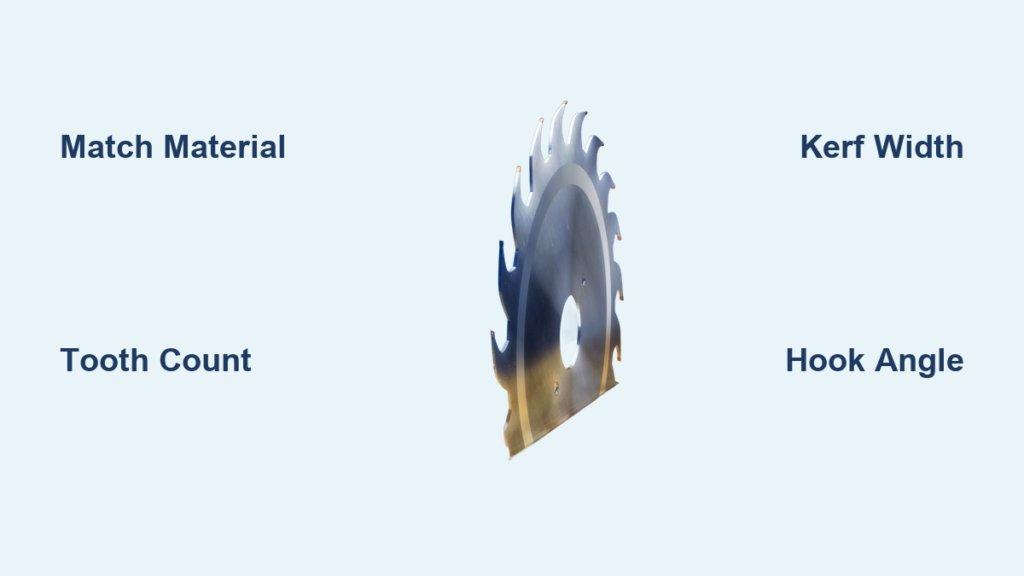
Choosing the right saw blade isn’t just about making cuts. It’s about making clean, safe, and efficient cuts that save you time and material. A mismatched blade can leave you with splintered edges, burned wood, dangerous kickback, or a dulled tool in minutes. Whether you’re building cabinets, framing a deck, or trimming crown molding, the blade determines your results more than any other factor. This guide gives you the exact criteria you need to pick the perfect blade for every job, with no guesswork required.
You’ll learn how tooth count affects finish quality, why kerf width matters for your saw’s power, and which grind types prevent chipping on melamine. We break down real-world recommendations, decode confusing specs like hook angle, and show you exactly what to look for on blade packaging. By the end, you’ll know how to match every project to the ideal blade, avoid costly mistakes, and get professional results on every cut.
Match Blade to Material Type
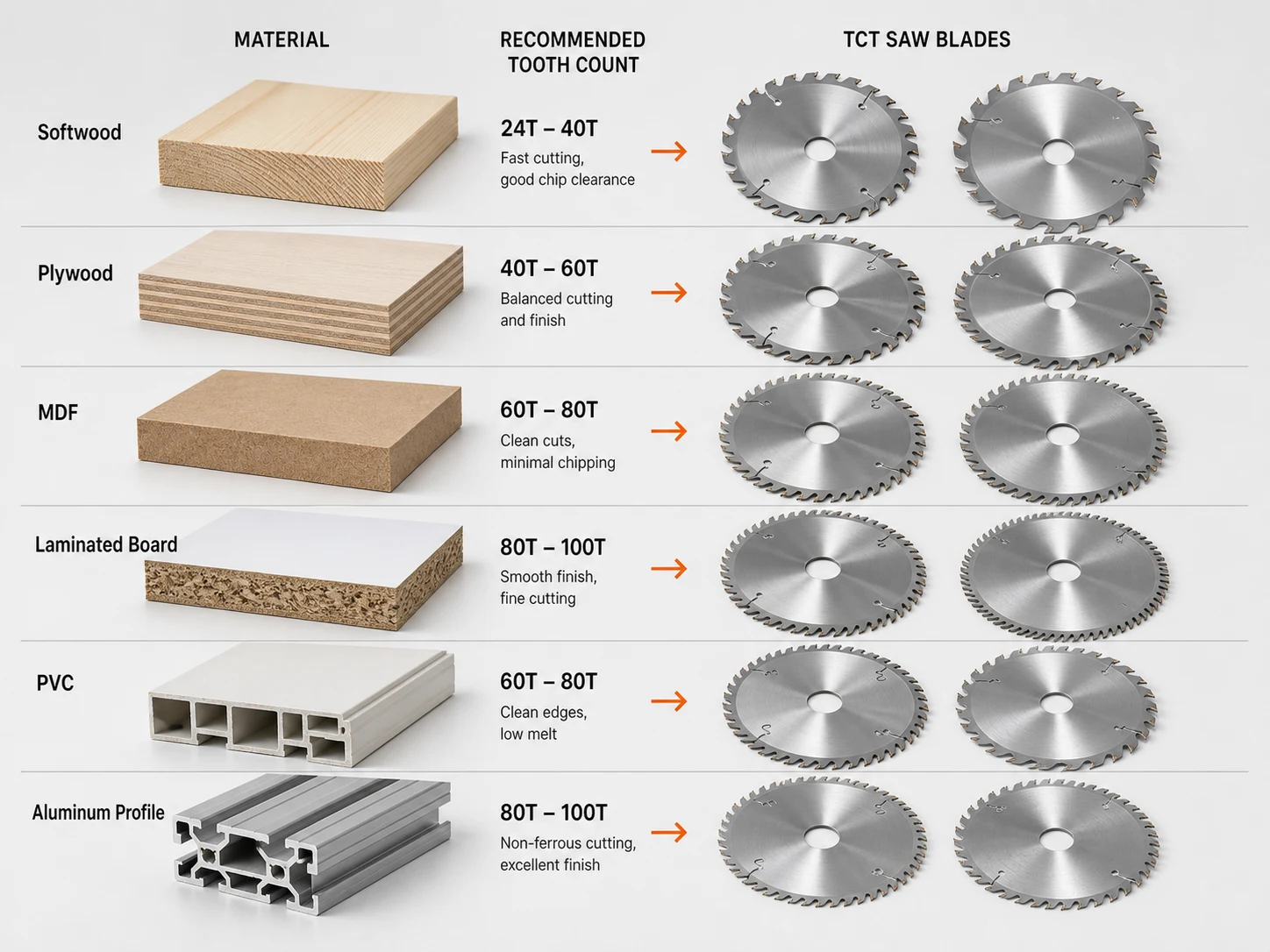
The first rule in how to choose a saw blade is simple: the material dictates the blade. Using the wrong grind or tooth count leads to splintered plywood, melted plastic, or instantly dulled carbide tips. Each material responds differently to cutting forces, heat, and tooth geometry. Matching your blade to what you’re cutting is the foundation of clean, efficient work.
Wood and Plywood Need Sharp Bevels
For solid wood and veneered plywood, Alternate Top Bevel blades are the gold standard. The angled teeth slice cleanly across wood fibers, minimizing tear-out on both faces of the board. Use 60 to 80 teeth for hardwood crosscuts and fine cabinetry. When cutting thin veneers or Baltic birch, step up to 80 to 100 teeth for near-perfect edges that require minimal sanding.
Ripping solid lumber along the grain? Switch to a Flat Top Grind blade with 24 to 30 teeth. Its chisel-like teeth remove material fast, while large gullets carry away sawdust efficiently. This combination delivers smooth grain splits with minimal motor strain on your table saw.
MDF and Particleboard Demand Durability
MDF and particleboard are highly abrasive. They dull blades quickly and chip easily under pressure. For MDF, use an 80-tooth ATB or TCG blade. Triple Chip Grind handles industrial use better due to its rugged trapezoidal tooth design, which resists wear and reduces heat buildup during long production runs.
Melamine-coated boards present an even bigger challenge. Their plastic surface cracks if the blade feeds too aggressively. A high-tooth-count TCG blade with 80 to 100 teeth and a zero or negative hook angle prevents chipping and melting. The flat raker tooth follows the cutting edge, shearing cleanly without grabbing into the delicate coating.
Plastics and Laminates Require Controlled Feed
Cutting plastic laminate, acrylic, or solid surface materials like Corian demands precision. Standard blades generate heat that warps or melts soft materials. Use a TCG grind with 80 to 100 teeth and a neutral or negative hook angle to slow the feed rate. This prevents the blade from self-feeding and gives you full control over the cut.
Never use a high-positive hook blade on plastics. It will dig in aggressively and ruin the edge. Some premium blades include non-stick coatings to reduce friction and resin buildup during long runs through sticky materials.
Metal and Masonry Need Specialized Blades
Aluminum, brass, and copper require carbide-tipped blades with 100 or more teeth and zero or negative hook angles. Cut slowly and use lubricant to prevent overheating. Standard wood blades will dull instantly or shatter on contact with metal.
Concrete, tile, and stone require diamond-rimmed blades used with angle grinders or wet saws. These aren’t toothed blades at all. They rely on diamond particles embedded in the rim to grind through hard surfaces. Never swap these with wood-cutting blades.
Understand Tooth Count and Cut Quality
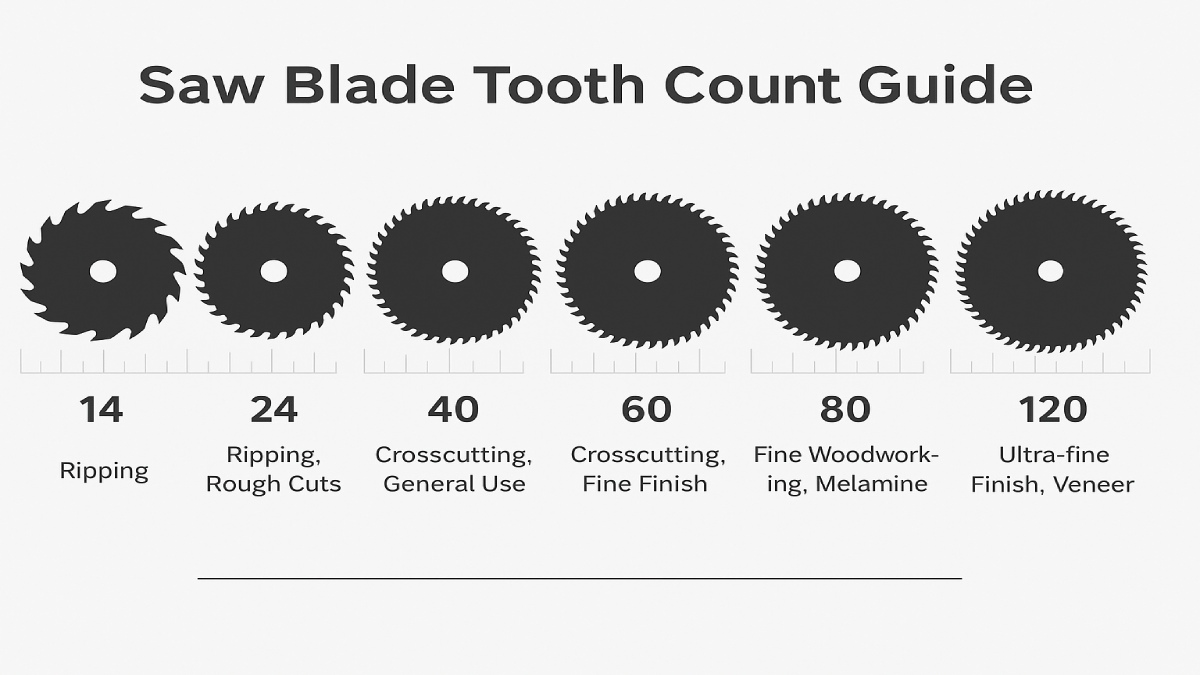
Tooth count directly controls how fast you cut and how smooth the result is. Too few teeth cause rough edges that require extensive sanding. Too many slow you down and risk overheating the blade. Understanding this balance helps you pick the right blade for speed, finish quality, or both.
Low Tooth Count for Fast Ripping
Blades with 10 to 30 teeth are built for speed. They excel at ripping thick lumber where finish quality isn’t critical. Large gullets between teeth evacuate sawdust quickly, reducing clogging and motor load. A 24-tooth FTG blade is ideal for breaking down 4x4s or cutting beams on a table saw.
But don’t use low-tooth blades for crosscuts across the grain. They’ll tear out the wood fibers and leave jagged edges that ruin your project.
Medium Count for General Use
A 50 to 60 tooth combination blade strikes the best balance for DIYers and job-site carpenters. It handles both rip and crosscut reasonably well. The ATBR design includes periodic flat teeth to clear chips while maintaining a decent finish. This is the go-to blade if you only keep one on hand. Brands like CMT, Freud, and Diablo offer reliable 60-tooth combo blades that work on pine, hardwoods, and sheet goods.
High Tooth Count for Fine Finish
For cabinetmaking, trim, or moldings, step up to 80 to 120 teeth. These blades deliver mirror-smooth cuts with minimal sanding. An 80-tooth ATB blade slices cleanly through plywood edges, while a 100-tooth version eliminates tear-out on delicate veneers.
On miter saws, use 80 to 100-tooth blades for crown molding and baseboards. The extra teeth ensure crisp corners without fuzzy edges that ruin the finished look.
Pro Tip: High-tooth blades require slower feed rates. Push too fast, and you’ll burn the material. Let the blade do the work.
Select the Right Blade Grind for the Job

The shape of the teeth, called the grind, determines how the blade cuts and finishes the material. Different grinds excel at different tasks. Understanding these differences helps you avoid using the wrong blade for your project.
ATB: Clean Crosscuts on Wood
Alternate Top Bevel teeth are angled left and right alternately. This creates a slicing action that severs wood fibers cleanly. ATB blades are best for crosscutting hardwoods, cutting veneered plywood, and trim and finish work. Higher bevel angles between 20 and 30 degrees improve cut quality on thin materials.
FTG: Power Through Rips
Flat Top Grind teeth have flat tops that act like chisels. They excel at removing material fast along the grain. Use FTG blades when ripping thick stock, working with softwoods or construction lumber, and prioritizing speed over finish. Avoid FTG for crosscuts. It causes severe tear-out that ruins edges.
TCG: Tough on Abrasives
Triple Chip Grind uses a trapezoidal tooth followed by a flat raker. This design resists chipping in melamine and MDF, manages heat in plastics, and extends blade life in production settings. TCG is the top choice for cabinet shops cutting high volumes of engineered materials.
ATBR: Balanced Performance
Alternate Top Bevel with Raker blends ATB teeth with periodic flat rakers. It offers smoother cuts than pure FTG, better chip clearance than ATB, and versatility across rip and crosscut tasks. ATBR is common in combination blades.
Combination and Hybrid Grinds
Some blades mix ATB and FTG teeth. While marketed as all-purpose, they compromise peak performance in either direction. Use these only if blade changes are impractical during your project.
Know Your Kerf: Full vs Thin
Kerf is the width of material the blade removes. It affects power needs, waste, and stability during cuts. Choosing the right kerf ensures your saw can handle the blade and that you don’t waste expensive material.
Full Kerf: Stability for Heavy-Duty Saws
Full kerf blades remove about 1/8 inch of material per cut. They require 1.5 or more horsepower to operate efficiently. Full kerf blades are best for cabinet table saws and resist deflection during deep cuts through thick hardwoods or when running dado stacks.
Thin Kerf: Efficiency for Lightweight Tools
Thin kerf blades remove about 3/32 inch of material. They draw less power and are ideal for benchtop and portable saws. Thin kerf blades save material on expensive hardwoods, which matters when every eighth of an inch counts. These blades work fine on powerful saws but may wander without proper fence alignment.
Ultrathin Kerf: Precision for Battery Tools
Ultrathin kerf blades remove less than 3/32 inch. They’re used in cordless circular saws to minimize load on battery motors. These blades are best for shallow, straight cuts. Avoid ultrathin blades for deep rips or hardwoods. Lack of rigidity increases deflection risk and leads to inaccurate cuts.
Safety Note: Never install a full-kerf blade on a low-power saw. It can stall the motor and create kickback hazards that endanger your safety.
Confirm Blade and Saw Compatibility
Even the best blade fails if it doesn’t fit your tool properly. Checking compatibility before purchasing prevents wasted money and dangerous situations.
Match Arbor Size Exactly
The center hole, called the arbor, must match your saw’s spindle. Common sizes include 5/8 inch for table saws, 1 inch for miter saws, and 5/8 inch for most circular saws. Some blades include reducer rings to fit smaller arbors. Only use them if approved by the tool manufacturer.
Warning: Skilsaw models often use a diamond-shaped flange that requires specific blades. Standard blades won’t fit. Check your tool before buying.
Choose Correct Blade Diameter
Blade size determines maximum cut depth. A 7-1/4 inch blade on a handheld circular saw provides about 2-1/2 inches of depth. A 10-inch blade on a table saw cuts about 3-1/2 inches deep. A 12-inch blade on a sliding miter saw reaches about 4-1/2 inches. Never exceed your saw’s rated blade size. It’s a serious safety hazard.
Use Hook Angle to Control Feed
Hook angle controls how aggressively the blade pulls itself into the material. Understanding this spec helps you choose a blade that matches your cutting style and safety needs.
Positive Hook: Aggressive Self-Feeding
Positive hook angles between 5 and 20 degrees make the blade pull itself into the material. These blades cut fast in wood and plywood on table saws. The tradeoff is higher risk of kickback if not controlled properly. High-positive hooks between 25 and 30 degrees help prevent chipping in melamine by maintaining consistent feed.
Zero or Slight Hook: Balanced Control
Zero to slight positive hook angles between 0 and 5 degrees reduce the tendency to bind or lurch. These blades are used in portable circular saws and are safer for freehand cuts where you need more control.
Negative Hook: Maximum Safety
Negative hook angles between negative 5 and negative 10 degrees resist self-feeding. They’re standard on sliding miter saws and prevent uncontrolled feed during long crosscuts. These blades require a firm push from you. They won’t self-feed, which improves safety when cutting long boards.
Note: Hook angle is rarely listed on blade packaging. Check manufacturer specifications online before purchasing.
Prioritize Blade Construction and Coatings
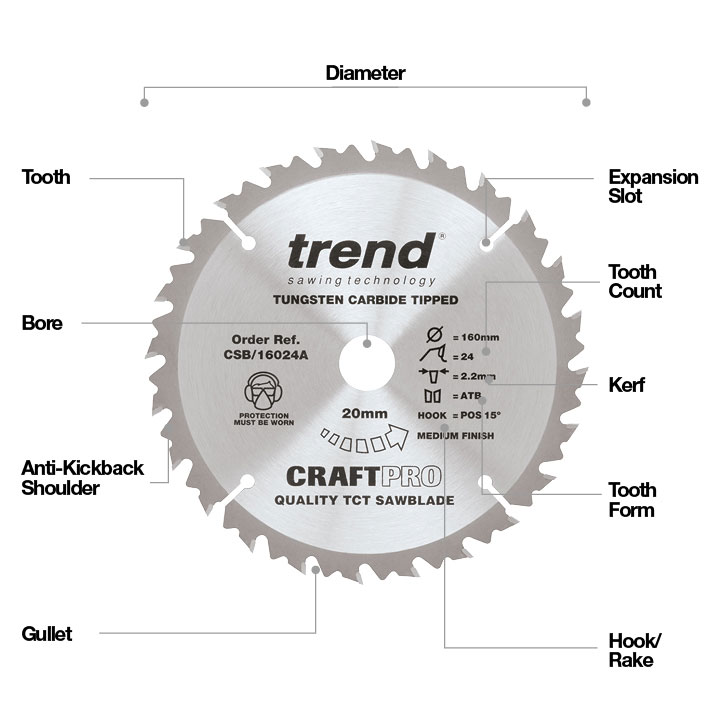
Not all blades are built the same. Premium features enhance durability, accuracy, and performance. Understanding construction quality helps you choose blades that last and cut accurately.
Carbide-Tipped for Long Life
Carbide-tipped blades dominate modern tools. Tungsten carbide edges stay sharp 5 to 10 times longer than steel. They can be professionally resharpened 10 to 20 times. Look for thick carbide tips of 0.060 inch or more, secure brazing to the steel body, and laser-cut expansion slots. Avoid low-cost blades with thin or uneven tips that won’t hold an edge.
High-Quality Steel Plates Reduce Vibration
Cheap blades warp under heat. Premium blades use stress-relieved, laser-cut steel with thicker plate bodies and expansion slots to absorb thermal stress. These features minimize vibration, improve cut accuracy, and extend blade life significantly.
Coatings Offer Specific Benefits
Titanium Nitride coating reduces friction, resists heat, and extends blade life for a $10 to $30 premium. Black oxide prevents rust and offers moderate friction reduction. Non-stick Teflon coatings repel pitch and sap, ideal for pressure-treated lumber. Diamond-edge coatings are for masonry only. Never use diamond-edge blades on wood.
Coatings help in extreme conditions, but tooth geometry and material match matter more than any coating.
Choose Specialty Blades for Unique Tasks
Some jobs demand specialized tools. Using the right specialty blade prevents damage to your material and ensures professional results.
Dado Blades Cut Wide Grooves
Dado sets aren’t single blades. They’re stacks of outer blades and chippers used to cut rabbets, housing joints, and shelf slots. Available in 8-inch and 10-inch sizes, dado sets require a dado-compatible saw, sufficient arbor length, and a wider washer or dedicated dado arbor.
Safety: Only use dado sets on saws rated for dado operations. Many contractor saws aren’t designed for this.
Plywood and Melamine Blades Prevent Chipping
Use 80 to 100-tooth ATB or TCG blades with high-positive hook angles for plywood and melamine. The dense tooth pattern supports veneer edges during cutting. Some include anti-friction coatings to reduce heat that causes melting.
Metal-Cutting Blades for Non-Ferrous Metals
Cut aluminum or brass with 100 or more teeth, zero or negative hook, and carbide tips. Use a slow feed rate and lubricant. Never use metal-cutting blades on steel. They’re designed only for non-ferrous metals.
Masonry Blades Are Non-Negotiable
Concrete, brick, and tile require diamond-rim blades used with grinders or wet saws. These blades grind rather than cut. Never install a masonry blade on a wood saw.
Follow Proven Maintenance Practices
A well-maintained blade lasts longer and cuts safer. Regular care prevents performance degradation and extends the life of your investment.
Clean Resin and Pitch Regularly
Use citrus-based cleaners or commercial blade degreasers with a soft brush or pad. Soak heavily gunked blades for 15 to 30 minutes. Rinse and dry completely. Avoid steel wool. It leaves particles that cause rust.
Sharpen Only Professionally
Carbide requires diamond wheels and precise jigs. DIY sharpening ruins tooth geometry. Send blades to a reputable service every 500 to 1,000 linear feet in softwood.
Store Properly
Keep blades in a dry environment, in original packaging or blade guards, and off metal surfaces to prevent corrosion.
Replace When Needed
Replace blades if teeth are chipped or missing, the blade vibrates excessively, burning persists despite correct feed, or the plate is warped. Resharpening extends life, but eventually replacement is necessary.
Key Takeaways for Choosing Your Saw Blade
Choosing the right saw blade comes down to three core criteria. First, match the blade to your material. Use ATB blades for wood and plywood, TCG blades for melamine and MDF, and specialized blades for metal and masonry. Second, balance tooth count with your priority. Low counts between 10 and 30 teeth speed up ripping, while 80 to 120 teeth deliver fine finish cuts. Third, confirm compatibility. Check arbor size, blade diameter, and kerf width against your saw’s specifications.
Keep a small inventory of task-specific blades rather than relying on one all-purpose blade. A 24-tooth FTG for ripping, an 80-tooth ATB for crosscuts, and an 80-tooth TCG for sheet goods cover most workshop needs. Upgrade from stock blades, follow safety protocols, and maintain your tools. The difference shows in every cut you make.
Frequently Asked Questions About Choosing a Saw Blade
What is the best saw blade for cutting plywood?
Use an 80-tooth ATB or TCG blade for plywood. High tooth count prevents tear-out on the delicate veneer surfaces. A 100-tooth blade delivers the cleanest edges on fine plywood and melamine-coated panels.
Can I use the same blade for ripping and crosscutting?
A 50 to 60-tooth combination blade handles both reasonably well, but it compromises peak performance in either direction. For best results, use a dedicated rip blade with 24 to 30 teeth and a crosscut blade with 60 to 80 teeth.
Does kerf width affect cut quality?
Kerf width affects power consumption and material waste more than cut quality. Full kerf blades are more stable in deep cuts, while thin kerf blades reduce motor strain and save material. Both produce clean cuts when used properly.
How often should I sharpen my carbide saw blades?
Professional sharpening is needed every 500 to 1,000 linear feet of cutting in softwood. Hardwood and abrasive materials like MDF require more frequent sharpening. Watch for signs like burning, rough edges, or increased feed resistance.
What hook angle is safest for a miter saw?
Use a negative or zero hook angle on sliding miter saws. This prevents uncontrolled feed during long crosscuts and reduces kickback risk. Positive hook blades can grab and lurch unexpectedly on miter saws.