If your chainsaw nose feels hot or the chain drags at the tip, you likely need to address sprocket lubrication immediately. Learning how to grease a chainsaw sprocket correctly prevents bearing seizure and extends the life of your bar significantly. Many users fail because they grease sporadically, creating a hardened plug that blocks fresh oil from reaching critical needle bearings.
This guide explains exactly which bars require grease, how often to apply it, and the specific steps to flush out contaminants safely. You will discover why some bars must never be greased and how to identify the right maintenance strategy for your specific cutting tasks.
Identify If Your Chainsaw Bar Has a Grease Port
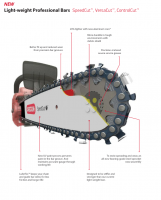
You must confirm your bar design before applying any lubricant. Not every chainsaw bar accepts grease, and forcing it into sealed units causes damage.
Check for the Grease Injection Hole
Inspect the nose of your chainsaw bar closely for a small drilled hole near the sprocket assembly. This feature indicates a grease port designed for injecting lubricant directly into the bearing cavity. Brands like Husqvarna, Oregon, Carlton, and Windsor often include this port on professional-grade bars. Use a flashlight to clear away sawdust that might obscure the opening.
Recognize Sealed Bar Designs
Stihl Rollomatic E and ES bars typically lack a grease hole entirely. These models use thin metal shims as seals over the bearings, relying solely on bar oil wicking into the assembly. Drilling a hole in these bars will not help grease reach the internals and may compromise the structural integrity. Attempting to grease these sealed units is ineffective.
Know Your Brand Patterns
Different manufacturers follow distinct design philosophies regarding tip lubrication.
* Stihl: Mostly sealed designs requiring no greasing.
* Husqvarna: Mixed designs with older models featuring ports and newer ones being sealed.
* Oregon and Carlton: Typically feature greaseable ports and replaceable noses.
* Carlton Pro Bars: Often designed specifically for replaceable roller noses ideal for greasing.
Consult your specific bar manual if you remain unsure about the design. Greasing the wrong bar type leads to premature failure.
Determine the Correct Greasing Frequency for Your Use
Greasing frequency depends entirely on your cutting style and bar design. Applying grease at the wrong intervals can cause more harm than good.
Refuel-Based Greasing for Heavy Duty
For greaseable bars used in heavy-duty tasks, apply grease every time you refuel the saw. This schedule flushes out old grease and sawdust while ensuring fresh lubricant coats the bearings constantly. This is the gold standard for milling and plunge cutting where heat and debris load the sprocket heavily.
Bi-Weekly Schedule for Moderate Use
If you cut occasionally, such as splitting firewood a few times a month, grease every two weeks during active seasons. This maintains adequate lubrication without over-saturating the area. It strikes a balance between protection and maintenance effort for casual users.
Pre-Storage Greasing for Protection
Apply a full shot of grease before storing your saw for weeks or months. This prevents rust and corrosion from forming on the needle bearings during downtime. Moisture accumulation during storage is a leading cause of seized sprockets in infrequently used saws.
Avoid Intermittent Greasing Completely
Never grease “sometimes” or sporadically without a set schedule. Irregular application creates a grease dam where old grease hardens and mixes with sawdust to block bar oil entry. This starves the bearings and causes rapid failure. Choose to either grease every use or never grease at all.
Step-by-Step Guide to Greasing Your Chainsaw Sprocket
Follow these precise steps to ensure effective and safe lubrication of your bar tip.
Gather the Right Tools
You need specific tools to perform this task correctly and safely.
* A bar tip grease gun (plastic syringe-style or mini cartridge type)
* High-quality bar tip grease (specifically formulated for chainsaws)
* Clean rag for wiping excess material
* Wire brush or pick for cleaning debris
Avoid using automotive chassis grease as it is too thin and will fling off instantly under high speeds. Use tacky, high-temperature grease designed specifically for chainsaw tips.
Clean the Nose Area Thoroughly
Remove the chain and bar from the saw before starting. Use a pick or wire brush to clear all sawdust from the sprocket and grease port area. A clogged port prevents fresh grease from entering the bearing cavity effectively. Wipe the nose with a rag to remove any old oil and loose debris.
Inject Fresh Grease Properly
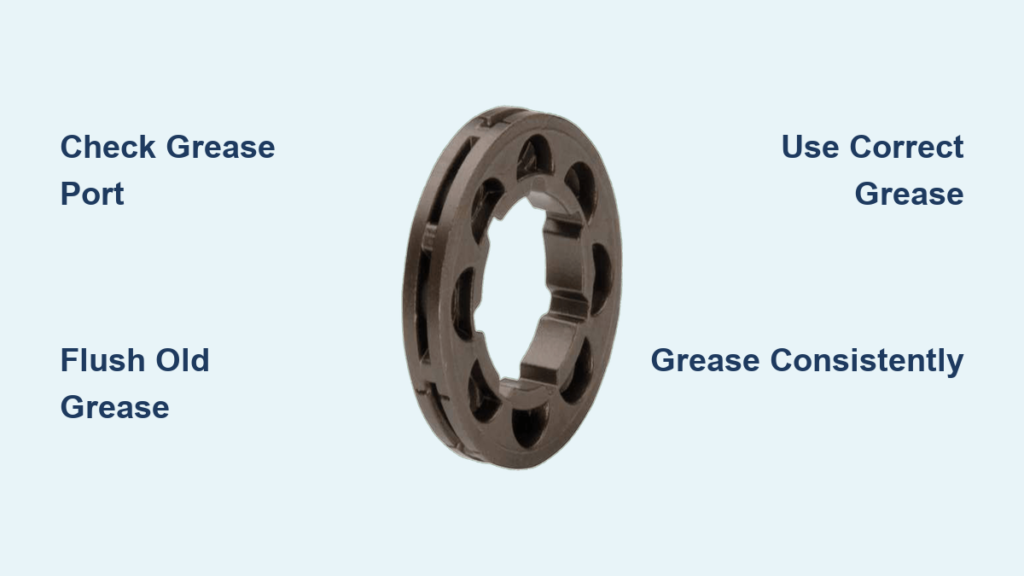
Insert the grease gun nozzle firmly into the port on the bar nose. Pump slowly and steadily until fresh grease oozes from the sides of the sprocket assembly. This visual cue confirms that old material is being flushed out completely. Do not stop at the first drip but continue until the emerging grease looks clean.
Reassemble and Test Operation
Reinstall the bar and chain onto your chainsaw carefully. Run the saw for 30 seconds at idle to distribute the new lubricant. Check that the sprocket spins freely without resistance. If it feels stiff or hot, disassemble and re-grease as contamination may still remain inside.
Maintain Oil-Only Bars Without Grease Ports
If your bar has no grease port, you must rely on bar oil but verify it is working effectively.
Perform the Oil Stripe Test
Hold the bar tip near a piece of cardboard or clean bark. Run the saw at full throttle for 5 seconds to check output. Look for a visible oil stripe on the surface. If no oil appears, your oiler may be clogged or malfunctioning, which will lead to bearing failure.
Clean the Oil Channels Regularly
Remove the bar and clean the oil hole at the base of the bar thoroughly. Use a small wire or needle to clear any blockages in the channel. Also clean the groove along the bar to ensure oil flows freely to the nose sprocket area.
Use Quality Bar Oil Specifically
Tacky, adhesive bar oil clings better to the chain and bar than generic substitutes. In cold weather, switch to a thinner oil formulation to prevent sluggish flow through the system. Avoid using motor oil as it lacks the necessary tackifiers and wear protection additives.
Monitor for Failure Signs Monthly
Check the sprocket condition regularly using these simple diagnostic steps.
* Spin by hand: The nose should turn smoothly with slight resistance.
* Listen for grinding: A gritty noise indicates bearing damage.
* Check for heat: A hot nose after cutting signals excessive friction.
Avoid These Common Chainsaw Sprocket Mistakes
Even with the right tools, specific errors can damage your bar permanently.
Skipping the Flush Process
Pumping a small amount of grease “just in case” does not help your bar. If you do not flush out old material, you add to the dam effect that blocks lubrication. Always pump until fresh grease emerges from the sides to ensure proper cleaning.
Using the Wrong Grease Type
Never use chassis, wheel, or general-purpose grease on your chainsaw. These products lack the viscosity and heat resistance needed for high-speed sprocket operation. Stick to chainsaw-specific bar tip grease for best results.
Ignoring Oil Flow on Greaseable Bars
Even if you grease regularly, bar oil must still reach the sprocket effectively. The grease protects the bearings, but oil lubricates the chain and sprocket teeth simultaneously. A clogged oiler will still cause wear regardless of your greasing habits.
Over-Greasing the Assembly
While rare, excessive grease can build pressure and potentially damage seals within the nose. Stop once fresh grease appears at the edges of the sprocket. There is no need to force more material into the system once it is full.
Troubleshoot Sprocket Issues Quickly
Diagnose problems early before they ruin your entire bar assembly.
Sprocket Won’t Spin Freely
Remove the chain and try spinning the nose by hand to assess resistance.
* Seized? Soak in penetrating oil overnight. If still stuck, bearings are dead and require replacement.
* Gritty? Contaminated bearings need flushing with grease if a port exists.
Chain Riding on Rails
If the chain’s tie straps touch the bar rails instead of riding on sprocket teeth, the tip is worn out. No amount of greasing will fix physical wear. Replace the nose or the entire bar immediately.
No Oil at the Tip
Check these components if you see no oil output.
* Oil tank level
* Oil hole in bar and saw body
* Oiler pump function
Clean or replace parts as needed to restore proper flow.
Bent or Damaged Nose
Dropping the saw or pinching the bar can bend the nose structure permanently. This misaligns the chain and damages the sprocket beyond repair. No repair is possible for bent noses, so replace the bar.
Best Practices for Long-Lasting Sprocket Performance
Maximize sprocket life with these proven maintenance rules and strategies.
Match Lubrication to Use Case
Select your method based on how you cut wood.
* Milling or plunge cutting? Grease every refuel.
* General felling? Oil-only is often sufficient.
* Occasional homeowner use? Grease before storage.
Choose One Lubrication Method
Stick to one strategy consistently for best results.
* Greaseable bar? Either grease every use or never grease.
* Sealed bar? Trust the oil system and keep it clean.
Inspect Weekly During Use
During regular maintenance checks, perform these quick actions.
* Spin the sprocket
* Check for oil at the tip
* Clean the bar groove
* Look for wear on sprocket teeth
Replace When Worn
Sprocket teeth wear down over time with use. Once the chain contacts the rails, the bar offers no advantage over a solid nose bar. Replace the nose if replaceable or the entire bar if necessary.
Frequently Asked Questions About Chainsaw Sprocket Maintenance
How often should I grease my chainsaw sprocket?
For heavy use like milling, grease every time you refuel. For moderate use, grease every two weeks. Always grease before long-term storage to prevent rust on the bearings.
Can I use regular wheel grease on my chainsaw bar?
No, regular wheel grease is too thin and will fling off instantly at high speeds. You must use high-quality, tacky bar tip grease designed specifically for chainsaw sprockets.
Do Stihl chainsaw bars need grease?
Most modern Stihl bars feature sealed noses without grease ports. They rely entirely on bar oil for lubrication. Do not attempt to drill holes or force grease into these sealed units.
What happens if I only grease my chainsaw sometimes?
Intermittent greasing creates a hardened plug of old grease and sawdust. This blocks fresh bar oil from reaching the bearings, causing them to run dry and fail rapidly.
How do I know if my sprocket bearings are bad?
Spin the nose by hand with the chain removed. If it feels gritty, seized, or excessively loose, the bearings are damaged. Excessive heat after cutting also indicates bearing failure.
Why is my chainsaw bar tip getting so hot?
Excessive heat usually means friction from dry bearings due to lack of lubrication. Check your oil flow immediately and inspect the sprocket for signs of seizure or contamination.
Key Takeaways for Greasing Your Chainsaw Sprocket
Proper maintenance of your chainsaw sprocket depends on knowing your bar type and sticking to a consistent schedule. If your bar has a grease port, flush it with fresh grease every refuel during heavy use to prevent bearing seizure. For sealed bars, ensure your bar oil system is clean and functioning perfectly to avoid premature wear.
The most critical rule is to avoid sporadic greasing, which creates a destructive plug that blocks all lubrication. Choose the method that fits your bar design, apply it consistently, and inspect your sprocket regularly for signs of wear. With the right care, your chainsaw bar will last significantly longer and perform more safely.