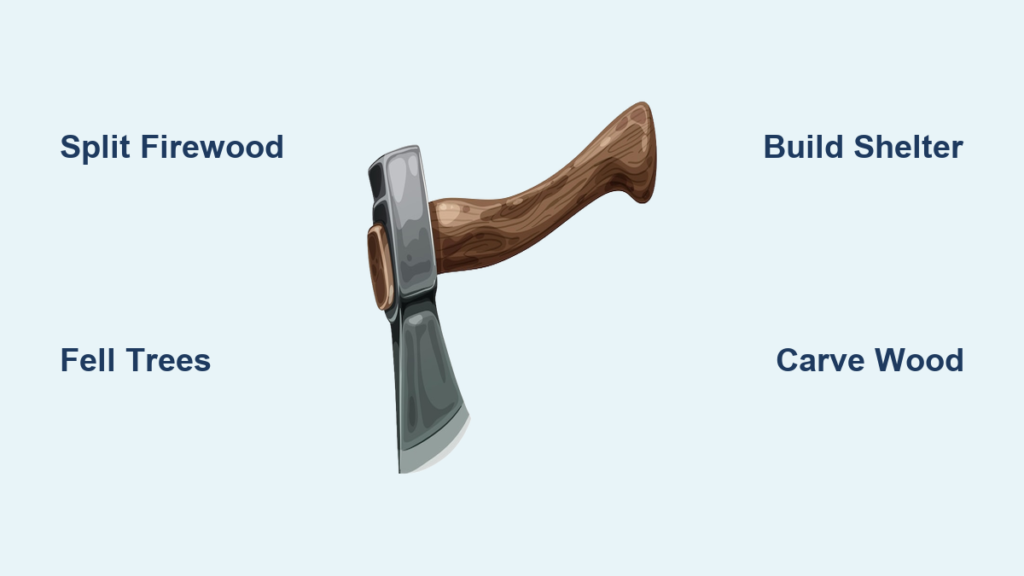
You’ve probably seen an axe leaning against a woodpile or tucked in a camping gear bag, but this ancient tool is far more versatile than it appears. The uses of axes span from survival situations to professional trades, outdoor recreation to historical craftsmanship. Whether you’re chopping firewood, building a shelter in the wild, or shaping timber for construction, the axe remains a fundamental tool across cultures and centuries. Despite modern power tools, the simplicity, reliability, and portability of an axe keep it relevant today.
In this guide, we’ll explore the many practical applications of axes, break down specific types and their ideal roles, and help you understand how to match the right axe to the task. From backyard chores to backcountry survival, knowing the uses of axes can enhance safety, efficiency, and self-reliance.
Wood Processing Tasks
Chopping and splitting wood is the most recognized use of an axe, but different tasks require different techniques and axe designs.
Split Logs for Firewood
Using a splitting axe or maul, you can efficiently break large logs into smaller pieces for burning. Position the log on a stable chopping block, aim for the center or existing cracks, and deliver a controlled swing. A sharp blade and proper stance prevent glancing blows and reduce fatigue. This task is essential for heating, cooking, or campfires, especially in off-grid or rural settings.
Fell Small Trees
A felling axe allows you to cut down trees typically under 12 inches in diameter. Start with a notch cut on the side facing your desired fall direction, then make a back cut on the opposite side. Never attempt to chop through a tree with a single continuous swing; use rhythmic, precise strikes. This skill is vital for land clearing, trail maintenance, or gathering timber in survival scenarios.
Buck Firewood to Length
After felling a tree, “bucking” refers to cutting it into manageable sections. While saws are more efficient, a hatchet or axe can be used in emergencies. Balance the log securely and strike perpendicular to the grain. This method takes more effort but works when no saw is available.
Camping and Outdoor Survival

Axes are indispensable tools when venturing into the wilderness, where self-sufficiency is key.
Build Emergency Shelter
In survival situations, an axe helps construct debris huts, lean-tos, or A-frame shelters using fallen branches and saplings. You can notch logs for stability, cut poles to size, and secure frames by driving sharpened ends into the ground. A compact camping axe gives you the power to create protection from wind, rain, and cold with natural materials.
Prepare Kindling and Tinder
Starting a fire with damp wood is challenging without proper tinder. Use the edge of your axe to shave bark or create feather sticks, which are thin curls of wood that catch sparks easily. A sharp axe can also split small branches into dry inner sections, revealing material less affected by moisture.
Clear Trails and Obstacles
Fallen branches or dense undergrowth can block progress in the woods. A sturdy axe helps you clear a path quickly, especially in remote areas where chainsaws aren’t practical. Use controlled swings to cut through small trunks or limbs, and always assess your surroundings for safety before swinging.
Bushcraft and Wilderness Crafting
Beyond survival, axes play a central role in traditional craftsmanship and sustainable living in nature.
Carve Wooden Tools
With a hatchet and knife, you can shape spoons, bowls, traps, or fishing hooks from green wood. Start by roughly shaping the piece with the axe, then refine with a carving knife. This process, known as green woodworking, connects users to ancestral skills and reduces reliance on manufactured goods.
Construct Log Structures
From simple benches to cabins, axes are used to notch and fit logs together. Techniques like saddle notching or corner dovetailing require precision chopping. Though time-consuming, hand-built log structures using axes are durable and blend naturally into forest environments.
Haul and Shape Timber
Before sawmills, people used axes to square logs for beams or planks. By removing the rounded edges, a process called “flattening” or “hewing,” builders created flat surfaces for flooring, walls, or furniture. A broadaxe, with its chisel-like edge, is specifically designed for this purpose.
Tactical and Emergency Applications

Though not their primary purpose, axes have roles in urgent or defensive scenarios.
Break Through Barriers
In firefighting or rescue operations, a flathead axe can breach doors, walls, or vehicles. The hammer poll can shatter glass or weaken structures, while the blade cuts through wood or light metal. Many emergency responders carry tactical axes for forced entry.
Self-Defense Considerations
While not a weapon by design, an axe can serve as a last-resort defensive tool in remote areas where threats exist, whether animal or human. Its weight and sharp edge provide deterrent value, but relying on it for protection should be a final option after evasion and de-escalation.
Signal for Help
In dire survival situations, the reflective surface of an axe blade can be used to signal aircraft or distant rescuers. Flashing sunlight in rhythmic patterns (like SOS) increases visibility over long distances.
Agricultural and Homesteading Roles
On farms and homesteads, axes support daily operations where power tools may be unavailable or impractical.
Prune Large Branches
While hand pruners handle small limbs, an axe cuts thicker branches from fruit trees or hedges. Make clean cuts just outside the branch collar to promote healing. This helps manage tree health, sunlight exposure, and crop yield.
Prepare Fencing Materials
Building or repairing wooden fences often involves cutting posts or rails to length. An axe allows quick sizing of timber on-site, especially when working with freshly cut wood. It’s also useful for driving posts into the ground by using the poll (back side) as a hammer.
Manage Brush and Thickets
Overgrown land requires clearing before cultivation. Axes help cut back brambles, small trees, and invasive shrubs. Regular maintenance with an axe keeps fields accessible and prevents pest habitats.
Recreational and Competitive Use
Axes aren’t just tools; they’re also part of sport and entertainment.
Axe Throwing Sports
Axe throwing has grown into a popular recreational activity and competitive sport. Participants aim at wooden targets, similar to darts, using balanced throwing axes. Dedicated venues offer lessons and leagues, emphasizing safety, form, and consistency.
Historical Reenactments
In medieval or frontier reenactments, axes are used authentically to demonstrate period skills. Participants may chop wood, build shelters, or perform feats of strength, staying true to historical practices and tool designs.
Skill Development Challenges
Many outdoor enthusiasts practice precision chopping, such as cutting specific shapes in logs or hitting small targets, to improve hand-eye coordination and axe control. These drills build confidence and competence for real-world applications.
Tool Maintenance and Safety

Proper care ensures an axe remains effective and safe across all its uses.
Sharpen the Blade Regularly
A dull axe is dangerous and inefficient. Use a file or whetstone to maintain a sharp edge. Focus on consistent bevel angles (typically 20 to 30 degrees). A sharp blade bites cleanly into wood, reducing slippage and effort.
Inspect the Handle for Damage
Wooden and composite handles can crack, splinter, or loosen over time. Check for hairline fractures or wobble in the head. Replace or repair damaged handles immediately and never use a compromised axe.
Store Properly After Use
Clean the blade with a dry cloth to prevent rust. Apply a light coat of oil if storing long-term. Keep the axe in a dry place, preferably sheathed or hung to protect the edge and prevent accidents.
Frequently Asked Questions About Uses of Axes
What are the most common uses of axes today?
The most common uses of axes today include splitting firewood, felling small trees, camping and survival tasks, bushcraft projects, and recreational activities like axe throwing. Many homeowners and outdoor enthusiasts rely on axes for both practical work and sport.
What type of axe is best for splitting firewood?
A splitting axe or maul is best for splitting firewood. These tools have wedge-shaped heads designed to drive logs apart rather than slice through them. They work most efficiently on a solid chopping block with controlled, powerful swings.
Can an axe be used for self-defense?
An axe can serve as a last-resort defensive tool in remote wilderness areas. Its weight and sharp edge provide deterrent value against threats. However, evasion and de-escalation should always be the first approach in dangerous situations.
How do you maintain an axe for long-term use?
Maintain an axe by sharpening the blade regularly with a file or whetstone, inspecting the handle for cracks or looseness, and storing it in a dry place. Applying a light coat of oil prevents rust during long-term storage.
Is axe throwing a safe sport?
Axe throwing is safe when performed at dedicated venues with proper safety protocols, trained instructors, and designated throwing lanes. Following venue rules and using balanced throwing axes designed for sport minimizes risk.
Key Takeaways on the Many Uses of Axes
The uses of axes extend far beyond simple wood chopping. From survival and craftsmanship to recreation and emergency response, the axe remains a powerful, multifunctional tool. Choosing the right type, whether a hatchet, splitting maul, felling axe, or tactical model, depends on your intended use. With proper technique and regular maintenance, an axe can last decades and serve as a reliable companion in both everyday tasks and unexpected challenges.
Start by identifying your primary need, whether it’s processing firewood, preparing for camping trips, or learning bushcraft skills. Then select an axe that matches that task, practice proper technique, and commit to routine care. Understanding the full range of applications helps you make the most of this timeless tool.