
A band saw is only as good as its maintenance. When blades wander, tires glaze, or guides wear, even the best saw produces rough cuts and frustrated woodworkers. Band saw maintenance isn’t optional, it is the difference between a precision tool and a frustrating paperweight. This guide covers every critical task, from daily inspections to annual overhauls, so your saw delivers clean, accurate cuts for decades.
You will learn how to inspect blades, adjust tension, clean components, lubricate moving parts, and troubleshoot common problems before they ruin a project.
Daily Band Saw Maintenance Checks
Perform these quick checks before every use to catch problems early.
Inspect the Blade for Damage
Run your fingers along the back edge of the blade, never the teeth. Feel for kinks, cracks, or warping. A damaged blade risks snapping during operation, potentially causing injury or damaging guides and wheels. Replace immediately if you find any defect.
Verify Proper Blade Tension
Press the blade with your thumb. It should deflect about ¼ inch under light pressure. Too loose causes wandering cuts; too tight strains bearings and accelerates blade fatigue. Use a tension meter for precision, and recheck after changing blades or materials.
Confirm Guide System Alignment
The blade must pass freely through guides without contact. Misaligned guides create friction, heat, and rapid dulling. Use a folded dollar bill to test clearance between thrust bearings and blade. If it drags, adjust the guides until a sliver of light remains between bearing and blade.
Check Coolant and Lubricant Flow
For metal-cutting saws, verify fluid levels and nozzle function. Low coolant causes overheating and blade wear. Check for leaks around hoses and connections. For wood saws, ensure dust extraction works well, since poor airflow increases heat and resin buildup.
Weekly Cleaning Routine for Your Band Saw
Buildup affects accuracy and increases fire risk. Clean the saw at least once per week.
Wipe Down All Surfaces
Power down and unplug the machine. Wipe the table, wheels, guards, and vents with a clean cloth. Use a stiff brush to remove packed debris from crevices. Dust and resin accumulation compromises precision and creates hazards near moving parts.
Clean Blade Teeth
After cutting resinous woods or metals, clean teeth with a stiff wire brush. Resin and metal fines reduce cutting efficiency and increase friction. For stubborn buildup, apply mineral spirits or dedicated blade cleaner. Never run the blade backward during cleaning unless using a manual oiler.
Top Off Fluid Levels
Low lubricant levels reduce cooling and increase wear. Top off sawing fluid or bar oil as needed. For metal-cutting saws, ensure the pump delivers consistent flow to the blade tip. Inspect any internal reservoirs and refill per manufacturer instructions.
Apply Wax to the Table
A waxed table reduces friction, improves feed control, and prevents rust. Apply a thin coat of hard wax like Wax-It-All. Buff with a lint-free cloth until glossy. Reapply weekly for heavy use, monthly for occasional use. Avoid paraffin-only waxes that attract grit.
Monthly Wheel and Tire Care
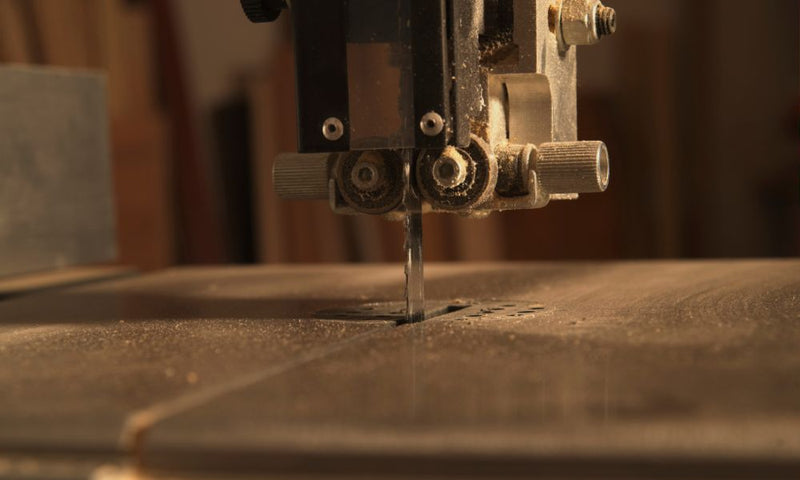
Rubber tires degrade over time. Monthly inspections prevent tracking problems and blade slippage.
Inspect Tires for Wear
Check monthly for cracks, flat spots, glazing, or loss of crown. Glazed tires lose grip, causing blade slippage. Clean with mineral spirits. If cleaning does not restore texture, replace the tire. Urethane tires last longer but offer no performance gain in standard environments.
Align Wheels with a Straightedge
Misaligned wheels cause tracking issues and uneven blade wear. Remove the blade and place a metal straightedge across both wheels. They should lie in the same plane. If not, adjust the rear wheel using set screws per your manual. Even slight misalignment leads to blade drift.
Adjust Tracking and Clearance
Reinstall the blade and adjust tracking so the gullet sits centered on the wheel crown, not the tooth tip. Maintain a 1/8-inch gap between the blade back and wheel flange. Too little causes rubbing; too much risks derailment. Verify tracking under tension after a short warm-up run.
Guide System Setup and Adjustment
Proper guide setup prevents blade drift and extends blade life.
Position Side Guides Correctly
Set side guides just behind the gullet, never touching the blade body. Final spacing should be about two hair widths, roughly 0.004 to 0.006 inches. This prevents fishtailing while allowing flexibility for curves. Once set, do not adjust front-to-back unless replacing the blade.
Set Thrust Bearings with Precision
Adjust both top and bottom thrust bearings so a sliver of light remains between bearing and blade. Use a folded dollar bill as a feeler gauge. It should slide in with slight resistance. Tighten just enough to allow micro-movement when touched.
Use Low-Friction Guide Materials
Replace worn steel guides with cool blocks or oil-infused hardwoods like cocobolo. These reduce heat and noise. Never let blade teeth contact any guide surface, as this causes overheating and rapid dulling.
Belt and Drive System Maintenance
The drive system transfers power to the blade. Keep it in top condition.
Check Belt Tension Daily
Before each project, inspect the drive belt. It should resist deflection but not be rock-solid. Press with your finger; deflection of ½ inch is typical for most models. A loose belt slips, reducing blade speed; an over-tightened belt strains the motor and bearings.
Replace Worn Belts Promptly
Inspect belts weekly for cracks, glazing, or fraying. Replace immediately if any defect appears. Belts degrade faster in dusty or humid environments. Keep a spare on hand. During 6-month maintenance, remove and clean pulleys, since grime reduces grip and accelerates wear.
Bearing Inspection and Service

Worn bearings cause drag, noise, and misalignment. Service them regularly.
Test Bearing Rotation
Remove covers and spin bearings by hand. If stiff or wobbly, service or replace. Sealed bearings cannot be lubricated; replace if noisy or rough. Rubber-covered bearings can be cleaned and repacked with fresh grease.
Clean and Repack Serviceable Bearings
Remove rubber covers. Spray with carburetor or brake cleaner. Blow out residue with compressed air. Work fresh grease into the bearing by hand without overfilling. Reinstall covers. Properly maintained bearings last indefinitely; seizing is preventable with regular cleaning.
Table Alignment and Waxing
The table is your reference for every cut. Keep it square and smooth.
Wax for Smooth Feeding
An unwaxed table increases friction, leading to binding and misalignment. Apply wax based on use frequency. Daily use requires weekly application; occasional use needs monthly waxing. Buff to a shine for faster feed, cleaner cuts, and better control.
Align Table to 90 Degrees
After adjusting guides, reattach the table. Adjust the 90-degree reference knob so the table contacts it when square. Lock with the bottom nut. Misaligned tables cause angled cuts and safety hazards.
Test Squareness with the Kerf Flip Method
Cut a scrap piece of walnut. Flip the cut section behind the blade and recut. Observe the fit. A gap at the top indicates the table angles away. Adjust until the blade fits perfectly flush. Walnut is ideal for testing due to its stability and visible grain.
Lubrication of Moving Parts

Proper lubrication reduces wear and keeps mechanisms smooth.
Apply Correct Lubricants
Use thick gear oil for trunnions to ensure smooth tilt. Apply GL2 adhesive grease to gears to resist fling-off. Use light oil or dry lube for guard mechanisms to prevent stickiness. For wood blades, use mineral oil mixed with chainsaw bar oil. For metal blades, apply cutting fluid generously.
Oil Blades Properly
For wood saws, mix mineral oil with a splash of chainsaw bar oil for adhesion. Use a rag-in-a-can oiler. Run the blade backward manually while holding an oiled rag against the wheel. Avoid cooking sprays like PAM, which may degrade rubber over time.
Troubleshooting Common Band Saw Problems
Address issues quickly to prevent further damage.
Fix Wandering Cuts
Likely causes include misaligned guides, loose table, or dull blade. Recheck guide spacing, secure table bolts, and verify squareness. Replace the blade if teeth are rounded.
Stop Blade Overheating
If the blade turns blue or emits smoke, check if teeth touch guides, verify proper tension, and reduce feed rate. Overheating dulls blades fast; adjust before damage occurs.
Eliminate Resin Buildup
Resin sticks due to heat from high speed, dull blades, tight guides, or poor dust extraction. Slow down, sharpen the blade, open guide clearance slightly, and improve airflow. Add auxiliary dust nozzles behind the blade if needed.
Annual Deep Maintenance
Schedule comprehensive service once per year to restore peak performance.
Drain and Replace Fluids
Once a year, drain hydraulic fluid, clean the filter and strainer, replace transmission oil, and flush coolant lines. Old fluid degrades performance and accelerates wear.
Perform Full Mechanical Inspection
Remove all covers. Inspect the frame and stand for cracks. Tighten all mounting bolts. Clean the motor with compressed air. Test the emergency stop function. Recalibrate fence, tilt, and tracking.
Overhaul Worn Components
Replace blade guides, bearings, belts, tires, and scrapers. Even if they seem okay, worn parts degrade performance. Fresh components restore factory-level accuracy.
Frequently Asked Questions About Band Saw Maintenance
How often should I check blade tension?
Check blade tension before every project. Proper tension prevents wandering cuts and extends blade life. Recheck after installing a new blade or changing materials.
What causes blade drift?
Blade drift results from misaligned wheels, improper tracking, or a dull blade. Recheck alignment, center the gullet on the wheel, and use a sharp blade. A well-tuned saw cuts straight even on older blades.
Can I use cooking oil on my band saw blade?
Avoid cooking sprays like PAM. They may degrade rubber tires over time. Use mineral oil mixed with chainsaw bar oil for wood blades, or dedicated cutting fluid for metal blades.
How do I know if my guides need adjustment?
If the blade contacts guides during cutting, produces excessive heat, or shows uneven wear patterns, adjust the guides. Use a folded dollar bill to test clearance. A sliver of light should remain between thrust bearings and blade.
What is the best blade for cutting resinous wood?
Use a 3 to 4 TPI skip tooth blade for pine and similar softwoods. Run at lower speeds, keep the blade sharp, and apply adherent lubricant. Strong dust extraction is essential to prevent heat buildup.
Key Takeaways for Band Saw Maintenance Success
A well-maintained band saw is a precision instrument that rewards consistent care. Perform daily checks on blade condition, tension, and guide alignment. Clean weekly to prevent buildup that affects accuracy. Service tires, wheels, and bearings monthly. Lubricate moving parts with the correct products for your material type. Document every task in a maintenance log to track patterns and plan replacements.
The time you invest in routine maintenance saves hours of frustration and costly repairs. Start with the basics: clean, align, and wax weekly. Build from there. Your band saw will reward you with flawless performance every time you turn it on.