A stripped spark plug hole can turn routine maintenance into a major problem. You go to change the plug, and it spins freely or blows out entirely, leaving you with compression loss and a chainsaw that won’t run properly. This damage happens frequently in chainsaws with aluminum cylinder heads, where soft metal wears quickly from over-torquing, incorrect plug types, or years of vibration. The good news? The cylinder itself is usually fine. With the right thread insert kit and technique, you can restore full function without buying expensive replacement parts.
This guide covers everything you need to know about chainsaw spark plug repair: how to diagnose damage, select the proper repair method, install thread inserts correctly, and prevent future issues. Whether you’re a homeowner or professional arborist, this repair is achievable with basic tools and patience.
Signs Your Chainsaw Has Spark Plug Thread Damage
Before starting any repair, confirm the extent of the damage. A few simple checks tell you whether repair is feasible or replacement makes more sense.
Check for Loose or Wobbly Plugs
Try installing the spark plug by hand. If it drops in freely or spins without catching, the threads are stripped. The plug should require some resistance to thread in properly.
Listen for Compression Leaks
Start the saw and listen near the spark plug base. A hissing sound indicates combustion gas escaping due to poor thread engagement. This is clear evidence of thread failure.
Inspect for Cracks or Structural Damage
Use a bright light to examine the cylinder head around the plug hole. If you see cracks, warping, or visible damage to the surrounding metal, no insert will hold properly. In this case, cylinder replacement is the only safe option.
Distinguish Over-Torquing from True Stripping
Some plugs blow out because they were tightened too much and bottomed out, not because threads are completely gone. This is a different problem that may require different correction, so diagnose carefully before proceeding.
Choosing the Right Thread Repair Kit for Chainsaws

Not all repair kits perform equally in chainsaw applications. Heat and vibration demand strong, durable solutions.
Use Sav-A-Thread or Time-Sert Inserts
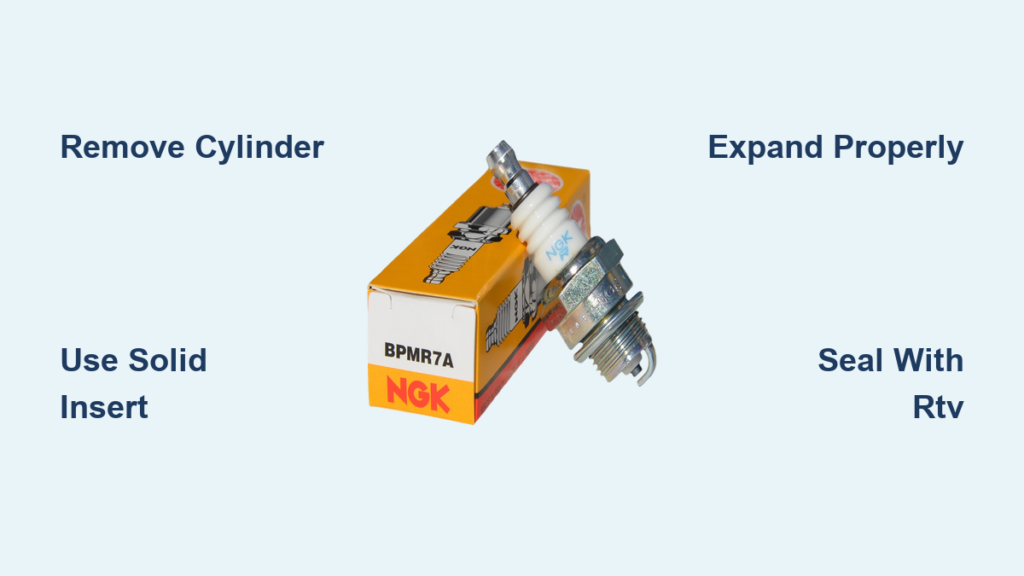
These solid-body steel inserts outperform coiled wire types in aluminum cylinder heads. Sav-A-Thread features knurled top threads that lock into the cylinder when expanded. Time-Sert uses an expansion plug for permanent fixation.
Avoid Cheap Generic Inserts
Generic kits sold at auto parts stores often fail under thermal cycling. One user warned that Napa-style inserts are prone to backing out under the heat and vibration chainsaw engines produce.
Fix-A-Thread Works Well for DIYers
This kit includes shallow, medium, and deep inserts designed specifically for spark plug repairs. The shallow insert works best for most chainsaw cylinder depths and avoids piston contact. The kit comes with a swedge tool for expansion.
How to Remove the Cylinder Safely Before Repair
Skipping this step risks engine damage from metal shavings falling into the combustion chamber.
Why Cylinder Removal Matters
Even tiny aluminum chips can score the piston or cylinder walls, causing additional damage. One expert stated clearly: there is no way to prevent every shaving from falling into the engine if you don’t remove the cylinder.
Steps to Remove the Cylinder
Drain fuel and disconnect the spark plug wire. Remove the air filter cover, carburetor linkage, and muffler. Unscrew the cylinder nuts and lift the cylinder off carefully. Position the piston at Bottom Dead Center to avoid valve contact. Secure the cylinder in a vise with soft jaws for safe tapping.
Tapping the Spark Plug Hole Correctly

Precision during tapping determines repair success or failure. One misaligned tap can ruin everything.
Use the Correct Tap Size
Most chainsaws use 14mm x 1.25mm threads. Confirm your specifications before purchasing a kit or starting the repair.
Keep the Tap Perfectly Aligned
Any angle deviation cuts threads off-center, resulting in weak engagement and potential failure. Take your time and check alignment frequently as you tap.
Tap Slowly and Clear Chips Frequently
Turn the tap a quarter-turn, then reverse to clear debris. Never use grease on the tap because it traps shavings and increases contamination risk. Lubricate lightly if needed, but wipe clean afterward.
Installing the Thread Insert Properly
This is the critical phase where many repairs succeed or fail.
Select the Right Insert Length
Use only the small or shallow insert. Longer inserts risk contacting the piston, which causes catastrophic engine damage. Ensure the top sits flush with the cylinder surface so the spark plug crush washer seals correctly.
Hand-Thread the Insert First
Use the installation tool provided in the kit. Start by hand to avoid cross-threading the insert into already-cut threads.
Expand the Insert with a Drift Punch
Insert the punch into the center of the coil. Deliver several swift hammer taps to flare the knurled top section. This expansion locks the insert permanently into the aluminum. One user reported failure because the insert crushed due to misalignment during expansion, causing compression leaks. Perfect alignment is essential.
Sealing the Insert Against Compression Leaks
Even a well-installed insert can leak combustion gases without proper sealing.
Apply High-Temperature Sealant
Coat the outside of the insert before threading it in. Recommended products include Dirko HT, Permatex Ultra Copper Max Temp RTV, and Moto Seal. One user confirmed using the red Permatex Ultra Copper Max Temp stuff with perfect results.
Avoid Standard Thread Lockers
Most Loctite formulations break down at 450 to 500 degrees Fahrenheit, which is exactly where chainsaw combustion occurs. Use high-temperature sealants instead.
Reassembling and Testing Your Chainsaw
Once the repair is complete, careful reassembly ensures long-term success.
Reinstall the Cylinder Properly
Clean all gasket surfaces thoroughly. Torque cylinder nuts in a star pattern to manufacturer specifications. Reconnect fuel lines, carburetor, and muffler.
Install the Correct Spark Plug Type
Use a gasket-seat spark plug, not a taper-seat. The gasket type creates even pressure distribution. Taper-seat plugs damage aluminum threads. Apply anti-seize compound to plug threads and torque to specification using a wrench, never by feel.
Test for Proper Operation
Check for smooth starts and no hissing at the plug base. Run the saw under load to verify no performance issues or leaks develop.
When to Replace the Cylinder Instead
Sometimes repair isn’t worth the effort or cost.
Consider Replacement If
The cylinder is cracked or warped. Previous repair attempts failed. A new cylinder costs less than the tools and time needed for repair. Some models cost under $200 and are readily available, making replacement the smarter choice.
Cost Comparison
A new cylinder runs 175 to 300 dollars or more. Specialist repair services cost about 75 dollars plus shipping. Professional-grade Time-Sert kits cost around 300 dollars. Fix-A-Thread DIY kits run 80 to 100 dollars. Calculate total cost of ownership before deciding.
Preventing Future Spark Plug Thread Damage
A successful repair only matters if you protect it from happening again.
Use Anti-Seize on Every Plug Change
Apply a thin coat of copper-based anti-seize to spark plug threads before installation. This dramatically extends thread life and makes future removal easier.
Torque to Specification
Use a calibrated torque wrench. Most chainsaw spark plugs require 10 to 15 foot-pounds. Never tighten by feel.
Match Plug Type to Your Cylinder
Always use gasket-seat plugs in cylinders designed for them. Check your owner’s manual if unsure.
Inspect Threads During Routine Maintenance
During annual maintenance, check for wear, corrosion, or looseness. Catching problems early prevents catastrophic failures.
Hiring a Professional for Spark Plug Repair
If you’re unsure about DIY repair, professionals handle this regularly.
Recommended Specialist Services
Steve Carr (srcarr52) is known on arborist forums for quality aluminum thread restoration. Service costs about 75 dollars plus shipping with typical turnaround of one to two weeks.
Local Machine Shop Options
Many machine shops have Time-Sert kits. Some may trade labor for firewood or beer. Call around and ask about spark plug thread repair.
Frequently Asked Questions About Chainsaw Spark Plug Repair
Can I repair stripped spark plug threads in my chainsaw myself?
Yes, with a quality thread insert kit like Sav-A-Thread or Time-Sert. You need basic tools, patience, and the willingness to remove the cylinder to prevent metal shavings from entering the engine.
What causes spark plug threads to strip in chainsaws?
Over-torquing during installation is the leading cause. Using the wrong spark plug type, frequent removal without anti-seize, cross-threading, and vibration-induced wear also contribute significantly.
How long does a thread insert repair last?
When installed correctly, Sav-A-Thread or Time-Sert inserts last 5 to 10 years or more. They outperform the original aluminum threads and resist heat and vibration better.
Should I use a coiled wire Heli-Coil or solid insert?
Solid inserts like Sav-A-Thread or Time-Sert are preferred for chainsaws. They handle heat and vibration better than coiled wire types, which can loosen over time.
Can I use solder to fix a loose spark plug insert?
No. Solder cannot adhere to aluminum or magnesium and melts well below combustion temperatures. This approach universally fails and wastes time.
What happens if the insert is too long and contacts the piston?
This causes catastrophic engine damage. Always use the shallow or small-length insert specifically designed for chainsaw cylinder depths.
Key Takeaways for Successful Chainsaw Spark Plug Repair
A stripped spark plug thread doesn’t mean the end of your chainsaw. With the right approach, you can restore full function and reliability. The most critical steps are removing the cylinder to prevent contamination, using a quality solid-body insert like Sav-A-Thread or Time-Sert, maintaining perfect tap alignment during installation, and properly expanding the insert to lock it in place. Always seal the insert with high-temperature sealant and use anti-seize on every future spark plug change. If the cylinder is cracked, warped, or a new one costs under 200 dollars, replacement may be the smarter choice. For rare or expensive models, professional repair services offer reliable results at reasonable cost.