If your chainsaw isn’t cutting cleanly, pulling, smoking, or producing fine powdery dust instead of wood chips, you’re likely making a common sharpening mistake. Even with a new chain and the right tools, improper technique can ruin performance. The culprit is filing in the wrong direction.
This problem affects countless users who sharpen regularly but still experience poor cutting results. A chain can look sharp yet fail to cut simply because the tooth geometry has been destroyed. The fix requires understanding filing direction, gullet depth, and tooth profile restoration.
Why Chainsaw Chains Fail to Cut
Fine Dust vs. Wood Chips
If your chainsaw produces powdery sawdust, it’s not cutting. It’s grinding. A sharp chain ejects visible wood chips. Dust means the teeth lack proper bevel, depth, or curvature. Even if they appear sharp, the angle is likely wrong.
This symptom often appears after sharpening, leading users to blame the chain or file. The real issue is technique. Misfiled teeth lose their rake and gullet shape, turning the chain into a blunt scraper.
Misreading Tooth Wear
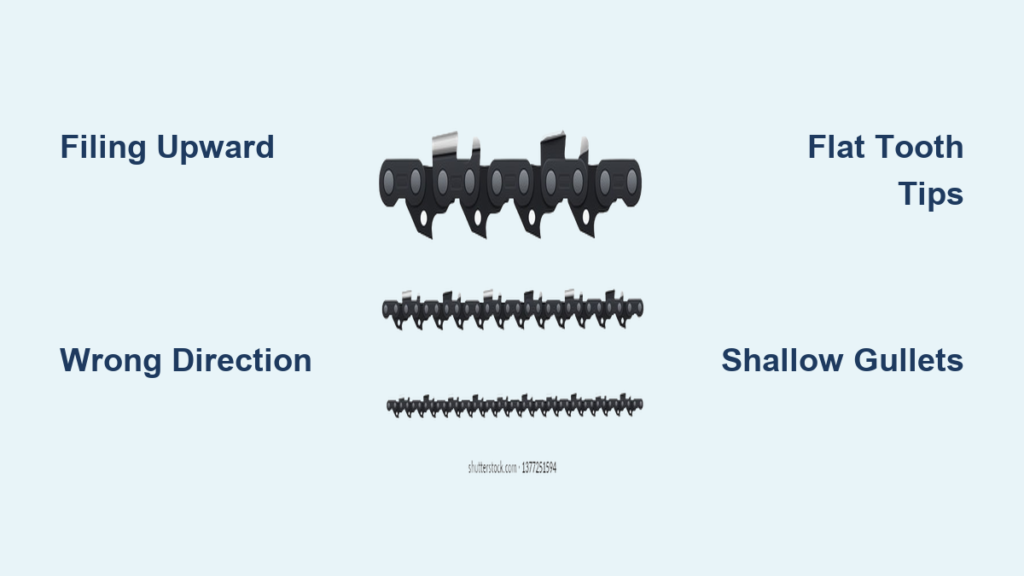
A tooth with a flat, vertical tip may still have steel remaining, but it won’t cut. Many users assume a chain is sharp if metal is present. However, usable life depends on geometry, not just material.
Inspect the leading edge of each tooth. It should slope backward at 25° to 35°, matching factory specs. If it’s near-vertical or rounded on top, it’s been filed incorrectly. No amount of raker adjustment will fix this.
The #1 Chainsaw Sharpening Mistake

Filing Up Instead of Down
The biggest error is pushing the file upward during sharpening. This lifts the file above the tooth’s natural plane, shaving off the tip and flattening the cutting edge.
On nearly vertical teeth, this mistake is easy to make. The sharpener’s guides may rest on the file instead of the teeth, forcing the tool into an upward stroke. The result is a blunt, ineffective tip that grinds rather than slices.
How Geometry Gets Destroyed
Each tooth has a curved gullet and a beveled edge designed to bite into wood. When filed upward, metal is removed from the top of the tooth, not the face. The cutting edge becomes shorter and steeper. The gullet rises, reducing chip clearance.
Over time, this creates a chain that heats up, binds, and cuts slowly, even after multiple sharpenings.
Correct Filing Direction Explained
Follow the Tooth’s Natural Slope
Sharpening must follow the original downward slope of the tooth. Think of it like stropping a knife. Motion matches the cutting angle. For most chains, this means a downward, forward stroke along the tooth’s face.
The tooth slopes back significantly. The file should angle down to match, not rise up. This preserves the gullet depth and reshapes the bevel correctly.
Let the Sharpener Sit on the Teeth
To avoid upward filing, ensure the sharpening guide contacts the top of the teeth, not the file. If the file is bearing the tool’s weight, it’s too high. Adjust the sharpener so the base rests flush on the cutting tooth and depth gauge.
This small shift changes everything. The file engages the correct surface. Stroke follows the proper plane. Gullet stays deep and effective.
Restoring the Tooth Profile

Reshape, Don’t Just Sharpen
Most sharpening sessions don’t restore the tooth. They degrade it further. True sharpening means rebuilding the factory profile, not just touching up the edge.
Start by selecting one tooth and reshaping it fully. Use 3 to 5 firm, downward strokes to carve a smooth curve from the gullet to the tip. The file should feel like it’s being wrapped by the tooth. This is a sign of proper contact.
Match the Factory Curve
A correctly profiled tooth has a deep gullet for chip removal, a convex curve on the face, and a sharp, angled tip pointing forward. Compare your work to a new chain or manufacturer diagram. If the shape is flat or vertical, keep filing until the curve returns.
Fixing Gullet Depth Issues
Why Gullets Ride Too High
Repeated upward filing raises the gullet. Instead of digging into wood, the tooth rides on its tip, creating friction and dust. A deep gullet allows the tooth to clear material efficiently.
If your gullets look shallow or squared off, they’ve been over-filed from the top. This can’t be fixed with raker adjustments alone.
Re-Deepen Through Proper Filing
Only correct filing motion restores gullet depth. Each downward stroke removes metal from the front face, not the top. Over time, this lowers the cutting edge relative to the depth gauge, effectively deepening the gullet.
Work on all teeth evenly. Skip damaged or missing ones, but ensure uniform angle and profile on the rest.
Rethinking Raker Adjustment
Don’t Blame the Raker Too Soon
Many users file rakers immediately when cutting suffers. But if the tooth profile is wrong, adjusting rakers won’t help. A blunt tooth cuts poorly regardless of depth gauge height.
Only adjust rakers after confirming the teeth are properly shaped, filing direction is correct, and all bevels are uniform. Then use the raker gauge to set depth, usually 0.010 inch to 0.025 inch below the cutting edge.
Use the Right Raker File
The sharpener includes a raker file that auto-sets depth. This helps, but only if used on a properly maintained chain. If teeth are misfiled, raker depth becomes irrelevant.
File rakers less frequently than cutting teeth, typically every 3 to 5 sharpenings. Over-filing them increases kickback risk and reduces cutting aggression.
Step-by-Step: Fixing a Misfiled Chain
1. Inspect the Chain
Remove the chain and examine 3 to 5 teeth. Look for vertical or flat tips, shallow gullets, and inconsistent bevel angles. If present, the chain has been filed upward.
2. Reset the Sharpening Tool
Reposition the sharpener so it rests on the top of the teeth, not the file. Apply downward pressure during the stroke. Test on one tooth first.
3. Refile with Downward Motion
Use firm, downward-forward strokes along the tooth face. 3 to 5 passes per tooth. Check for full file contact, curved profile forming, and metal curling, not dusting.
4. Repeat on All Cutters
Work around the chain, maintaining consistent angle and pressure. Flip the saw and repeat on the opposite side.
5. Test and Adjust
Reinstall the chain. Make a cut in softwood. Look for wood chips instead of dust, smooth effortless motion, and no smoke or excessive vibration. If still poor, recheck filing direction.
Avoid These Common Errors
Using the File as a Scraper
Many users rub the file back and forth like sandpaper. This wears down the tool and damages the tooth. File in one direction only, forward and down. Lift on the return.
Skipping Tooth Inspection
Sharpening blind leads to mistakes. Always inspect before filing. Replace broken or excessively worn teeth. File only those with usable steel and correct alignment.
Over-Sharpening
Each sharpening removes metal. Too many sessions shorten tooth life. File only when cutting slows noticeably, you’re producing dust, or the chain requires more force. Stop once the edge is restored.
Pro Tips for Long-Lasting Sharpness
Feel the Wrap Sensation
When filing correctly, the tooth should seem to wrap around the file. This means the curve is engaging the full diameter. If the file skates or bites only at the tip, the profile is wrong.
Mark Teeth Before Filing
Use a marker to color the cutting edge. After one stroke, check where metal was removed. If the top of the tooth is worn, your angle is too high. Adjust until the face is filed.
Store Chains Properly
Keep spare chains in a dry place. Wrap in oiled cloth to prevent rust. A corroded chain dulls faster and resists proper sharpening.
When to Replace the Chain
Even perfect technique cannot save a worn-out chain. Replace it if you see hooked or curled teeth that cannot be flattened, cracks at the base of cutters, missing teeth or damaged drive links, or excessive rounding with no flat surfaces left.
A new chain, properly maintained, lasts longer than a misfiled one sharpened dozens of times.
Key Takeaways for Avoiding Chainsaw Sharpening Mistakes
The most common chainsaw sharpening mistake, filing upward, wastes time, ruins chains, and kills performance. It’s not about how often you sharpen, but how you sharpen.
Focus on downward filing motion that follows the tooth’s slope, gullet depth maintained through correct technique, and factory profile restoration, not just edge touch-ups. Do this, and your chainsaw will cut cleanly, efficiently, and reliably.
Stop creating dust. Start making chips. Inspect your teeth before filing, keep the sharpener on the teeth rather than the file, and prioritize profile restoration over quick touch-ups.
Frequently Asked Questions About Chainsaw Sharpening Mistakes
Why does my chainsaw only produce dust instead of wood chips after sharpening?
Dust production indicates the tooth geometry is wrong. Even if teeth look sharp, incorrect filing direction flattens the cutting edge, turning the chain into a grinder rather than a cutter. The bevel and gullet shape must be restored for proper chip ejection.
How do I know if I’m filing in the wrong direction?
Inspect the tooth after sharpening. If the top appears worn or flattened while the face remains unchanged, you’re filing upward. The correct motion removes metal from the tooth face while preserving the gullet depth and curved profile.
Can raker adjustment fix a misfiled chain?
No. Raker depth cannot compensate for destroyed tooth geometry. If the teeth are vertically oriented or lack proper curvature, adjusting rakers will have minimal effect. Restore the tooth profile first, then set raker depth.
How often should I sharpen my chainsaw chain?
Sharpen only when cutting performance drops noticeably. Signs include increased effort required, dust instead of chips, or the chain pulling to one side. Over-sharpening removes too much metal and shortens chain life.
What’s the correct filing angle for chainsaw teeth?
Most chains require a 25° to 35° backward slope on the tooth’s leading edge. The file should follow this natural angle with a downward-forward stroke, not an upward motion that destroys the profile.
Can a severely misfiled chain be saved?
It depends on remaining metal. If teeth still have flat surfaces and haven’t rounded excessively, profile restoration through proper filing can recover functionality. However, cracked, hooked, or completely rounded teeth require chain replacement.