You start your chainsaw, but instead of the chain ripping forward, it spins backward. This rare phenomenon can alarm any operator. While uncommon, a chainsaw running backwards happens due to specific mechanical and timing issues that are often diagnosable and fixable. Understanding why your saw reverses and knowing how to respond protects both your equipment and your safety.
This guide covers the primary causes of reverse chain rotation, how to distinguish real reversal from camera illusions, and step-by-step fixes to restore proper forward operation. You will also learn maintenance practices that prevent this issue from recurring.
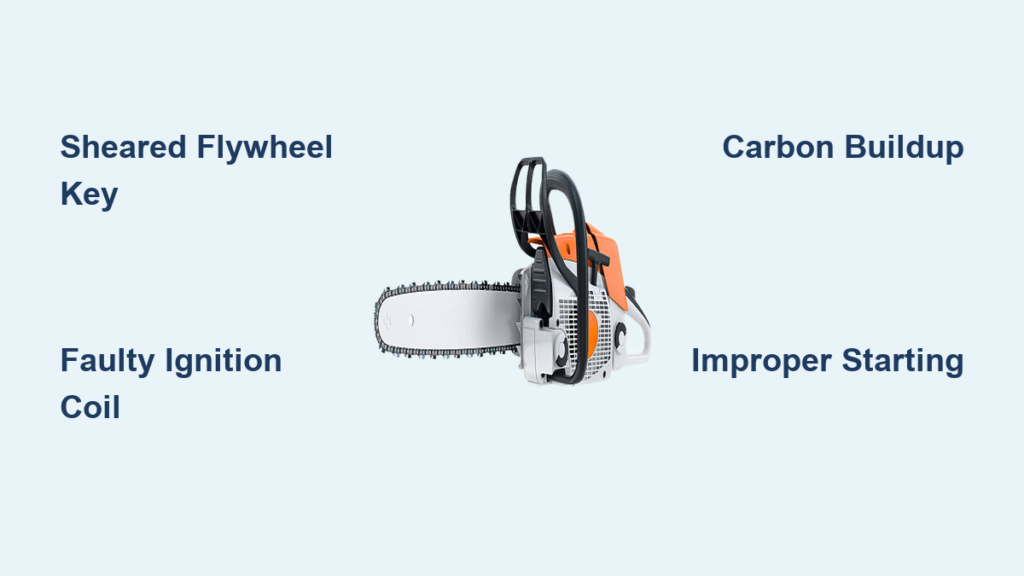
Sheared Flywheel Key
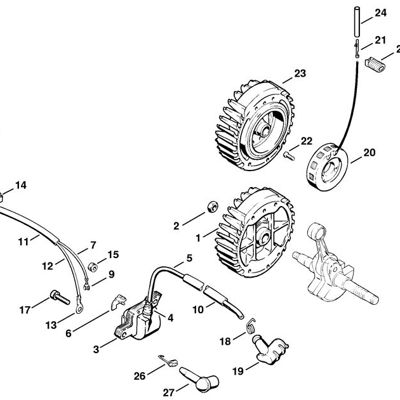
The most frequent mechanical cause of reverse chainsaw operation is a sheared flywheel key. This small metal pin aligns the flywheel with the crankshaft to maintain precise ignition timing. When the saw stalls suddenly, such as when the chain jams, the sudden force can shear this key. Even a slight shift alters spark timing, causing the plug to fire before top dead center on what should be the intake stroke. This forces the piston downward in reverse, spinning the crankshaft and chain the wrong direction.
Diagnosing a Sheared Key
Remove the flywheel cover and examine the key slot between the flywheel and crankshaft. Look for a flattened, broken, or missing metal key. Even minor deformation can shift timing enough to cause reverse firing. Check the crankshaft keyway for wear, though the key typically fails first to protect the shaft.
Visual indicators include:
- Engine starts but runs rough or stalls
- Saw only runs backwards
- Starter rope jerks backward during pull
Replacing the Flywheel Key
- Disconnect the spark plug wire
- Remove the flywheel nut and use a puller to extract the flywheel
- Pull out the damaged key with pliers or tweezers
- Insert a new OEM-spec key into the crankshaft groove
- Reinstall the flywheel, ensuring the key seats properly
- Torque the flywheel nut to manufacturer specifications
- Test the saw at low throttle
Critical: Never reuse a damaged or bent flywheel key. Always use OEM parts for accurate timing.
Faulty Ignition Coil Timing
A defective or incompatible ignition coil can cause reverse startup by firing the spark plug too early. In 2-stroke engines, the ignition system uses a spark advance curve where timing shifts earlier as RPM increases. A bad aftermarket coil may deliver full advance at idle, causing pre-top-dead-center ignition. This forces the piston down on the wrong stroke, initiating reverse rotation.
Why Aftermarket Coils Cause Problems
Cheap coils often lack proper timing curves. Some fire at 30 degrees before top dead center even at startup, well beyond safe limits. OEM coils are calibrated to fire at 10 to 15 degrees before top dead center at idle, preventing reverse starts.
Documented case: A Husqvarna 450 ran backwards after an ignition module swap. Replacing it with a known-good OEM coil fixed the issue instantly.
Testing and Replacing the Coil
- Shut off the saw and disconnect the spark plug
- Remove the ignition module cover
- Inspect for cracks, carbon tracking, or loose wires
- Swap in a known-working OEM coil
- Reconnect and test-start
Pro tip: Avoid no-name ignition modules. Stick with manufacturer-approved parts.
Checking Spark Plug Gap
Incorrect gap affects timing perception and combustion. For most saws, set gap to 0.3 millimeters or 0.012 inches. Use a feeler gauge rather than guessing.
Carbon Buildup and Pre-Ignition
Over time, carbon deposits form in the combustion chamber, especially with poor fuel mix or low-quality oil. These deposits create hot spots that ignite the fuel-air mixture before the spark plug fires, a condition called pre-ignition. If this happens just before top dead center on the wrong stroke, it kicks the engine backward.
Signs of Carbon-Induced Reverse Start
- Saw starts backwards only when hot or after repeated attempts
- Backfire occurs just before reverse rotation
- Spark plug shows black, sooty buildup
User fix example: A Poulan Pro 3516 AVX stopped running backwards after replacing the spark plug, cleaning the carburetor, adding Sea Foam to fuel, and switching to Stihl Ultra HP oil at 40:1 ratio.
Cleaning the Combustion Chamber

- Remove the spark plug and inspect for fouling
- Take off the cylinder head
- Scrape carbon from piston crown and head using a plastic scraper
- Avoid metal tools that could scratch surfaces
- Reassemble and use fresh fuel with high-quality 2-stroke oil
Prevention tip: Use synthetic or semi-synthetic oil and maintain the correct fuel ratio specified in your manual.
Starting Technique Errors
Two-stroke engines do not inherently know which direction to spin. They rely on initial crankshaft momentum and correct spark timing. If you pull the starter rope weakly, jerkily, or release too soon, the engine might begin rotating backward, and if combustion occurs on that stroke, it keeps going.
How Improper Pulling Causes Reverse Start
A short or soft pull gives the crankshaft minimal momentum. If the spark fires during this weak rotation on the intake stroke, it forces the piston down in reverse. Engines with piston-port intake, which lack reed valves, are more prone to this issue.
Real-world parallel: Polaris XLT snowmobiles could be started backward by pulling the rope from the clutch side, proving that simple 2-strokes can run either direction.
Proper Starting Technique
- Set choke for cold starts
- Press primer bulb 5 to 6 times if equipped
- Yank the rope fully and firmly in one smooth motion
- Let it catch without half-pulling or feathering
Warning: Never pull the starter rope if the engine is already running backwards. This can destroy the recoil mechanism.
Why 2-Stroke Engines Can Run Both Directions
Unlike 4-stroke engines with camshafts and valves, 2-stroke chainsaws can technically run in reverse because intake and exhaust are controlled by piston position rather than valves. There is no timing chain or belt to restrict rotation. The magneto ignition fires based on magnet position regardless of direction.
Historical fact: Detroit Diesel 2-stroke engines were known to runaway backward, with smoke pouring from the intake manifold.
Modern applications: Some Ski-Doo snowmobiles use controlled reverse by killing the engine, adjusting timing, and restarting it backward.
Stroboscopic Illusion: Is It Really Reversing?
Before panicking, confirm whether the chain is actually running backwards. What you see might be a stroboscopic effect, a visual illusion caused by camera frame rates.
How the Illusion Works
Cameras capture images at fixed rates such as 30 or 60 frames per second. If the chain rotates at a speed close to the frame rate, it can appear to move slowly or even backward. This is common under fluorescent lighting or in slow-motion video.
Example: A Discovery Channel clip showed a chainsaw running backwards. Experts confirmed it was a camera artifact, not mechanical failure.
Distinguishing Real vs. Illusion
Real reverse:
- Chain cuts from top edge
- Operator reacts in shock
- Smoke or flame from muffler
- Starter rope jerks backward
Visual illusion:
- Smooth, unnatural motion
- No mechanical consequences
- Only visible in video
- Seen in multiple camera angles
Test: Watch the saw in person. If the chain moves opposite the expected cutting direction, it is real.
Husqvarna 450 Reverse Start Fix

The Husqvarna 450 is one of the most reported models for reverse starts, often after ignition module replacement.
Common Causes in This Model
- Aftermarket ignition coil with wrong advance curve
- Flywheel key not fully seated
- Clogged fuel filter or stale fuel
- Improper spark plug gap
Diagnostic Protocol
- Verify chain direction and ensure drive links are engaged correctly in the bar
- Inspect starter pulley for cracks or binding
- Test spark plug, check gap of 0.3 millimeters, replace if fouled
- Swap ignition coil using a known-good OEM unit
- Clean fuel system by replacing fuel filter and flushing carburetor
- Check compression; below 90 psi suggests worn cylinder
Success story: A mechanic fixed a Husqvarna 450 by replacing the air and fuel filters and installing an OEM coil. The saw started normally afterward.
Safety Risks of Reverse Operation
Running a chainsaw in reverse is not just odd, it is dangerous.
Immediate Hazards
- Loss of control because chain moves opposite expected direction, increasing kickback risk
- Injury risk as hands or legs may be cut differently than in forward mode
- Mechanical damage including starter recoil system failure under reverse torque
- Rope may snap and pulley can shatter
Critical action: If your saw starts backwards, shut it off immediately. Do not pull the starter again. Inspect flywheel key, ignition coil, and spark plug before further use.
Preventing Reverse Starts
Prevention is the best defense. Follow this maintenance routine to avoid timing-related failures.
Maintenance Checklist
Spark plug maintenance:
- Inspect every 25 to 50 hours
- Clean carbon deposits
- Set gap to 0.3 millimeters
- Replace if electrode is worn or cracked
Component inspection:
- Use OEM ignition components, avoid cheap aftermarket coils
- Inspect flywheel key annually, especially after hard stalls
- Replace fuel filter every season
- Clean carburetor annually or at first sign of rough running
- Replace air filter every 5 to 10 hours in dusty conditions
- Use fresh fuel mixed no more than 30 days before use
Oil mix requirements:
- Use correct ratio such as 40:1 or 50:1 per manual
- Choose synthetic 2-stroke oil like Stihl Ultra or Husqvarna XP
- Avoid old or off-brand oils that increase carbon buildup
Frequently Asked Questions About Chainsaw Running Backwards
Can a chainsaw actually run backwards?
Yes, 2-stroke chainsaws can run backwards due to their simple valve-less design. Unlike 4-stroke engines, 2-strokes lack camshafts or timing mechanisms that restrict rotation direction. When timing shifts due to mechanical issues, combustion can occur on the reverse stroke, causing backward operation.
What is the most common cause of reverse chainsaw operation?
The most common causes are a sheared flywheel key and a faulty ignition coil. Both affect ignition timing, causing the spark to fire before top dead center on what should be the intake stroke. This forces the piston down in reverse, spinning the chain backwards.
How do I know if my chainsaw is really running backwards?
Watch the chain in person. If it moves opposite the expected cutting direction, it is running backwards. Real reverse operation shows the chain cutting from the top edge, may produce smoke from the muffler, and the starter rope may jerk backward. If it only appears backwards on video, it is likely a stroboscopic camera illusion.
Can starting technique cause reverse operation?
Yes, improper starting technique can cause reverse operation. A weak or erratic starter pull gives the crankshaft minimal momentum. If the spark fires during this weak rotation on the intake stroke, it forces the piston down in reverse. Always pull the rope fully and firmly in one smooth motion.
Is reverse chainsaw operation dangerous?
Yes, reverse operation is dangerous. The chain moves opposite the expected direction, increasing kickback risk. The starter recoil system is not designed for reverse torque and can fail catastrophically. If your saw starts backwards, shut it off immediately and do not pull the starter rope again until you inspect the cause.
How do I prevent my chainsaw from running backwards?
Prevent reverse starts by using OEM ignition components, inspecting the flywheel key annually, maintaining correct fuel and oil mix ratios, and using proper starting technique. Replace spark plugs every 25 to 50 hours and keep fuel fresh. Regular maintenance of timing-sensitive components prevents most reverse start issues.
Key Takeaways for Fixing Reverse Chainsaw Operation
A chainsaw running backwards is usually caused by timing issues stemming from a sheared flywheel key or faulty ignition coil. With proper diagnosis and OEM parts, most cases are fixable. Always shut off the saw immediately if it starts backwards and avoid pulling the starter rope until you inspect the flywheel key, ignition coil, and spark plug.
Prevention through regular maintenance is straightforward. Use manufacturer-approved ignition components, inspect the flywheel key after any hard stall, maintain correct fuel-to-oil ratios, and follow proper starting technique. These practices keep your chainsaw cutting forward where it belongs while protecting your safety and equipment.