If you’ve ever admired the precision and artistry in traditional Japanese woodworking, you’ve likely wondered about the tools behind the craft. Among them, Japanese axes stand out for their refined design, balance, and purpose-driven construction. Unlike their Western counterparts, Japanese axe types are engineered for specific tasks, whether splitting, shaping, or hewing, often with one-handed control and razor-sharp accuracy. These tools reflect centuries of forestcraft, temple building, and a deep respect for wood as a living material.
This guide breaks down the most common Japanese axe types, explaining their unique forms, functions, and where they fit in modern and traditional woodworking. You’ll learn how each axe differs in blade shape, handle length, and cutting angle, and how to choose the right one for your project. Whether you’re a woodworker, bushcrafter, or tool enthusiast, understanding these distinctions helps you appreciate and use these exceptional tools correctly.
Traditional Japanese Axes Overview
Japanese axes are rooted in the country’s timber-framing heritage, especially in miyadaiku (temple carpentry) and sashimono (fine joinery). They are typically lighter than Western axes, with thinner, harder steel blades that hold a sharp edge longer. Most are used with a single-handed grip, allowing for controlled, detailed work rather than brute force.
The forging techniques often involve san mai construction, where a hard steel core is sandwiched between softer iron layers, providing durability and shock absorption. Handles (tsuka) are usually made from dense Japanese oak (kashi) and fitted tang-style through the blade, secured with a metal wedge.
Key Design Features That Define Japanese Axes
- Blade geometry: Thin, convex bevels for clean cuts
- One-handed use: Enables precision and detail
- Poll end: Often flat or hammer-like for striking chisels
- Tang construction: Full or partial tang secured with wedge
- Edge hardness: Typically 60–63 HRC for long edge retention
These features make Japanese axes ideal for fine timber framing, log shaping, and even artistic wood carving.
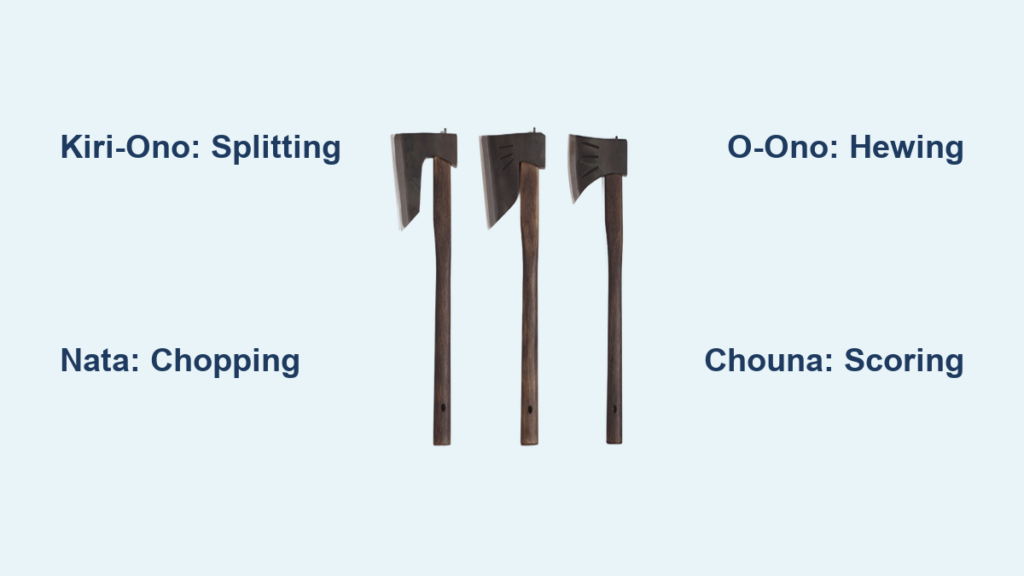
Kiri-ono – The Wood-Splitting Axe
The kiri-ono (切り斧) is one of the most common Japanese axes, designed primarily for felling and splitting softwood logs. Its name translates to “cutting axe,” and it’s often used in forestry and traditional timber preparation.
Blade and Handle Specifications
- Blade weight: 1–1.5 kg (2.2–3.3 lbs)
- Blade width: 8–12 cm (3–5 inches)
- Handle length: 50–60 cm (20–24 inches)
- Edge bevel: Slightly convex, moderate thickness
The kiri-ono has a broader bit than other Japanese axes, allowing it to wedge into wood effectively. The blade is slightly curved, enabling a rolling cut that follows the grain.
Best Uses for the Kiri-ono
- Felling small to medium trees
- Splitting firewood along the grain
- Rough shaping of logs
Pro tip: Use with a two-hand grip for felling, but switch to one hand for controlled splitting. Always cut with the grain to avoid binding.
Nata – The Japanese Hatchet
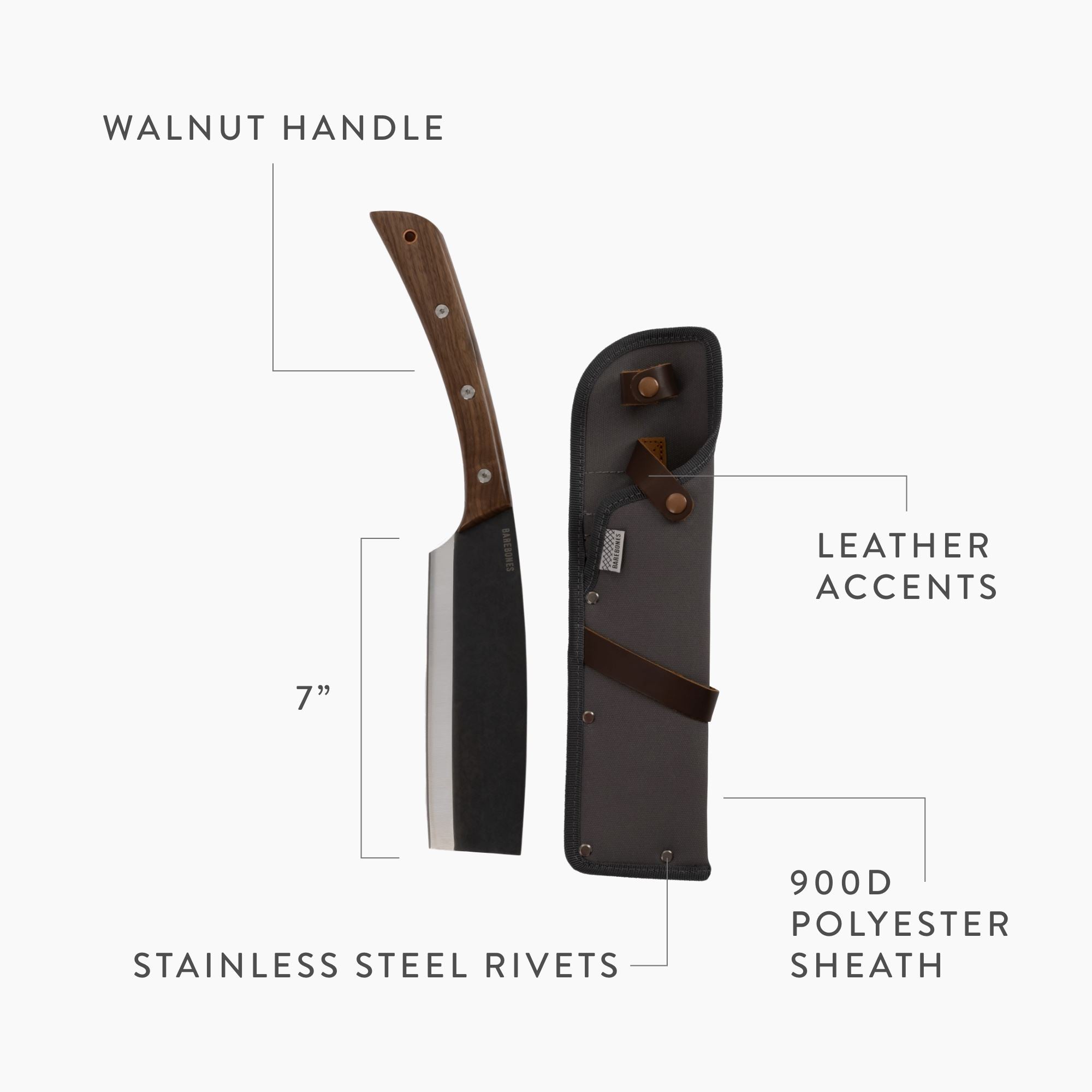
The nata (那太) is a versatile, machete-like axe commonly used in forestry, trail clearing, and small-scale woodworking. Often compared to a heavy cleaver, it’s one of the most widely used cutting tools in rural Japan.
Design and Variants
- Blade length: 15–25 cm (6–10 inches)
- Weight: 600–900 grams (1.3–2 lbs)
- Handle: 30–45 cm (12–18 inches), straight or slightly curved
Two main types exist:
– O-nata (“large nata”): Heavier, for chopping and limbing
– Ko-nata (“small nata”): Lighter, used in fine woodworking and carving
The nata’s edge is usually flat or slightly convex, optimized for chopping down saplings or trimming branches.
Common Applications of the Nata
- Trail maintenance
- Limbing felled trees
- Shaping wooden stakes or posts
- Garden and farm work
Avoid: Using the nata for splitting, as its narrow profile can bind in logs.
O-ono – The Heavy Hewing Axe
The o-ono (大斧) is the largest of traditional Japanese axes, translating to “great axe.” Used historically in timber framing and shipbuilding, it delivers powerful, deep cuts for squaring logs or hewing beams.
Characteristics of the O-ono
- Weight: 2.5–4 kg (5.5–9 lbs)
- Blade width: 12–18 cm (5–7 inches)
- Handle: 70–90 cm (28–36 inches), often curved for two-handed use
The o-ono features a broad, heavy blade with a pronounced bit curvature. Its design allows carpenters to remove large amounts of wood quickly while maintaining straight, flat surfaces.
Primary Uses for the O-ono
- Hewing logs into beams
- Rough timber shaping
- Traditional temple and post-and-beam construction
Expert note: The o-ono requires skill and strength. It’s often used in rhythmic, alternating strokes by two workers in traditional crews.
Chouna – The Log-Scoring Axe
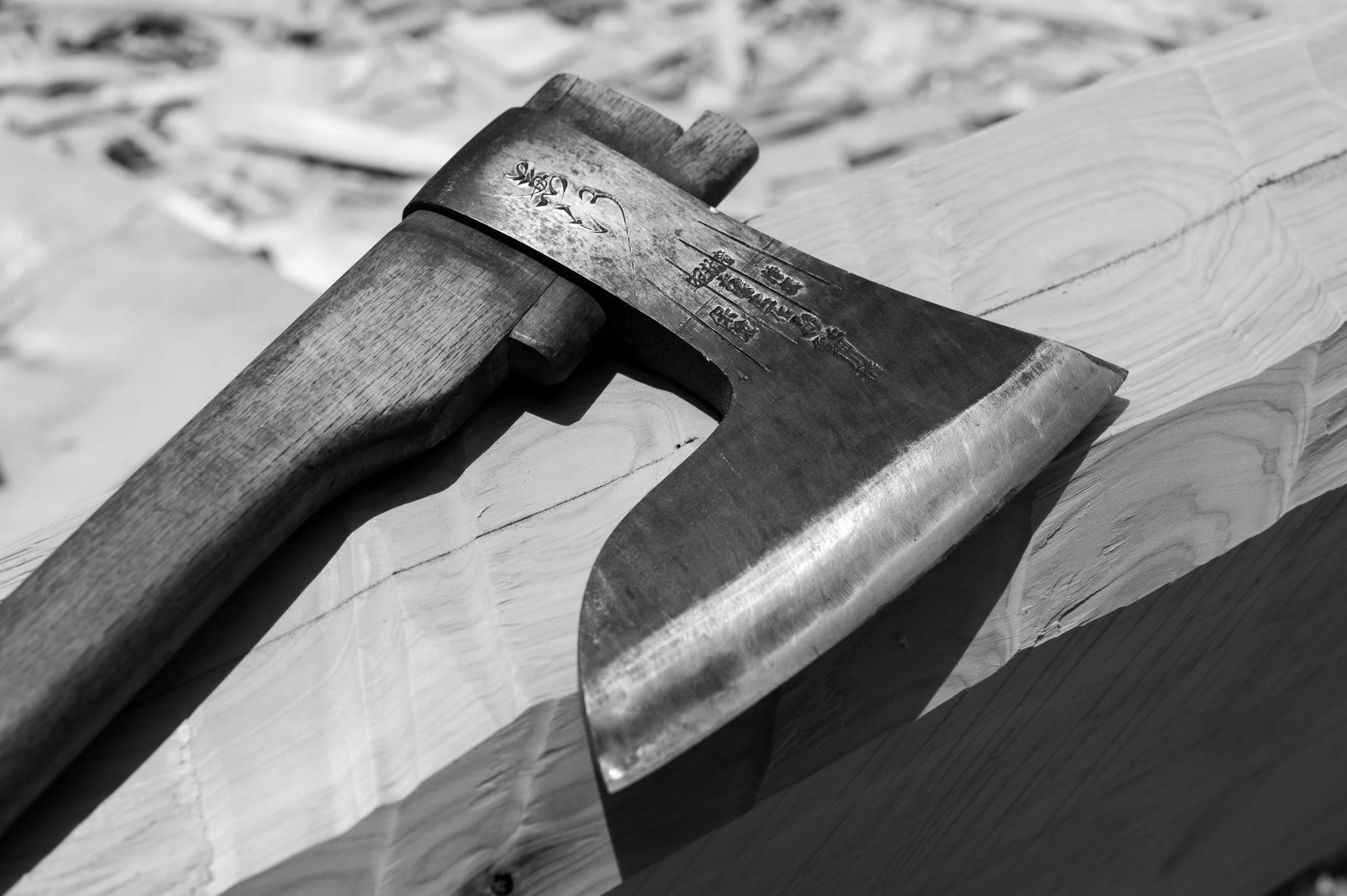
The chouna (チョウナ), also known as chona, is a specialized axe used for scoring and hewing large timbers, especially in daiku (carpentry) work. It’s instantly recognizable by its wide, chisel-like blade and flat cutting edge.
Unique Features of the Chouna
- Blade width: 10–20 cm (4–8 inches)
- Edge: Almost perfectly straight, flat-ground
- Handle: 50–70 cm (20–28 inches), straight and sturdy
Unlike other axes, the chouna is not swung freely. Instead, it’s guided with both hands in a downward chopping motion to create flat, even surfaces on logs.
How the Chouna Is Used
- Scoring timber along grain lines
- Creating flat faces on hewn beams
- Preparing joints in traditional framing
Technique tip: Stand over the log and use body weight to drive the chouna straight down. This ensures a level cut without wandering.
Ara-ono – The Roughing Axe
The ara-ono (荒斧), meaning “rough axe,” is used in the early stages of timber preparation. It’s designed for rapid material removal, leaving a coarse finish that will later be refined with other tools.
Performance and Design Details
- Weight: 1.8–2.5 kg (4–5.5 lbs)
- Blade: Thick, slightly convex, aggressive bevel
- Handle: 60–70 cm (24–28 inches)
The ara-ono strikes a balance between the kiri-ono and o-ono, more controlled than the latter but more powerful than the former.
Ideal Uses for the Ara-ono
- Removing bark and uneven surfaces
- Shaping logs before fine hewing
- Preparing wood for chouna or plane work
Common mistake: Using the ara-ono for precision cuts. It’s meant for speed, not accuracy.
Tsu-ono – The Joinery Axe

The tsu-ono (津斧) is a rare, specialized axe used in fine carpentry and joinery. Smaller and lighter than most, it’s designed for precise chopping and shaping of mortises and joints.
Precision Tool Specifications
- Weight: 500–700 grams (1.1–1.5 lbs)
- Blade width: 5–8 cm (2–3 inches)
- Handle: 30–40 cm (12–16 inches)
The tsu-ono features a thin, sharp blade with a flat or slightly convex edge, allowing for clean, controlled cuts in hardwood joinery.
Applications in Fine Joinery Work
- Chopping mortises
- Trimming tenon shoulders
- Detail shaping in sashimono
Pro tip: Use with a mallet for fine control, or by hand for light trimming.
Choosing the Right Japanese Axe for Your Project
Selecting the correct Japanese axe type depends on your task, material, and skill level. Here’s a quick reference guide:
| Axe Type | Best For | Weight Range | One-Handed? |
|---|---|---|---|
| Kiri-ono | Felling, splitting | 1–1.5 kg | Yes/No |
| Nata | Chopping, clearing | 0.6–0.9 kg | Yes |
| O-ono | Hewing large timbers | 2.5–4 kg | No |
| Chouna | Scoring flat surfaces | 1.5–2.2 kg | No |
| Ara-ono | Rough shaping | 1.8–2.5 kg | Yes/No |
| Tsu-ono | Fine joinery | 0.5–0.7 kg | Yes |
Consider these factors:
– Work scale: Larger projects need heavier axes
– Precision needs: Fine work demands lighter, sharper tools
– Wood type: Hardwoods require harder steel and thinner blades
Maintenance and Care Tips for Japanese Axes
Proper upkeep ensures longevity and peak performance of your Japanese axe.
Sharpening Routine
- Use water stones (1000–6000 grit)
- Maintain original bevel angle (usually 25°–30°)
- Hone with a nagura stone for finishing edge
Warning: Never use a grinder on high-HRC Japanese steel, as overheating can ruin the temper.
Handle Care Guidelines
- Sand minor splinters with fine grit
- Apply boiled linseed oil every few months
- Check wedge tightness regularly
Storage Best Practices
- Store in a dry, low-humidity area
- Hang vertically or lay flat, avoiding standing on the bit
- Use a leather sheath to protect the edge
Frequently Asked Questions About Japanese Axe Types
What is the most common Japanese axe type?
The kiri-ono is the most common Japanese axe type, widely used for felling and splitting softwood logs in forestry and timber preparation.
What is the difference between a nata and a regular axe?
A nata has a longer, machete-like blade optimized for chopping and clearing, while traditional Japanese axes have shorter, wider bits designed for splitting and hewing tasks.
Can Japanese axes be used for splitting firewood?
Yes, the kiri-ono is specifically designed for splitting firewood along the grain, making it highly effective for that purpose.
What Japanese axe should I use for fine woodworking?
The tsu-ono is the best choice for fine woodworking, as it’s lightweight and precise enough for chopping mortises and trimming tenon shoulders.
How do I sharpen a Japanese axe properly?
Use water stones ranging from 1000 to 6000 grit, maintaining the original bevel angle of 25° to 30°, and finish with a nagura stone for a polished edge.
Are Japanese axes suitable for beginners?
Lighter Japanese axes like the nata or tsu-ono are suitable for beginners due to their manageable weight and one-handed control, though proper technique should be learned before use.
Key Takeaways for Understanding Japanese Axe Types
Japanese axes are specialized tools designed for specific woodworking tasks, from splitting and felling to fine joinery and hewing. Each type, including the kiri-ono, nata, o-ono, chouna, ara-ono, and tsu-ono, offers unique features tailored to its purpose.
Understanding these distinctions helps you select the right tool for your project and use it effectively. Start by identifying your primary task, whether splitting firewood or shaping joinery, then match it to the appropriate axe type.
Your next step is to explore reputable sources for purchasing or learning more about these traditional tools, and practice fundamental techniques with a lighter axe before advancing to heavier models.