You’re cutting through a log when the chain suddenly stops. The bar is trapped, wedged tight by invisible pressure in the wood. This happens to beginners and professionals alike when wood movement and internal tension close the kerf around your guide bar in seconds. The good news is that with the right tools and techniques, you can free your saw safely without damaging equipment or risking injury.
This guide covers every proven method for extracting a stuck chainsaw, from simple wedge use to advanced recovery tactics. You’ll learn how to assess the situation, apply controlled force, and prevent future binds. Most importantly, you’ll understand what not to do, because reacting impulsively can lead to bent bars, broken chains, or dangerous kickback.
Why Chainsaws Get Stuck
A chainsaw becomes stuck when the kerf closes around the guide bar due to wood pressure, commonly called pinching. This happens when the weight or tension in the wood shifts during cutting.
Common Causes of Binding
Log bucking under support creates this issue when a log resting on two points bends in the middle as you cut, pinching the saw from below. Tree felling mishaps occur if the back cut closes prematurely and the stump compresses the bar before the tree falls. Limb tension release happens when suspended branches shift or roll after partial cuts, trapping the saw. Internal wood stress stores hidden tension in some logs that only releases mid-cut, causing sudden binding.
The key factor is failing to anticipate pressure buildup before completing the cut.
Immediate Safety Steps When Your Saw Gets Stuck
Before attempting extraction, prioritize safety. Acting recklessly can turn a minor setback into serious harm.
Do This Immediately
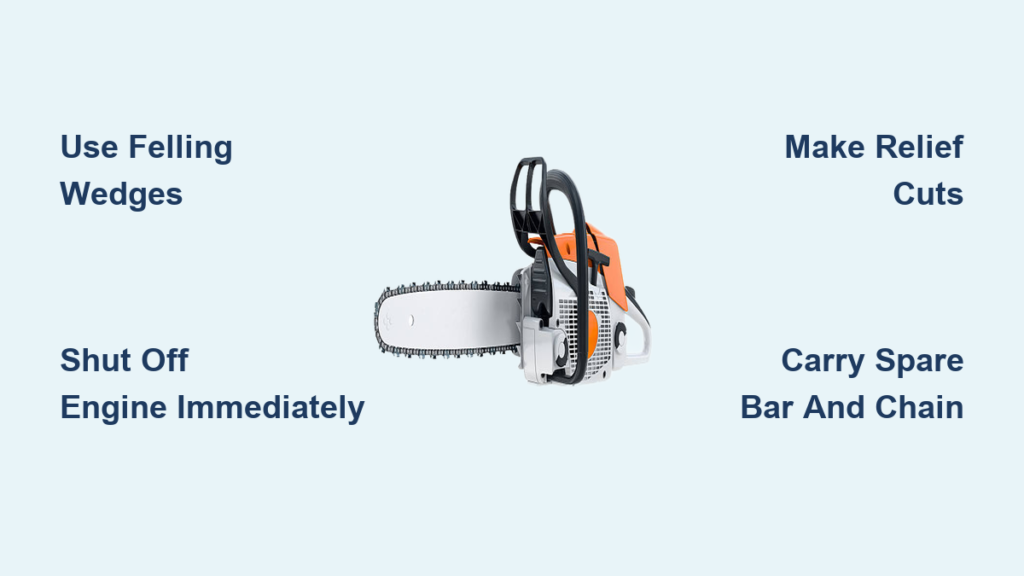
Shut off the engine immediately and never run a bound saw. Set the saw down if possible and keep your hands clear. Assess the situation by checking if the log is shifting or if there’s tension above or below the bar.
Never Do These
Never pull the saw out by hand because this can warp the bar permanently. Never run the chainsaw while stuck because it risks clutch burnout and chain damage. Never strike the bar with an axe because it dulls the rails and weakens the metal. Never yank the chain directly because sudden release causes dangerous kickback.
Using Felling Wedges to Free a Stuck Chainsaw
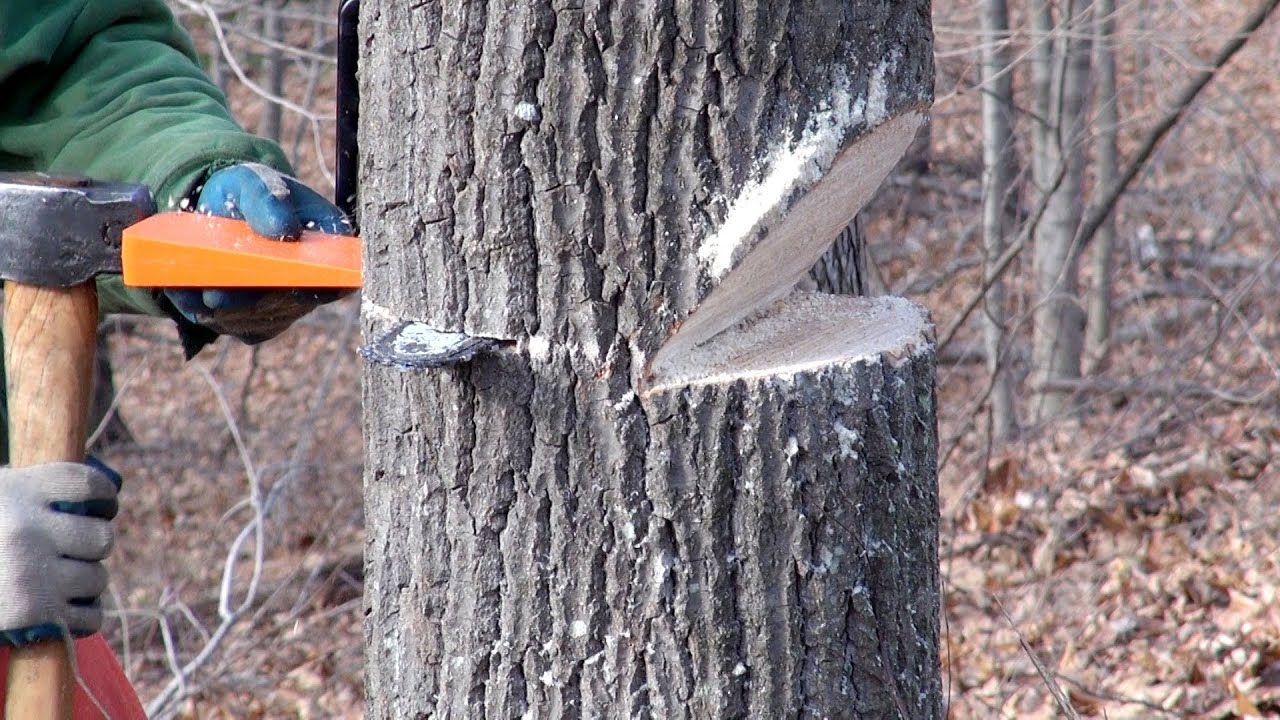
The most reliable method to free a stuck chainsaw is using felling wedges.
Insert Wedges Gradually
Place a plastic or steel wedge into the kerf near the stuck bar. Tap it in with a hammer or maul. As the wedge expands the cut, pressure on the bar decreases. Add a second wedge if needed for larger logs. Once daylight appears in the gap, gently pull the saw free.
Pro Tips for Success
Drive wedges from the side of maximum pressure, such as where the log has sagged. For large trees, insert one wedge, make a small plunge cut, then add more wedges sequentially. If the kerf is too tight, use a second saw to widen it first before attempting wedge insertion.
Advantages and Limitations
Wedges provide safe, controlled, and effective extraction while preventing further binding during felling. They work on both logs and standing trees. However, they are less effective on thick-barked or green wood, and you must carry wedges in your kit at all times.
Pry Bar and Peavey Technique for Small Logs
When wedges are not available, leverage can help especially on smaller logs.
Lift the Log Slightly
Slide the tip of a peavey, cant hook, or pry bar under the log near the stuck saw. Use a rock or stump as a fulcrum. Apply upward pressure to lift the log just enough to free the bar.
Best For This Method
This technique works best on short, lightweight logs and limbs that have not fully settled. It serves as an emergency field fix when proper wedges are unavailable.
Risks to Consider
Fulcrum failure can cause slips and potential injury. The method is ineffective on heavy or fully supported logs and offers limited control in tight spaces.
Relief Cuts to Prevent and Fix Binding
Prevention beats correction. Use relief cuts to reduce pressure before the saw binds.
Single Relief Cut Technique
Feel resistance while cutting? Stop immediately and back the chain out. Make a parallel cut two to four inches away from the original cut. Resume the original cut with significantly reduced tension.
Top-and-Bottom Method
Cut from the top down first, then start a second cut upward from below. The two cuts meet in the middle, eliminating downward pressure on the bar entirely.
When Relief Cuts Work Best
This method is ideal for long, suspended logs, wood with visible cracks or bends, and high-tension bucking jobs.
Spare Bar and Chain Recovery Method
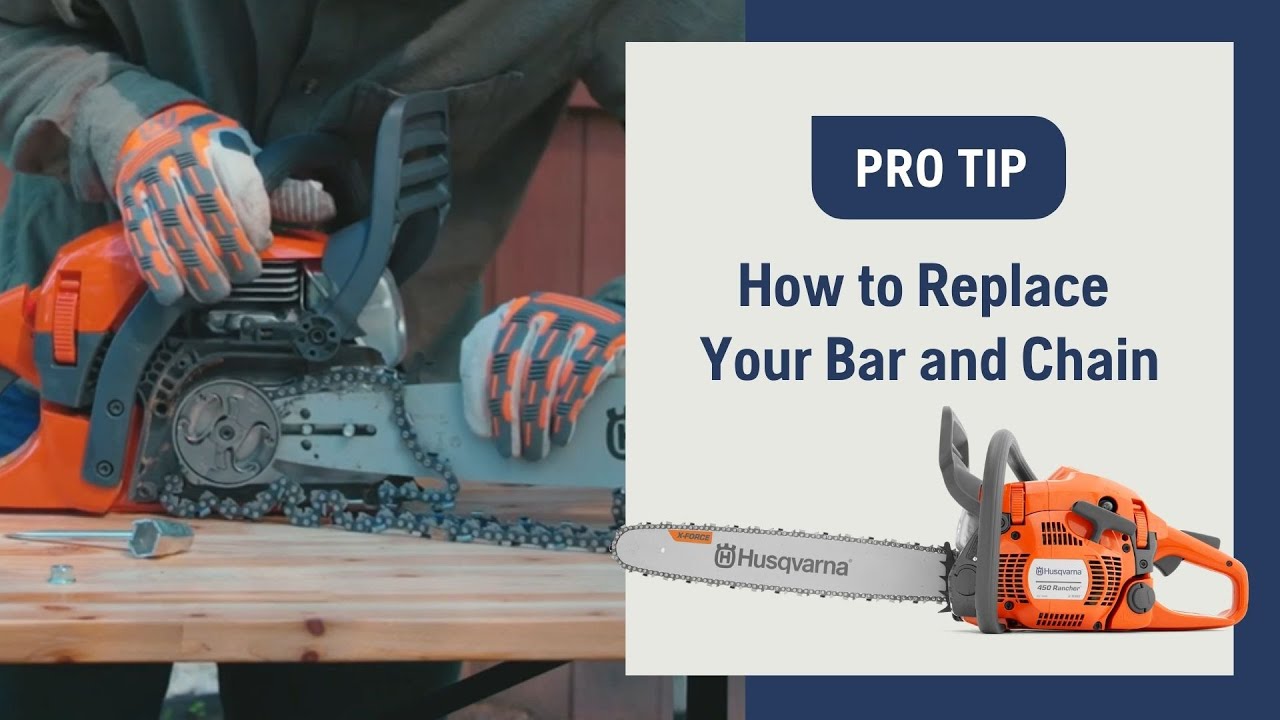
If the bar is deeply embedded, detach the power head and keep working.
Steps to Recover
Use a bar wrench to remove the nuts and power head from the stuck bar. Attach a spare bar and chain to the power head. Cut from another angle to free the trapped bar. Alternatively, use the bare bar as a manual tool by rocking it to widen the kerf.
Why Pros Carry Spares
Carrying spare parts restores cutting ability instantly, saves the original bar from damage, and reduces downtime in remote locations.
Must-Have Tools for This Method
You need a spare bar and chain, a bar wrench for quick disassembly, and knowledge of how to reassemble the power head properly.
Parallel Bore Cut Technique (Expert Only)
This is a last-resort technique for freeing a deeply stuck saw.
Procedure for Advanced Users
Take a second chainsaw and position the tip at the top of the original kerf. Make a plunge cut (bore cut) parallel to the stuck bar. Cut through the compressive fibers above the bar. When pressure releases, pull the saw free.
Critical Warnings
The cut must be perfectly parallel because hitting the bar ruins both saws. This method carries high risk in standing trees and can trigger dangerous tip-back. Only use this technique in controlled environments like logging decks.
When to Use This Method
Use this only when no wedges or spare bars are available and the saw is trapped in a tight pinch with no other options.
Emergency Axe Method as a Wedge
No wedges? Your axe can help in an emergency.
Turn Your Axe Into a Wedge
Slide the axe blade into the kerf or nearby crack. Tap it in from the bottom of the log or limb using controlled strikes. Use the tree’s weight to help split the wood open. Once a gap forms, slide the saw out carefully.
Safety Notes
Never strike the bar or chain with the axe. Use controlled taps rather than full swings. Combine with a pry bar for better leverage when possible.
Extreme Extraction: Jacks and Rope Systems
When muscle and wedges fail, use mechanical advantage.
Lift With a Jack
Place a tractor jack or bottle jack under the log. Dig a shallow pit if ground clearance is low. Lift just enough to free the bar without destabilizing the log.
Pull With Rope and Snatch Block
Remove the power head first to prevent damage. Tie a strong rope high on the tree trunk. Anchor to another tree or vehicle. Use a snatch block to redirect force safely outside the fall zone. Pull slowly until the tree shifts enough to release the bar.
For Heavy Jobs
Use a winch system for maximum pull on large trees. Small trees may respond to hand-pulling alone. Never stand in the fall zone while pulling.
How to Prevent Stuck Chainsaws
Avoiding binds is smarter than fixing them.
Proven Prevention Tips
Use wedges proactively during felling rather than waiting for trouble. Cut in stages by backing out frequently to check for pressure. Support logs close to the cut line to prevent bending. Anticipate wood movement by watching for cracks, leans, or tension. Always carry essential tools including two to four felling wedges, a pry bar or peavey, spare bar and chain, bar wrench, and a hammer or maul.
Best Bucking Practice
Cut from the compression side of tensioned logs. Use relief cuts on long or suspended pieces. Never cut all the way through in high-risk situations; stop early and assess.
Post-Recovery Maintenance Checklist
Once free, your saw needs attention before you continue working.
Inspect and Clean
Remove the bar and chain. Inspect for damage including bent or twisted bars, damaged drive links or cutters, and worn sprockets or clutches. Clean debris from the bar groove, oil holes, and chain path. Re-tension the chain and refill the oil reservoir. Test run the saw in a safe area before resuming cutting.
Neglecting maintenance after a bind increases the risk of chain breakage, poor performance, and safety hazards.
Essential Tools to Always Carry
Several tools prove essential for chainsaw recovery and prevention. Felling wedges in quantities of two to four force open kerfs and prevent binding. A pry bar or peavey lifts logs manually. A spare bar and chain enables continued cutting after recovery. A bar wrench removes the power head quickly. A hammer or maul drives wedges or axe into wood. Rope and snatch blocks pull trees or logs in extreme cases. A second chainsaw provides backup cutting capability.
Key Takeaways for Fixing a Stuck Chainsaw
Wedges are your best defense against stuck chainsaws, so always carry them. Never run a stuck saw because it leads to fast engine damage. Relief cuts prevent most binds by cutting smart rather than fast. Spare parts save time and enable self-reliance in remote locations. Assess the situation before acting because tree size, lean, and available tools determine your strategy. Safety comes first because no saw is worth an injury.
By mastering these techniques and carrying the right tools, you will turn a frustrating bind into a quick, safe recovery. Stay prepared, stay alert, and keep cutting.
Frequently Asked Questions About Getting a Chainsaw Unstuck
What is the safest way to get a chainsaw unstuck?
The safest method is using felling wedges to gradually open the kerf. Shut off the engine first, then insert wedges near the stuck bar and tap them in with a hammer. This creates space without risking bar damage or injury.
Why does my chainsaw keep getting stuck?
Chainsaws get stuck when the kerf closes around the bar due to wood pressure. This happens during log bucking when the log bends and pinches the blade, during tree felling when the hinge compresses prematurely, or when cutting suspended limbs that shift during the cut.
Can I use an axe to get a chainsaw out of a log?
Yes, but only as an emergency wedge. Slide the axe blade into the kerf or crack near the stuck saw. Tap it in from the bottom using controlled strikes. Never strike the bar or chain directly with the axe.
Should I keep a spare bar and chain for emergencies?
Absolutely. Professional loggers always carry a spare bar and chain. If your bar gets deeply stuck, you can remove the power head, attach the spare, and continue cutting from another angle to free the trapped bar.
How do I prevent my chainsaw from getting stuck?
Prevent binds by making relief cuts when cutting long or suspended logs. Use wedges proactively during felling rather than waiting for problems. Cut in stages and back out frequently to check for pressure. Support logs close to the cut line to prevent bending.