Chainsaws are essential tools for cutting firewood, clearing trees, or maintaining property, but their noise can be a major issue. A typical gas-powered chainsaw produces 95 to 115 decibels, which is louder than a motorcycle or jackhammer. Prolonged exposure risks permanent hearing loss, and the loud roar often sparks complaints from neighbors, especially in suburban or urban areas. If you are wondering how to make a chainsaw quieter, the good news is there are effective ways to reduce noise through equipment choices and smart practices.
This guide breaks down every proven method to quiet your chainsaw, from choosing the right model to safe modifications and neighbor-friendly habits. You will learn why muffler tampering usually backfires, how electric saws offer the quietest solution, and what behavioral strategies can prevent conflicts without sacrificing performance.
Why Chainsaws Produce So Much Noise

Understanding the source of chainsaw noise helps you choose the right solution. Gas-powered chainsaws create sound through two main mechanisms: engine combustion and exhaust expulsion. The two-stroke engine fires multiple times per second, producing a rhythmic pounding sound, while the exhaust system vents hot gases at high pressure.
Older chainsaws and budget models lack proper sound dampening. For example, the Swarm 372 XP, a Chinese replica of the Husqvarna 372 XP, comes with a stock muffler containing only a single small exhaust hole and no internal baffling. This minimal design results in poor noise suppression and operating temperatures reaching 158°F. Vintage models from the 1960s often had no muffler at all, just a funnel and screen over the exhaust, making them audible from a full block away.
Modern chainsaws address these issues with improved muffler technology. A newer Stihl MS200 produces a high-pitched “wheeeeeee” instead of the harsh “bangbangbang” of vintage models. This difference makes modern saws far more tolerable for both operators and nearby residents.
Switch to an Electric Chainsaw for Maximum Quiet

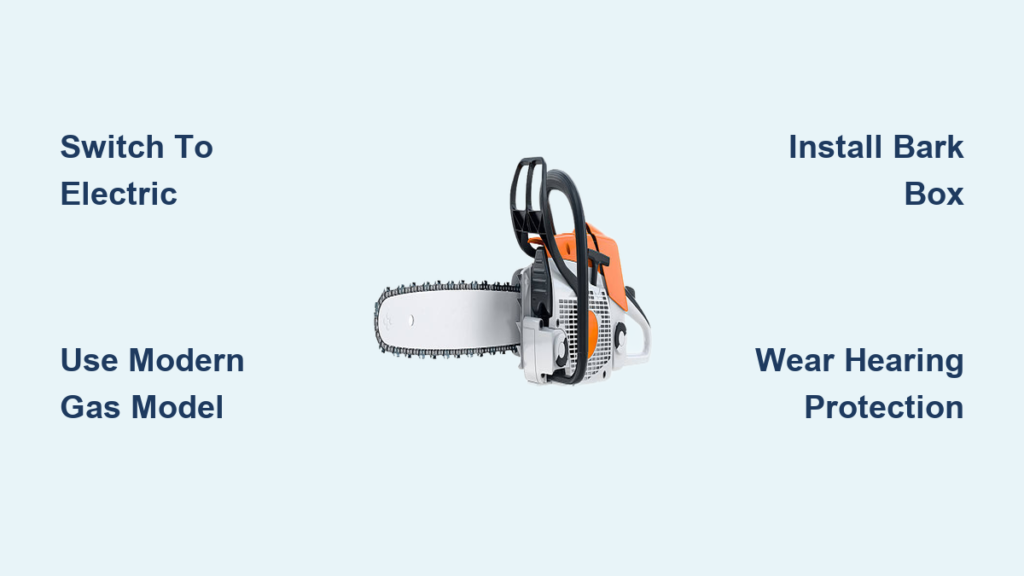
The most effective way to reduce chainsaw noise is to switch to an electric model. These saws operate between 85 and 95 decibels, significantly quieter than gas-powered alternatives. They produce a smoother, less jarring sound more like a power drill than a roar.
Corded electric saws offer unlimited runtime and consistent power but are limited by cord length. Battery-powered models, such as those with 40V+ batteries and 4Ah capacity, provide portability and quiet operation suitable for logs up to 8 inches in diameter. One user noted that a small electric chainsaw works well for logs up to 5 inches, reserving the larger gas saw for bigger jobs.
Electric saws are not ideal for heavy felling or professional forestry work, but they excel at pruning, limbing, and firewood preparation. They produce no exhaust emissions, require less maintenance, and are perfect for residential use. As one expert stated, “If you need something quiet, go electric.”
Choose a Modern Gas Chainsaw If You Need Power
If you require gas power for heavy-duty cutting, choose a modern chainsaw with advanced muffler technology. Newer gas chainsaws are significantly quieter than older models thanks to improved muffler designs and better engine tuning. Reputable brands like Stihl, Husqvarna, and Echo engineer their saws with internal baffles and sound-absorbing materials in the exhaust system.
Look for models advertised with “low-noise” or “quiet-muffler” technology, which are specifically designed for residential use. Avoid older models and budget Chinese replicas, which often lack proper muffling and can run louder and hotter. The investment in a quality modern saw pays off in both performance and neighbor relations.
Never Modify or Remove the Muffler
Many users attempt to modify their chainsaw mufflers to boost power or reduce engine heat, but this almost always makes the saw louder. Removing or altering the muffler exposes raw engine noise that was previously contained. One user reported their modified vintage saw could be heard a full block away, sounding like a high-RPM two-stroke engine at maximum throttle.
Even partial modifications like drilling extra holes or installing performance pipes eliminate the backpressure that helps suppress sound. The result is a chainsaw that is not only louder but potentially damaging to your hearing and unpopular with neighbors. Additionally, reducing backpressure can affect engine performance and increase operating temperatures.
Performance exhausts like expansion chambers or stinger pipes are designed for speed, not silence. These components can push sound levels past 115 decibels, comparable to a jet engine at close range. While they may improve airflow and cooling, they defeat any goal of noise reduction. If quiet operation matters, avoid performance exhaust upgrades entirely.
Install a Commercial Quiet Muffler

If your chainsaw stock muffler is loud or damaged, consider replacing it with a commercial low-noise muffler such as a bark box, which costs approximately $75. These bolt-on systems are engineered to reduce sound without sacrificing too much performance.
Bark boxes use multi-chamber baffling and heat-resistant sound dampeners to muffle exhaust noise effectively. They are tested for safety and durability, unlike homemade versions that can crack, leak, or overheat. Unlike DIY modifications, a commercial solution provides reliable noise reduction without the risk of damaging your saw or voiding the warranty.
DIY muffler projects rarely achieve meaningful noise reduction. One project involving a custom-modified exhaust on a Swarm 372 XP required carburetor retuning but did not significantly reduce noise. The builder gained fabrication experience but acknowledged the mod was not a practical solution for quieting the saw.
Maintain Your Existing Muffler for Optimal Performance
A clogged or damaged muffler can become louder over time. Carbon buildup, rust, or physical damage disrupts the internal baffling that absorbs sound. To keep your saw as quiet as possible, inspect the muffler after every 10 to 15 hours of use.
Remove carbon deposits with a wire brush or solvent. Check for cracks or holes, as even small leaks can amplify noise significantly. Ensure the spark arrestor screen is clean and intact. A well-maintained muffler performs as designed, while neglecting it can turn a moderately loud saw into a neighborhood nuisance.
Regular maintenance also prevents other problems. A functioning muffler ensures proper backpressure, which protects engine performance and prevents overheating. This simple habit keeps your chainsaw running smoothly and quietly.
Wear Hearing Protection Every Time You Operate
Wearing hearing protection does more than prevent hearing loss; it also reduces the perceived loudness of the chainsaw. High-quality earmuffs with a Noise Reduction Rating of 25 or higher can cut sound levels dramatically. Modern electronic hearing protection amplifies ambient sounds like conversation or birds while suppressing sudden loud noises, improving situational awareness and comfort during long cutting sessions.
OSHA recommends no more than 2 hours of unprotected exposure at 100 decibels. Since most gas chainsaws exceed this threshold, always wear hearing protection even for short jobs. Over time, repeated exposure leads to tinnitus or permanent hearing damage. One user shared, “Sitting here listening to the ringing in my ears as I type this,” illustrating the long-term risks of unprotected exposure.
Ear protection has a dual benefit, as one user noted: “Ear pro has two advantages: it mutes the chainsaw and dulls out the neighbors yacking.” It is a practical investment in both your hearing health and your peace of mind.
Adjust Your Operating Habits for Better Relations
Timing matters when using a chainsaw in residential areas. Running a chainsaw early in the morning, late at night, or on weekends increases complaints. Stick to daytime hours, ideally between 9 AM and 5 PM, when noise is more socially acceptable. Summer evenings are often tolerable, especially if neighbors are outdoors and expect some activity.
One of the most effective noise solutions is social, not technical. Cut firewood for neighbors, share logs, or simply warn them in advance. As one user reported, “I get away with running saws in the middle of London this way.” When people benefit from your work, they are far less likely to complain.
A little kindness goes a long way in maintaining quiet relationships. Simple communication and consideration transform a potentially contentious situation into a positive community interaction.
Avoid Dangerous and Ineffective Noise Hacks
Some suggest routing the exhaust into a bucket of water to muffle sound, mimicking marine wet exhaust systems. This idea is highly risky for chainsaws. Water can enter the cylinder and cause hydrolock, destroying the engine. Rapid cooling of hot metal can lead to thermal cracking. Steam and pressure buildup create safety hazards. No verified cases exist of this working safely on a handheld chainsaw, so do not attempt it.
Retaliatory modifications like installing expansion pipes to “teach neighbors a lesson” only escalate conflict and may result in fines or complaints. Making your saw louder never solves the underlying issue. Stay civil and focused on actual noise reduction methods that benefit everyone.
Best Methods Ranked by Effectiveness
| Method | Noise Reduction | Difficulty | Best For |
|---|---|---|---|
| Switch to electric chainsaw | High | Easy | Homeowners, light cutting |
| Buy modern low-noise gas saw | High | Moderate | Users needing gas power |
| Install bark box muffler | Moderate | Medium | Gas saw owners seeking quiet |
| Maintain stock muffler | Low to Moderate | Easy | All gas saw users |
| Wear hearing protection | High for user | Easy | Everyone |
| Cut during daytime | Moderate social impact | Easy | Urban suburban users |
| Build neighbor goodwill | Moderate | Easy | Community-focused users |
Frequently Asked Questions About Chainsaw Noise
What is the quietest type of chainsaw?
Electric chainsaws are the quietest option, operating between 85 and 95 decibels. They produce a smooth sound similar to a power drill rather than the harsh roar of gas engines.
Does removing the muffler make a chainsaw quieter?
No, removing or modifying the muffler almost always makes a chainsaw louder. It exposes the raw engine noise that the muffler was designed to contain, and it can damage engine performance.
How loud is a typical gas chainsaw?
A typical gas-powered chainsaw produces 95 to 115 decibels, which exceeds safe exposure limits and can cause hearing damage with prolonged use.
Can I use a water muffler to quiet my chainsaw?
No, routing exhaust into water is dangerous. It can cause hydrolock, destroy the engine, create thermal cracking, and pose steam safety hazards. This method is not recommended.
What time of day is best to use a chainsaw?
The best time is between 9 AM and 5 PM on weekdays. Avoid early mornings, late evenings, and weekends when noise is more likely to disturb neighbors.
Key Takeaways for Quieter Chainsaw Operation
The most reliable way to make a chainsaw quieter is to choose the right tool from the start. Electric models offer the best noise reduction with minimal trade-offs for most homeowners. If you need gas power, invest in a modern factory-quiet model and keep the muffler intact.
Avoid DIY exhaust modifications. They rarely reduce noise and often make things worse by increasing volume, reducing performance, or damaging the engine. Commercial solutions like bark boxes are safer and more effective.
Combine smart equipment choices with good habits like wearing hearing protection and communicating with neighbors. These practical steps will help you cut wood efficiently without disturbing the peace.