Starting a chainsaw might seem straightforward, but doing it safely and correctly is critical for both operator safety and equipment longevity. The phrase how to turn on a chainsaw is more than a simple search, it reflects a need for clear, step-by-step guidance that prevents injury and ensures reliable engine startup every time. Whether you are using a Husqvarna, STIHL, or another brand, improper starting techniques can lead to kickback, flooding, or even long-term engine damage.
This guide breaks down the exact process to start any gas-powered chainsaw safely, covering cold and hot starts, model-specific controls, pre-start checks, and common mistakes to avoid. You will learn not just how to pull the cord, but why each step matters, from engaging the chain brake to mastering choke settings.
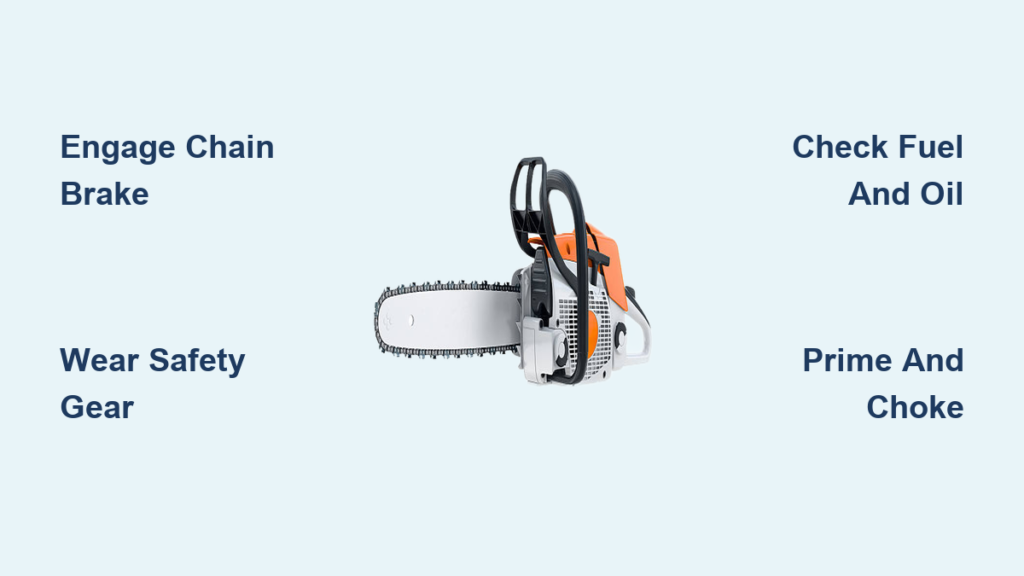
Engage the Chain Brake Before Starting
Before touching the starter, your first action must always be to engage the chain brake. This step is non-negotiable for safe operation.
Why the Chain Brake Matters
The chain brake locks the chain in place, preventing it from spinning during startup. Even a brief engine pop can rotate the chain at high speed, posing a serious laceration risk if the brake is off.
• Push the front hand guard forward until it clicks into place
• The guard should sit flush against the top of the saw body
• Never start a chainsaw with bare hands near the bar or chain
This step applies to all models, including Husqvarna and STIHL, and is the foundation of safe operation.
Wear Proper Safety Gear Before You Start
You cannot start a chainsaw safely without the right protection. Full PPE should be worn every single time, even for a quick test start.
Essential Protective Equipment Checklist
• Gloves to improve grip and protect hands
• Eye protection to shield against debris during startup
• Hearing protection since gas saws exceed 100 dB
• Chaps or chainsaw pants made of cut-resistant material
• Steel-toed boots to protect feet, especially during ground starts
• Helmet with face shield for full head and face coverage
One slip can cause life-altering injuries. Full gear reduces that risk significantly.
Perform Pre-Startup Inspection Every Time
Skipping inspection risks equipment failure or danger. Run through these checks before every start.
Check Fuel and Oil Levels
• Fuel tank should contain fresh 50:1 gas/oil mix or as specified by manufacturer
• Oil reservoir needs bar and chain oil filled, never run dry
• Both cap seals must be tight and vented properly
• Old fuel causes hard starts, so use fresh fuel only
Inspect Chain Tension
• Ideal tension means the chain pulls slightly away from the bar but does not hang loose
• Run your finger along the bottom of the chain, it should feel snug
• Too loose risks derailment, too tight overheats the bar
Test Air Filter and Spark Plug
• Air filter should be clean and dry, clogged filters cause poor combustion
• Spark plug needs inspection for cracks, carbon buildup, or fouling
• Replace spark plug annually or after heavy use
Choose a Safe Starting Position
Your stance determines control during startup. Two methods are approved for safe operation.
Ground Start Method
This method works best for beginners and provides maximum stability.
- Place chainsaw on a flat, non-slip surface
- Position your right foot through the rear handle or use your knee to stabilize
- Grip the front handle with your left hand, keeping your arm straight
- Keep your body offset, never position over the bar
- Pull the starter cord with your right hand using a sharp, full stroke
The saw should stay completely still when you pull the cord. This method reduces strain and prevents movement during startup.
Leg Lock Method
For experienced users when ground start is not possible.
- Sit or stand with legs apart for stability
- Lock the rear handle between your left thigh and right knee
- Hold the front handle firmly with your left hand, wrist straight
- Ensure the chain brake is engaged before pulling
- Pull the starter cord smoothly using sharp, controlled motions
Wear long pants and chaps. Never use this method on slippery surfaces.
Never drop start a chainsaw. This illegal and deadly method causes loss of control and severe injury.
Cold Start Procedure for Cold Engines
Cold engines need extra fuel to ignite. Follow this sequence when the engine has been off for over 30 minutes.
Prime the Engine First
If your saw has a primer bulb or air purge system, use it before attempting to start.
• Press the primer bulb 3 to 5 times
• Stop when fuel becomes visible in the lines or chamber fills
• On Husqvarna Air Purge models, press until resistance drops and fuel flows
No primer bulb? Pull the starter 2 to 3 times slowly to draw fuel into the carburetor.
Set Choke or Control Lever Correctly
This tells the carburetor to enrich the fuel mixture for cold starts.
• Choke knob out equals full choke on standard models
• STIHL Master Control Lever down means Cold Start position with snowflake symbol
• Husqvarna half-throttle is safe only with brake fully engaged
Pull the Starter Cord the Right Way
Technique matters more than strength when starting your chainsaw.
- Pull slowly until you feel resistance, this engages the pawls
- Deliver one sharp, full-stroke pull using your body weight
- Let the cord rewind fully before the next pull
- Repeat until the engine pops once or twice
Common mistakes include jerking too fast early in the pull, using partial pulls, and yanking back violently. Use your body weight by pulling with arms extended, not bent elbows.
Transition After the Engine Fires

Once the engine pops, you must adjust settings before full startup can complete.
Adjust Choke or Lever
• Push the choke in halfway or move the lever to warm-engine position
• On STIHL models, raise the lever one notch up from Cold Start
• This reduces fuel enrichment for the next pull
Continue Pulling Until Running
• Pull again and the engine should start and idle briefly
• If it stalls, repeat the process with less choke applied
Squeeze and Release Throttle on STIHL Models
This step is critical on STIHL chainsaws with Master Control Lever.
• Squeeze the throttle fully, then release it completely
• This resets the idle speed and moves the lever to Run position
• Failure to do this causes the engine to run at high RPM with the brake engaged
• The clutch overheats and damage occurs within minutes
Hot Start Procedure for Warm Engines
Warm engines do not need extra fuel, choke can actually cause flooding.
Standard Hot-Start Steps
- Leave the choke off, set lever to Run or Warm position
- Pull the starter cord using sharp, full strokes
- Engine should start in 1 to 3 pulls
If Starting Is Difficult
Try the half-throttle technique.
• Pull the choke out fully on the first pull
• Push the choke back halfway before the next pull
• This provides slightly richer mixture without full flooding
Dealing With Flooded Engines
• Symptoms include strong fuel smell and no start after 6 or more pulls
• Wait 5 to 10 minutes to let excess fuel evaporate
• Restart with no choke, full throttle, and clear flood mode if equipped
Use the Decompression Valve If Equipped
Many modern chainsaws include a decompression valve to ease startup effort.
How It Helps
• Releases cylinder pressure during startup
• Cuts pull effort by up to 70 percent
• Extends starter rope life significantly
Proper Usage
• Press the button on the engine housing before pulling the starter
• Hold it down during the first 1 to 2 pulls
• Release once the engine begins to fire
This feature is common on STIHL MS 261, Husqvarna 455 Rancher, and pro-grade saws.
Model-Specific Startup Tips
:max_bytes(150000):strip_icc()/stihl-vs-husqvarna-chainsaws-2218119-Final-e35015f7bf9241938edb5b6e1bec0824.jpg)
Controls vary between brands. Know your specific model for best results.
Husqvarna Chainsaw Notes
• TrioBrake models allow brake activation through front or rear hand guard
• Half-throttle starting is allowed but only if the brake is engaged
• Air Purge system requires pressing until fuel fills the chamber
STIHL Chainsaw Notes
• Master Control Lever combines multiple functions into one control
• Cold Start position is lever fully down
• Warm Engine is the middle position
• Run position is at the top, achieved by throttle squeeze after start
• Push to the red mark to stop the engine
Warning: Forgetting to squeeze and release the throttle after startup traps the lever in high-speed mode and damages brake and clutch components within minutes.
Post-Startup Warm-Up Routine
Never cut immediately after starting. Let the engine stabilize first.
Follow These Steps
- Let the engine idle for 30 to 60 seconds to ensure oil circulates
- Listen for smooth operation with no misfires, sputtering, or smoke
- Disengage the chain brake only when idling steadily
- Test throttle response, it should rev smoothly and return to idle
- Check for leaks including fuel, oil, and exhaust
Verify Chain Lubrication Is Working
Running the chain dry destroys the bar and chain quickly.
How to Test Lubrication
- Hold the bar tip over a scrap piece of wood or stump
- Rev the engine to full speed
- Look for a thin line of oil appearing on the wood surface
If No Oil Appears
• Check the reservoir level first
• Inspect the oil line for kinks or blockages
• Clear the oiler hole with a small wire if clogged
• Test the oil pump manually if accessible
Running without oil can overheat the bar in under a minute and creates a fire risk.
Test Chain Brake Function Before Cutting
Ensure safety systems work before you begin any cutting task.
Manual Activation Test
- Start the saw and hold it securely
- Run at half speed
- Swing your left wrist forward to engage the brake
- The chain must stop instantly with no delay
Inertia Activation Test
- Turn off the saw completely
- Rest the guide bar on a stump or stable object
- Hold the rear handle and release the front handle
- The saw pivots downward and the brake should engage automatically
If either test fails, do not operate the saw. Inspect the brake band, spring, and mechanism.
Avoid Common Startup Mistakes
Even professionals make these errors. Do not become another statistic.
Starting With Brake Disengaged
The chain can spin unexpectedly, creating serious injury risk. Always check the brake before pulling the starter cord.
Drop Starting
This method causes kickback, loss of control, and severe injury. It is banned by OSHA and all manufacturers. Never do this.
Running at High RPM With Brake Engaged
This overheats the clutch drum and damages brake components. Disengage the brake before revving the engine.
Ignoring Primer Steps
Skipping the primer causes hard starting and flooding. Prime properly every cold start.
Skipping Pre-Start Checks
Undetected brake failure or dry chain can lead to catastrophic results. Perform the full inspection every time.
Key Takeaways for Starting Your Chainsaw Safely
Mastering how to turn on a chainsaw is not just about pulling a cord. It requires control, preparation, and respect for the tool.
The most important points to remember are always engage the chain brake before starting, perform a full pre-start inspection including fuel, oil, and chain tension, and follow the correct cold or hot start sequence for your specific model. Take time to warm up the engine for 30 to 60 seconds before cutting, and test both chain lubrication and brake function before beginning any job.
Whether you are felling a tree or limbing branches, a safe startup sets the tone for the entire job. Follow these steps every time, and you will protect yourself, your equipment, and those around you.
Frequently Asked Questions About Starting a Chainsaw
What is the correct order to start a chainsaw?
The correct order is to first engage the chain brake, then perform your pre-start inspection checking fuel, oil, and chain tension. Prime the engine if equipped, set the choke for cold starts, anchor the saw using ground or leg lock method, pull the starter cord until the engine fires, adjust the choke and complete startup, let the engine warm up, then finally disengage the brake and verify lubrication.
Why does my chainsaw flood when I try to start it?
Flooding typically occurs when too much fuel gets into the carburetor. This happens most often on hot starts when you use the choke unnecessarily, pull the starter too many times without starting, or fail to push the choke in after the initial fire. Wait 5 to 10 minutes for excess fuel to evaporate, then restart with no choke.
Can I start my chainsaw with the chain brake engaged?
Yes, you must start with the chain brake engaged. This is a critical safety requirement. The brake should remain engaged throughout the starting process and only be released after the engine is running smoothly at idle. Running with the brake engaged at high RPM causes damage.
How do I start a chainsaw after it has been stored?
For a stored chainsaw, first check the fuel condition. Old fuel causes hard starts, so drain and replace it if older than 30 days. Inspect the air filter and spark plug, then follow the full cold start procedure including priming the engine, setting the choke, and performing the complete startup sequence.
What is the difference between cold start and hot start?
Cold start is for engines that have been off for over 30 minutes or completely cooled. It requires priming and full choke enrichment. Hot start is for engines still warm from recent use and requires no choke. Using choke on a hot engine causes flooding.
Why won’t my chainsaw start even after following all the steps?
If the engine still will not start, check the spark plug for fouling or damage, verify fuel is fresh and the fuel lines are not clogged, ensure the air filter is clean, and inspect the ignition module. Persistent starting problems often indicate a fuel delivery or ignition system issue requiring professional service.