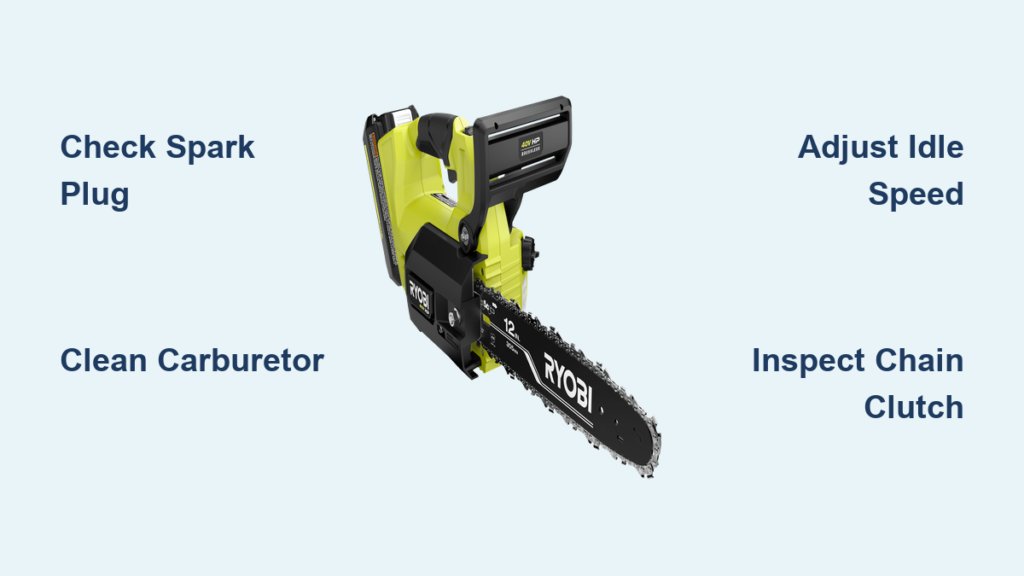
If your Ryobi chainsaw won’t start, stalls during use, or fails to cut properly, you are dealing with one of the most common problems reported by owners. These issues typically stem from fuel system clogs, spark plug failures, or simple maintenance oversights rather than catastrophic engine damage. This comprehensive Ryobi chainsaw repair guide walks you through every major troubleshooting step, from diagnosing starting failures to restoring cutting performance. You will learn exactly which components to check, how to test them with basic tools, and when replacement is necessary.
Diagnose Starting Problems
Check Fuel System and Spark First
When your Ryobi chainsaw refuses to start, two systems are usually responsible. The fuel delivery system and the ignition system account for the majority of no-start scenarios.
Begin by inspecting the fuel tank. Drain old fuel that is older than 30 days because degraded gasoline forms varnish that clogs the entire fuel system. Replace it with a fresh 50:1 gasoline-to-oil mix. Next, pump the primer bulb exactly 10 times to prime the fuel line. If the bulb feels soft or collapses, the fuel filter inside the tank is likely clogged or the fuel line is cracked.
Test the spark plug to verify ignition. Remove it using a socket wrench and inspect the electrode. A wet tip indicates a flooded engine. Black soot signals a rich fuel mixture. Oily residue means oil is leaking into the combustion chamber. For a flooded engine, crank the starter 5 to 6 times with the spark plug removed and the throttle held wide open. Let it dry before reinstalling the plug.
Perform a spark test in low light. Reconnect the plug wire, ground the metal base against the engine block, and pull the starter sharply. A bright blue spark confirms the ignition system works. No spark or a weak orange spark points to a failed ignition coil or moisture in the system.
Clean or Replace the Carburetor
A clogged carburetor prevents fuel delivery even when the tank has gas. Symptoms include the engine refusing to start, starting briefly then dying, or poor throttle response.
Remove the carburetor by disconnecting the fuel line and detaching the throttle linkage. Unscrew the mounting screws and pull the unit free. Spray carburetor cleaner through all jets and passages. Soak the float bowl if gummed residue is present. Never use metal tools because they damage precision orifices.
Reinstall with a new gasket, ensuring the choke shaft and throttle linkage align properly. If cleaning fails to restore performance, replace the entire carburetor. This step resolves approximately 90% of stalling and starting issues in documented repairs.
Fix Stalling and Rough Running
Adjust Idle Speed and Clean Air Filter
An engine that starts but immediately dies usually has an idle speed set too low or a clogged idle jet in the carburetor. Locate the idle screw on the side of the carburetor. Turn it counter-clockwise to raise RPM or clockwise to lower it. Adjust until the engine runs steadily without stalling and the chain does not rotate at idle.
A dirty air filter restricts airflow and causes rough operation. Remove the filter cover and inspect the foam element. Clean it with soap and water or replace if damaged. This simple step often eliminates sputtering and smoking.
Check Fuel Quality and Exhaust
Incorrect fuel mix causes significant running problems. Always use fresh 50:1 gasoline-to-oil mixture for 2-stroke Ryobi models. Old fuel attracts moisture and degrades rubber components. Drain contaminated fuel and refill with fresh mixture.
Inspect the muffler for carbon buildup. A clogged exhaust restricts airflow and causes the engine to run poorly. Remove the muffler and clean out carbon deposits. Replace it if cracked or excessively loud.
Repair Chain Drive Issues
Troubleshoot a Stationary Chain
If the engine runs but the chain does not move, first disengage the chain brake by pulling the front handle back and releasing it. If the chain remains frozen, the problem is mechanical.
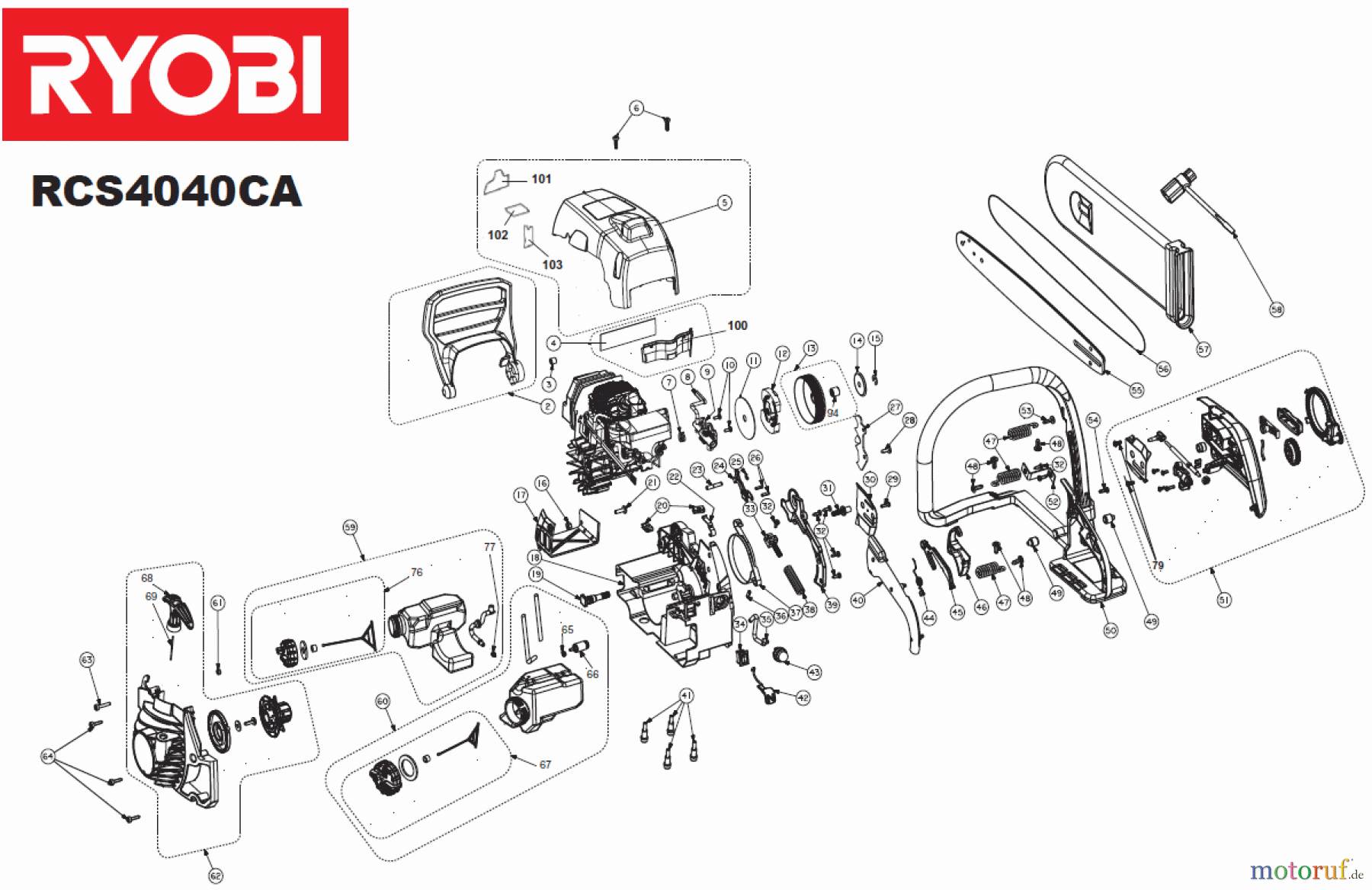
Remove the clutch cover and inspect the clutch assembly. Spin the clutch drum by hand. If it slips under power or won’t engage properly, the clutch shoes are worn and replacement is needed. Inspect the drive sprocket at the base of the bar. Worn teeth or rough rotation indicate the sprocket requires replacement.
Check chain tension. The chain should grip the bar firmly but still move freely when pulled by hand. Adjust the tensioner if the chain is too loose or too tight.
Stop a Continuously Spinning Chain
A chain that won’t stop turning indicates a stuck clutch. Heat warping, debris binding the shoes, or a glazed drum surface typically cause this condition.
Disassemble the clutch and clean all components with degreaser. Inspect for warping or binding. If the clutch still fails to disengage freely after cleaning, replace the entire assembly. Never operate with a faulty clutch because it poses a serious safety hazard.
Restore Cutting Performance
Sharpen the Chain and Check Bar Oil
A dull chain dramatically reduces cutting efficiency and increases kickback risk. Use a 5/32 inch round file to sharpen the cutters at a 30 degree angle. File the depth gauges so they sit 0.025 inch lower than the cutters. This maintains proper cutting geometry.
Verify bar oil flow. Fill the oil reservoir and hold the bar tip near a white piece of paper. Run the saw for 10 seconds. Visible oil spray confirms the oil pump delivers lubrication. No spray indicates a clogged oil hole on the bar, a failed oil pump, or a cracked oil line.
Inspect the guide bar for uneven rail wear, a bent tip, or groove clogging. Flip or replace the bar as needed. A worn bar causes poor tracking and accelerates chain wear.
Maintain Your Chainsaw Year-Round
Follow a Preventive Maintenance Schedule
Annual maintenance prevents most failures before they occur. Perform a tune-up before each spring cutting season.
Replace these components annually: spark plug, carburetor, fuel filter, fuel line, and primer bulb. Clean or replace the air filter before each use. Lubricate the chain and bar daily during use. Check chain tension before each use.
Use tune-up kit X002JH which includes the spark plug O22P/L7T, carburetor, fuel filter, fuel hose, primer bulb, and gaskets. This kit ensures all components are compatible and saves diagnostic time.
Store Fuel Properly
Never store chainsaws with old fuel. Ethanol-blended gasoline breaks down within 30 days, forming varnish that clogs the carburetor. Add fuel stabilizer to fresh gas before storage. Run the engine for 2 minutes to circulate the stabilized fuel. Drain the carburetor bowl and store with an empty tank. This single practice prevents approximately 70% of no-start issues.
Find Correct Replacement Parts
Use Model Numbers for Exact Fits
Ryobi supports numerous chainsaw models with available parts. Enter your full model number on Repair Clinic or Amazon to get exact-fit components. Popular models with strong parts support include CS1800, P540, P542, RY10521A, RY10532, RY40500, RY43006, RY43155, RY5020, and RY74003D.
Common replacement parts include carburetor assemblies, starter ropes, ignition modules, chain brake mechanisms, mufflers, and oil pumps. Avoid off-brand carburetors because they often fail within months. Stick with OEM or high-rated third-party replacements for reliability.
Perform Final Safety Check
Verify Safe Operation After Repair
After completing any repair, follow this verification sequence. Reinstall all covers and screws securely. Fill the tank with fresh 50:1 fuel and top off the bar oil reservoir. Ensure the chain brake is disengaged.
Perform a dry start test. Turn the safety switch on. Pull the choke lever fully out. Pump the primer bulb 10 times. Pull the starter rope 3 to 5 times. Move the choke to the Run position and restart. Adjust the idle screw so the engine runs steadily and the chain stops moving.
Test on small branches and monitor for smoke, vibration, oil leaks, or overheating. Recheck chain tension after 10 minutes of operation.
Frequently Asked Questions About Ryobi Chainsaw Repair
Why does my Ryobi chainsaw won’t start even with fresh fuel?
The most likely causes are a fouled spark plug, clogged carburetor, or failed ignition coil. Test the spark plug first using the spark test procedure. If spark is present, clean or replace the carburetor. No spark after testing indicates an ignition system failure requiring coil replacement.
How often should I replace the spark plug in my Ryobi chainsaw?
Replace the spark plug annually as part of your preventive maintenance schedule. More frequent replacement may be needed if the engine runs poorly, shows black soot on the plug, or experiences repeated starting failures.
Can I use ethanol gasoline in my Ryobi chainsaw?
Avoid ethanol-blended gasoline when possible because ethanol attracts moisture and degrades rubber components in the fuel system. If you must use ethanol fuel, add a fuel stabilizer and never store the chainsaw for more than 30 days with ethanol-containing gas.
What causes a Ryobi chainsaw to stall after starting?
Stalling after starting typically results from an idle speed set too low, a clogged idle jet in the carburetor, or a dirty air filter. Adjust the idle screw first. If the problem persists, clean the carburetor focusing on the idle circuit and replace the air filter.
How do I know if my chainsaw clutch needs replacement?
Signs of clutch failure include the chain slipping under power, the chain not engaging when the engine revs, or the chain spinning continuously even when the brake is engaged. Remove the clutch cover and inspect the shoes for wear. If they appear worn or the drum is damaged, replace the entire clutch assembly.
Key Takeaways for Successful Ryobi Chainsaw Repair

Most Ryobi chainsaw repair issues stem from three simple sources: fuel system problems, ignition failures, or basic maintenance oversights. By checking the spark plug, testing fuel delivery, and cleaning the carburetor, you can resolve approximately 90% of starting and stalling problems without major repairs. Always use fresh 50:1 fuel mix, perform annual tune-ups with tune-up kit X002JH, and store your chainsaw with stabilized fuel to prevent varnish buildup. For chain and cutting issues, verify proper tension, sharpen or replace dull chains, and ensure the bar oil system delivers lubrication. Register your model on the RYOBI website for warranty support and bookmark repair videos for quick reference during future maintenance sessions.