Installing 17-inch supermoto wheels on your dirt bike drastically changes your final drive ratio and often ruins your highway comfort. Without adjusting your gearing, your engine spins 33% faster at speed, creating excessive vibration and limiting your top end significantly.
This guide details the exact supermoto sprocket setup you need to fix high RPM issues and match your riding style. You will learn which front and rear combinations deliver smooth cruising, explosive city acceleration, or track-ready performance while ensuring proper chain fitment.
How Supermoto Wheels Alter Your Gearing
Switching to smaller 17-inch wheels reduces your tire diameter compared to stock off-road wheels. This physical change shortens your effective gearing, forcing the engine to work harder to maintain any given road speed.
A bike that cruised comfortably at 3,000 RPM on dirt tires will spike to 4,000 RPM at 60 mph with supermoto wheels if you keep stock sprockets. This increase causes unnecessary engine stress and makes long-distance riding uncomfortable due to constant high-frequency vibration.
Why Engine RPM Spikes on the Highway
The smaller rolling circumference of supermoto wheels means the wheel must rotate more times to cover the same distance as a larger dirt wheel. Your transmission and sprockets must compensate for this difference to maintain efficient engine speeds.
Ignoring this math results in a machine that feels frantic on the freeway and lacks usable top-end power. Properly calculating your new ratio is the only way to restore balance to your drivetrain after a conversion.
Best Rear Sprocket Sizes for Street Use
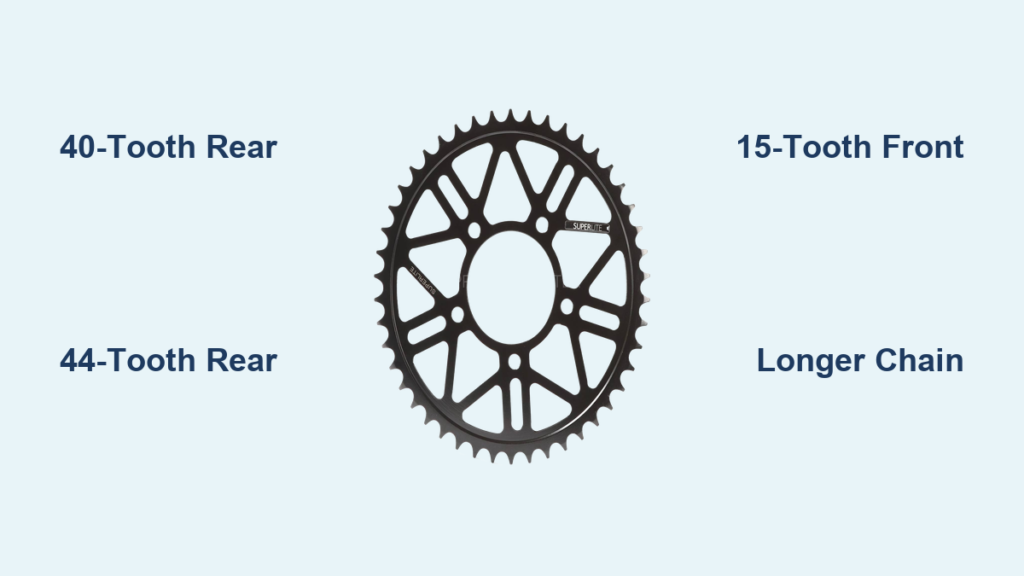
The rear sprocket is the primary component you will change to correct your gearing. Selecting the right tooth count depends entirely on whether you prioritize highway mileage, city torque, or track acceleration.
40-Tooth and 42-Tooth for Highway Touring
A 40-tooth rear sprocket provides the tallest gearing available for supermoto builds, making it ideal for extended freeway travel. This setup minimizes engine RPM to reduce fatigue and vibration during long hauls.
The 42-tooth option offers a versatile middle ground that prevents over-revving while retaining enough torque for urban environments. Riders have successfully used a 16-tooth front with a 42-tooth rear for cross-island touring in Tasmania without issues.
43-Tooth and 44-Tooth for City Riding
A 43-tooth rear sprocket delivers excellent versatility for mixed-use riders who visit the track occasionally. While slightly short for sustained highway speeds with a 14-tooth front, it performs well in spirited street riding configurations.
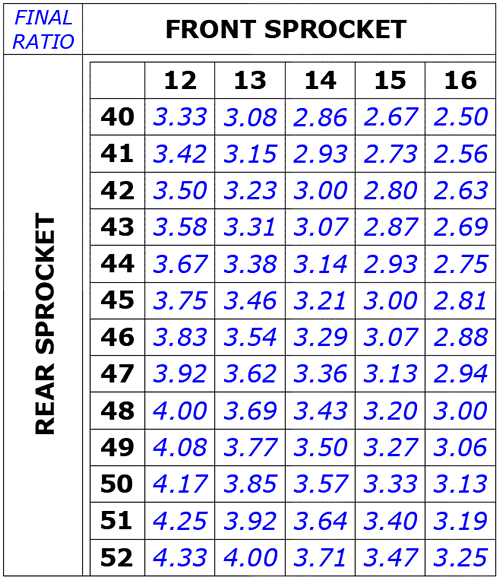
The 44-tooth rear is the most common choice for city-focused builds and wheelie enthusiasts. A 15-tooth front paired with a 44-tooth rear allows easy cruising at 65 mph while achieving top speeds over 85 mph and roughly 50 mpg.
46-Tooth and 48-Tooth for Specialized Uses
Larger sprockets like the 46-tooth create extremely short gearing that is generally impractical for street use. A 14-tooth front with a 46-tooth rear produces excessively high RPMs that make pavement riding unpleasant.
The 48-tooth aluminum sprocket serves a niche market focused on wheelie competitions and visual customization. These lightweight options come in various anodized colors but sacrifice highway usability for low-speed torque and style.
Front Sprocket Pairing Strategies

Changing the front sprocket is a cost-effective way to fine-tune your final drive ratio without replacing the entire chain system. This small component allows for significant adjustments in performance characteristics.
14-Tooth Front for Aggressive Performance
A 14-tooth front sprocket creates a very short final drive ratio suitable for tight woods or technical track sections. However, this configuration spins at 4,500 RPM at just 62 mph, which feels too busy for highway commuting.
While useful for dual-sport scenarios requiring maximum off-road torque, avoid using a 14-tooth front with large rear sprockets on the street. The resulting gearing is simply too aggressive for comfortable pavement riding.
15-Tooth Front for Mixed Terrain
The 15-tooth front sprocket represents a sweet spot for riders who split time between city streets and canyon runs. Pairing this with a 41-tooth rear drops highway RPM to 4,150 at 62 mph, a noticeable improvement over the 14-tooth setup.
This configuration delivers strong pulling power and excellent fuel economy when matched with a 44-tooth rear. It provides enough torque for urban environments while remaining comfortable enough for occasional highway stretches.
16-Tooth Front for Smooth Cruising
Riders prioritizing long-distance comfort should consider a 16-tooth front sprocket to significantly lower engine RPM. This size works exceptionally well with 42-tooth or 44-tooth rear sprockets to create a relaxed cruising experience.
Be aware that switching to a 16-tooth front often requires a new chain or significant modification to your existing one. The increased diameter changes the chain path enough that standard lengths may not fit properly.
Chain Length and Compatibility Rules
Changing your sprocket sizes directly impacts the required length of your drive chain. Installing a larger rear sprocket increases the distance the chain must travel around the perimeter of the wheel.
When You Need a Longer Chain
You will definitely need a longer chain if you install a 14-tooth front with a 44-tooth rear sprocket. Even a 14-tooth front with a 43-tooth rear might require extra links, so verification is essential before installation.
Any increase in rear sprocket size, such as moving from 41 teeth to 44 teeth, usually demands a new chain. Assuming your old chain will fit often leads to binding, poor alignment, or catastrophic chain failure.
Best Practices for Chain Installation
Always purchase a chain that is longer than your estimated requirement to ensure you have enough material. Use a chain breaker tool to remove excess links and achieve perfect tension rather than risking a chain that is too short.
Replace your front sprocket and chain whenever you install a new rear sprocket to ensure uniform wear patterns. Mismatched components accelerate wear and can lead to premature drivetrain failure.
Performance Profiles by Riding Style
Your ideal supermoto sprocket setup depends on where you ride most often and what performance characteristics you value. Matching your gear ratio to your specific lifestyle ensures the best possible experience.
City Commuters and Wheelie Enthusiasts
Urban riders benefit most from quick acceleration and low-speed torque provided by a 44-tooth rear sprocket. Combinations like 15/44 or 16/44 deliver strong pull from stoplights and make the bike feel agile in traffic.
This setup allows for smooth cruising at city speeds while retaining enough top end for occasional highway merges. Fuel efficiency remains high, making it an economical choice for daily transportation.
Highway Tourers and Long Distance Riders
Riders covering long distances should opt for a 40-tooth or 42-tooth rear sprocket to reduce engine strain. These taller gearing options lower RPM at speed, minimizing vibration and improving overall comfort during extended trips.
Pairing these rear sprockets with a 16-tooth front creates a relaxed driving dynamic perfect for touring. This configuration maximizes fuel economy and reduces mechanical stress on the engine.
Track Days and Dual Sport Riders
Track enthusiasts need responsive acceleration without sacrificing too much top speed, making a 42-tooth or 43-tooth rear ideal. These sizes offer sharp pick-up for corner exits while remaining versatile enough for street use.
Dual-sport riders often keep a 14-tooth front for off-road capability and pair it with a 42-tooth or 43-tooth rear. This balance maintains trail performance while providing acceptable on-road manners.
Aesthetic and Customization Options
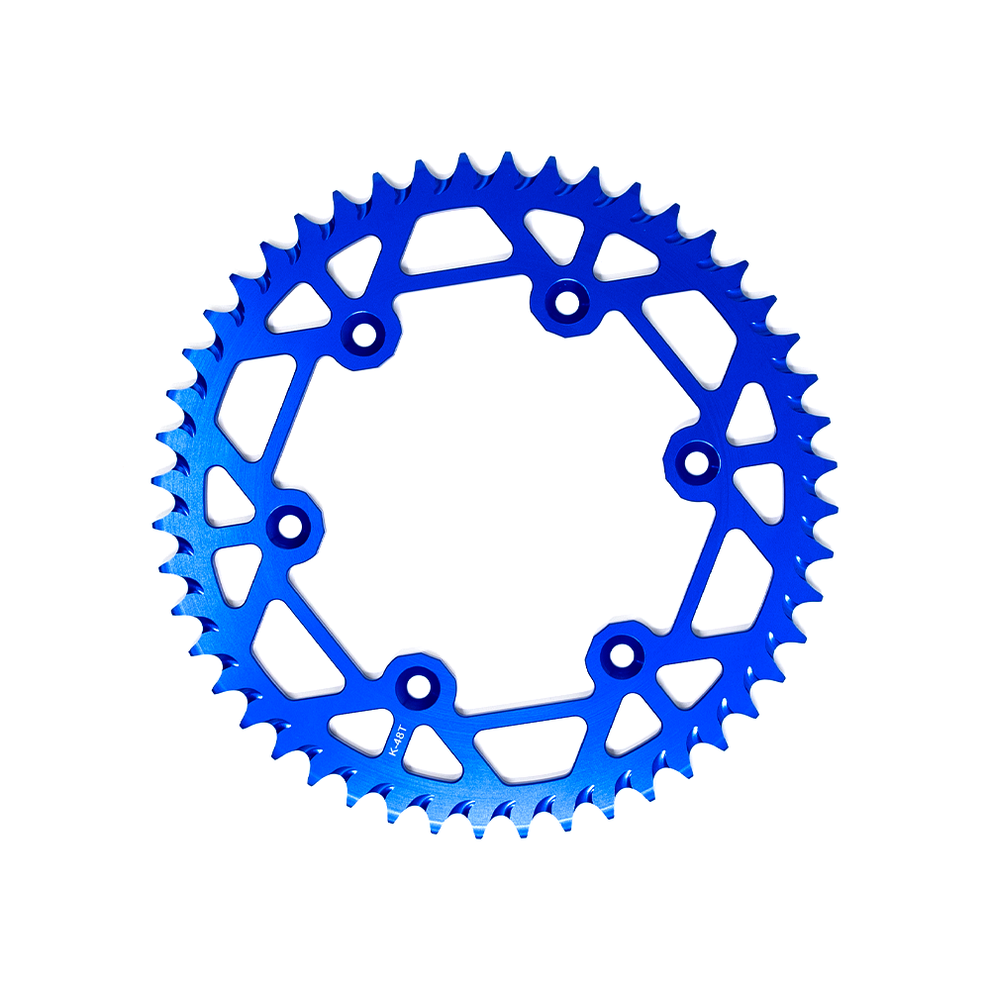
Supermoto builds often emphasize style as much as performance, and sprockets offer a simple way to personalize your bike. Manufacturers now offer various colors and finishes to match your specific theme.
Color Matching and Anodized Finishes
Aluminum sprockets are available in anodized finishes including Orange, Black, Blue, and Purple to match your wheel accessories. Riders with gold front rotors can find gold-colored rear sprockets from manufacturers like Supersprox to complete the look.
These color options allow for seamless integration with axle blocks, valve caps, and crown nuts. Coordinating these small details creates a professional, custom appearance that stands out.
Fitment for Popular Models
Specific lightweight aluminum sprockets fit KTM EXC and SX models from 2002 to 2025. They also compatible with Husqvarna TE, FE, and TX models from 2014 to 2025, plus GasGas bikes from 2021 to 2025.
Warp 9 supermoto wheels typically use the RMZ450 bolt pattern, which supports a wide range of aftermarket sprocket sizes. This compatibility makes it easier to find the perfect combination of performance and visual appeal for your build.
Frequently Asked Questions About Supermoto Sprocket Setup
What is the best supermoto sprocket setup for highway riding?
For highway riding, use a 40-tooth or 42-tooth rear sprocket paired with a 16-tooth front. This combination lowers engine RPM significantly, reducing vibration and fatigue during long-distance travel while improving fuel economy.
Do I need a new chain when changing my supermoto sprockets?
Yes, you should assume a new or longer chain is required when increasing rear sprocket size. A 14-tooth front with a 44-tooth rear definitely needs a longer chain, and buying extra length allows you to cut it to fit perfectly.
How does a supermoto conversion affect my engine RPM?
Converting to 17-inch supermoto wheels increases engine RPM by approximately 33% at any given speed if you keep stock sprockets. A bike doing 3,000 RPM at 60 mph on dirt tires will hit 4,000 RPM at the same speed with supermoto wheels.
Which rear sprocket size is best for city commuting?
A 44-tooth rear sprocket is the most common choice for city riding because it provides strong acceleration and torque. Paired with a 15-tooth or 16-tooth front, it offers excellent maneuverability and smooth cruising up to 65 mph.
Can I use a 48-tooth sprocket for street riding?
A 48-tooth sprocket is designed primarily for wheelie competitions and visual customization rather than practical street use. While it fits specific KTM, Husqvarna, and GasGas models, it creates extremely short gearing that is inefficient for normal riding.
Key Takeaways for Your Supermoto Sprocket Setup
Selecting the correct supermoto sprocket setup transforms your bike from a frantic high-RPM machine into a balanced street performer. Prioritize a 40-tooth or 42-tooth rear for highway comfort, or choose a 44-tooth rear for city torque and acceleration.
Always buy a longer chain and cut it to size rather than risking a chain that is too short for your new gearing. Replace your front sprocket and chain simultaneously with your rear sprocket to ensure maximum drivetrain longevity and safety.