
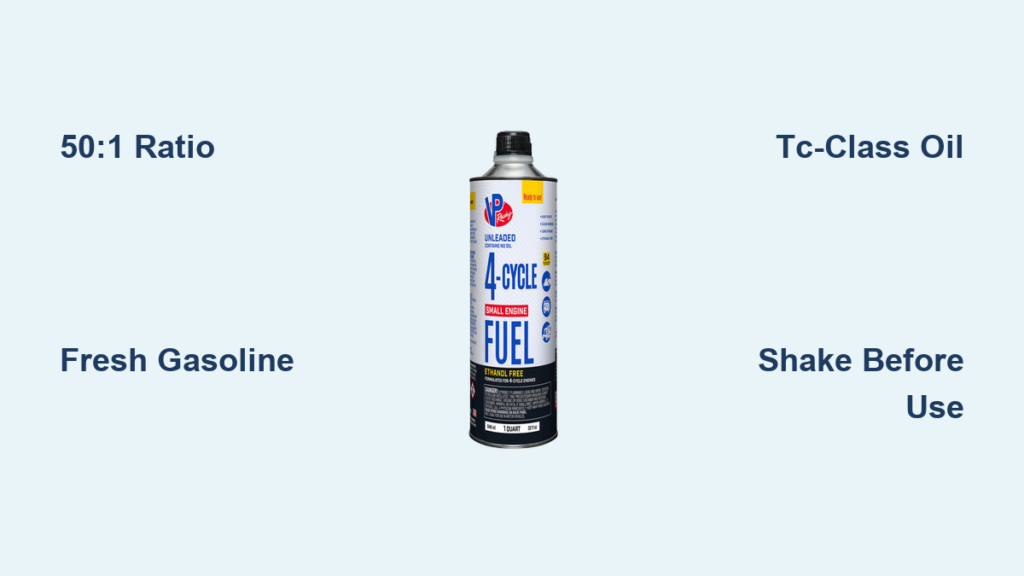
Running a chainsaw without the correct fuel mixture is like driving a car without oil. It might work for a few minutes, but permanent damage is inevitable. Most chainsaws use two-stroke engines, which rely on a precise blend of gasoline and two-stroke oil to power the engine and lubricate internal components. The chainsaw fuel mixture ratio is the foundation of reliable performance and long engine life.
The standard ratio for nearly all modern chainsaws is 50:1. This means 50 parts gasoline to 1 part two-stroke oil. Getting this mix right ensures smooth starts, consistent power, and protection against overheating and wear. Too little oil leads to engine seizure, while too much causes carbon buildup and poor performance. This guide breaks down everything you need to know about mixing fuel correctly, choosing the right oil and gas, avoiding common mistakes, and keeping your chainsaw running like new.
Know Your Correct Ratio
50:1 Is the Modern Standard
Nearly every new chainsaw on the market uses a 50:1 fuel mixture ratio. This leaner blend is possible thanks to advanced engine designs and high-performance two-stroke oils that provide excellent lubrication even in small amounts. Brands like STIHL, Husqvarna, and Echo all default to 50:1 for their gasoline-powered models.
Using 50:1 optimizes engine efficiency, power output, fuel economy, and emissions control. Always confirm your model’s requirement in the operator’s manual. Never assume, because some older or specialty models may require different ratios.
When to Use 40:1 or 32:1
While 50:1 dominates today, some situations call for richer mixtures. A 40:1 ratio (2.5% oil) is used in older models or under heavy-duty conditions like prolonged cutting in hot weather. It offers extra lubrication but increases smoke and carbon. A 32:1 ratio (3% oil) is common in vintage equipment and pre-1980s engines with less refined oil systems. It is not recommended for modern saws unless specified by the manufacturer.
Using a richer mix than required is not safer. It can harm your engine through excess carbon buildup. Stick to 50:1 unless your manual explicitly states otherwise.
Mix Fuel Like a Pro

Calculate Oil Amounts Accurately
Precision matters when mixing your chainsaw fuel mixture ratio. A small measuring error can lead to engine damage over time. Use this simple formula: Oil (mL) equals Total Fuel Volume (mL) divided by the Ratio Denominator.
For a 50:1 ratio with a 5-liter can, add exactly 100 mL of oil. STIHL sells pre-measured 75 mL oil bottles designed for one gallon at 50:1, which takes the guesswork out of mixing.
Step-by-Step Mixing Process
Follow these steps to ensure a uniform, safe fuel blend.
-
Use a clean fuel container. Pick a gasoline-approved jerrycan with clear volume markings. Never use food or drink containers due to safety hazards and contamination risk.
-
Add oil first (preferred method). Pour the correct amount of oil into the empty container, then add gasoline to the desired level. The turbulence from pouring fuel helps disperse the oil.
-
Shake thoroughly. Seal the container tightly and shake for at least 30 seconds. The mixture should look uniform with no visible oil separation.
-
Label and date the container. Mark it with the chainsaw fuel mixture ratio, the mix date, and fuel type. This prevents confusion and ensures timely use.
Pro Tip: Reuse empty oil bottles as dedicated measuring tools. A 100 mL bottle equals 50:1 in 5 L of gas.
Choose the Right Gas and Oil
Use Fresh, High-Octane Gasoline
Gas quality directly affects performance and engine life. Use 87-89 RON minimum, with 90-98 RON recommended for best results. Only use unleaded gasoline.
Ethanol content matters significantly. E5 (5%) and E10 (10%) are approved by all major brands, but ethanol attracts moisture, leading to phase separation and gum formation. Non-ethanol gas is best for storage and long-term engine health.
Never use fuel older than 30 days unless stabilized. Old fuel leaves behind varnish and gum that clog carburetors, fuel lines, and filters.
Pick High-Quality 2-Stroke Oil
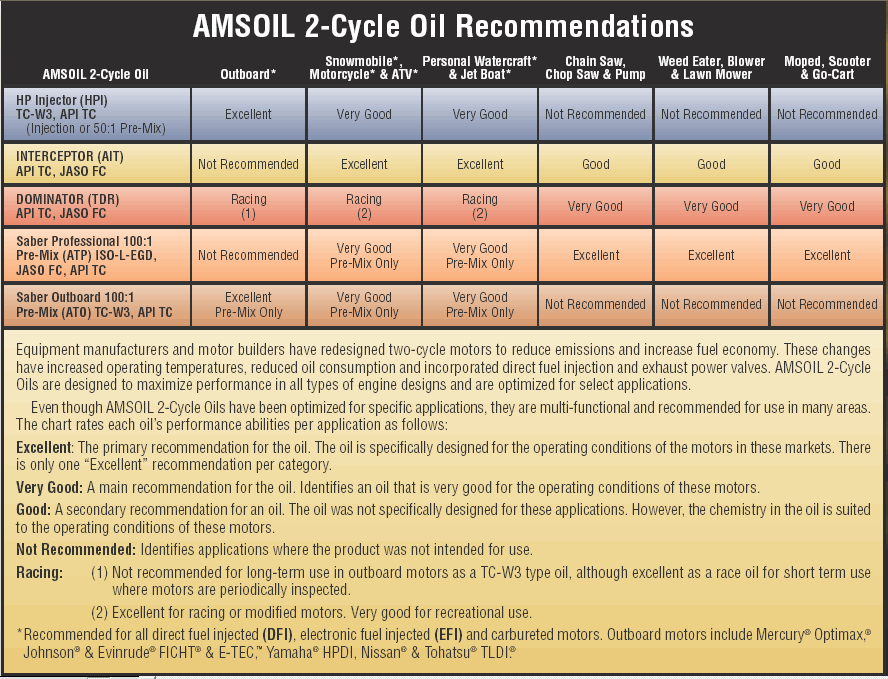
Not all oils are created equal. Use only TC-classified (API-TC) oil designed for air-cooled engines. Recommended oils include STIHL HP Ultra or MotoPower, Husqvarna 2-Stroke Oil, Echo Power Blend, and Amsoil Saber.
These oils burn cleanly, reduce carbon buildup, protect against heat and wear, and extend engine life. Never use automotive motor oil, diesel oil, or marine two-stroke oil. They are not formulated for high-RPM chainsaw engines and can cause carbon deposits, seal damage, and engine failure.
Store Mixed Fuel Safely
Shelf Life: 30 Days Max (Unstabilized)
Mixed fuel degrades quickly due to oxidation and ethanol’s moisture absorption. Self-mixed fuel without stabilizer lasts up to 30 days. With fuel stabilizer, it lasts up to 6 months. Premixed fuel like STIHL MotoMix lasts up to 5 years when unopened.
Old fuel leaves behind varnish and gum that clog carburetors, fuel lines, and filters.
Storage Best Practices
Store mixed fuel in sealed, fuel-approved containers. Keep them in a cool, dry, ventilated area away from sunlight and heat. Never store indoors or near ignition sources because flammable vapors are dangerous.
Shake before each use, especially after storage. This re-suspends any settled components and ensures proper lubrication.
Try Premixed Fuel: STIHL MotoMix
Skip the Mixing: Use Ready-to-Go Fuel
STIHL MotoMix is a factory-premixed 50:1 fuel that eliminates guesswork. It provides no measuring errors, consistent oil distribution, and a 5-year shelf life when unopened.
This premixed fuel offers better cold starts, cleaner combustion, and reduced carbon buildup. It is ideal for occasional users, professionals needing reliability, and anyone tired of mixing.
While more expensive than self-mixed fuel, MotoMix saves time, reduces waste, and protects your engine.
Fix Wrong Fuel Fast
What If You Used the Wrong Mix?
Do not panic, but do not start the engine if you suspect wrong fuel.
If you used too little oil (lean mix like 70:1), the risk includes piston seizure, cylinder scoring, and engine death. Drain the tank immediately, refill with correct 50:1 mix, and inspect the spark plug for damage. If the engine ran on lean fuel, get it inspected by a technician.
If you used too much oil (rich mix like 25:1 in a 50:1 saw), symptoms include white smoke, foul smell, and hard starting. Drain and refill with proper mix, clean the spark plug, and check the muffler and spark arrestor for carbon buildup.
Even short runs with wrong fuel can cause lasting damage. Act fast.
Avoid Common Mixing Mistakes
Top Errors and How to Prevent Them
Guessing the oil amount leads to incorrect ratios. Use a graduated bottle or syringe instead.
Using old gas causes poor starts and clogs. Mix only a 30-day supply.
A dirty container leads to contamination. Use a clean, dedicated fuel can.
Unlabeled fuel causes misuse or wrong mix. Label every container.
Using automotive oil causes engine damage. Use only TC-class 2-stroke oil.
Mixing in the saw tank causes incomplete blend. Always mix in a separate container.
No shaking causes oil separation. Shake for 30 seconds before each use.
Pro Tip: Keep a mixing chart taped to your fuel station for quick reference.
Refuel Safely Every Time
Safety First: Refueling Rules
Chainsaw fuel is highly flammable. Follow these rules to stay safe.
Always refuel outdoors, away from sparks, flames, or smoking. Keep 10 feet (3 meters) from any ignition source. Wipe the fuel cap area before opening to keep dirt out. Open the cap slowly to release pressure safely. Use a funnel to avoid spills. Wipe spills immediately because they are flammable and harmful to paint. Close the cap tightly to prevent leaks and vapor loss.
Never refuel a hot engine. Fire risk is real, so wait at least 5 minutes after shutdown.
Refueling Steps
First, shut off the saw and let it cool completely. Second, wipe around the fuel cap. Third, open slowly. Fourth, insert a funnel and pour the 50:1 mix. Fifth, close the cap securely.
Follow Manufacturer Guidelines
STIHL Fuel Rules
STIHL requires a 50:1 ratio for all 2-MIX and 4-MIX engines. Use STIHL HP Ultra or MotoPower (TC-class). Gasoline should be 89+ octane, E10 compatible.
The mixing method is to add oil to partial fuel, top off, and shake for 30+ seconds. Storage limit is 30 days for self-mixed fuel.
Husqvarna Mixing Method
Husqvarna uses 50:1 for most models. Use Husqvarna 2-stroke oil (TC-rated) with E10-compatible gas.
The recommended mixing order is half-fill with gas, add oil, top off, and shake well. Mix only one month’s supply at a time.
Echo Requirements
Echo requires 50:1 with Echo Power Blend or equivalent TC oil. Gasoline should be E10 compatible.
Echo emphasizes that oil quality prevents carbon buildup and spark plug fouling. Even small differences in mixing order matter, so always follow your manual.
Final Checklist: Best Practices
Confirm the ratio in your manual. 50:1 is standard, but verify.
Measure oil precisely. No guessing allowed.
Use fresh, unleaded gas. 87+ octane, E10 max.
Use TC-class 2-stroke oil. It must be air-cooled rated.
Mix in a clean container. Never mix in the saw.
Shake well. 30 seconds minimum.
Label and date fuel. Track freshness.
Store safely. Cool, dry, ventilated, away from home.
Use within 30 days. Unless stabilized.
Refuel safely. Engine off, cool, no flames.
Consider MotoMix. For convenience and reliability.
Golden Rule: Never run straight gas. It will destroy your engine in minutes.
Frequently Asked Questions About Chainsaw Fuel Mixture Ratio
What happens if I use the wrong fuel mixture ratio?
Using too little oil causes engine seizure, piston scoring, and permanent damage. Using too much oil leads to white smoke, carbon buildup, fouled spark plugs, and reduced performance. Both scenarios shorten engine life significantly.
Can I use regular gasoline in my chainsaw?
No. Chainsaws require a specific chainsaw fuel mixture ratio with two-stroke oil mixed in. Running straight gasoline destroys the engine within minutes because there is no lubrication for internal components.
How long does mixed fuel last?
Self-mixed fuel lasts up to 30 days without stabilizer. With stabilizer, it lasts up to 6 months. Premixed fuel like STIHL MotoMix lasts up to 5 years when unopened. Always shake fuel before each use.
What is the best chainsaw fuel mixture ratio for cold weather?
The standard 50:1 ratio works best in cold weather when using fresh, high-quality fuel. Premixed fuels like MotoMix are specifically formulated for enhanced cold-weather performance and starting reliability.
Do all chainsaws use 50:1?
Nearly all modern chainsaws from STIHL, Husqvarna, and Echo use 50:1. Some older models or specialty equipment may require 40:1 or 32:1. Always check your operator’s manual for the correct ratio.
Can I use automotive motor oil instead of two-stroke oil?
No. Automotive motor oil is not formulated for the high-RPM, air-cooled environment of chainsaw engines. It causes carbon deposits, seal damage, and engine failure. Always use TC-classified two-stroke oil designed for air-cooled engines.
Key Takeaways for Perfect Chainsaw Fuel Mixture
The chainsaw fuel mixture ratio is not optional. It is the single most important factor in determining whether your chainsaw starts easily, runs smoothly, and lasts for years. Always use the correct 50:1 ratio unless your manual specifies otherwise.
Quality matters as much as quantity. Use fresh, high-octane gasoline and TC-classified two-stroke oil from reputable brands. Cheap or incorrect oils cause carbon buildup, fuel system clogs, and premature engine wear that costs far more to repair than the oil savings.
Finally, proper storage and handling complete the picture. Mix only what you need for 30 days, store safely away from living spaces, and always shake before refueling. A few minutes of care at the fuel can saves hours of repair later. Your chainsaw will thank you with reliable starts, consistent power, and a long service life.