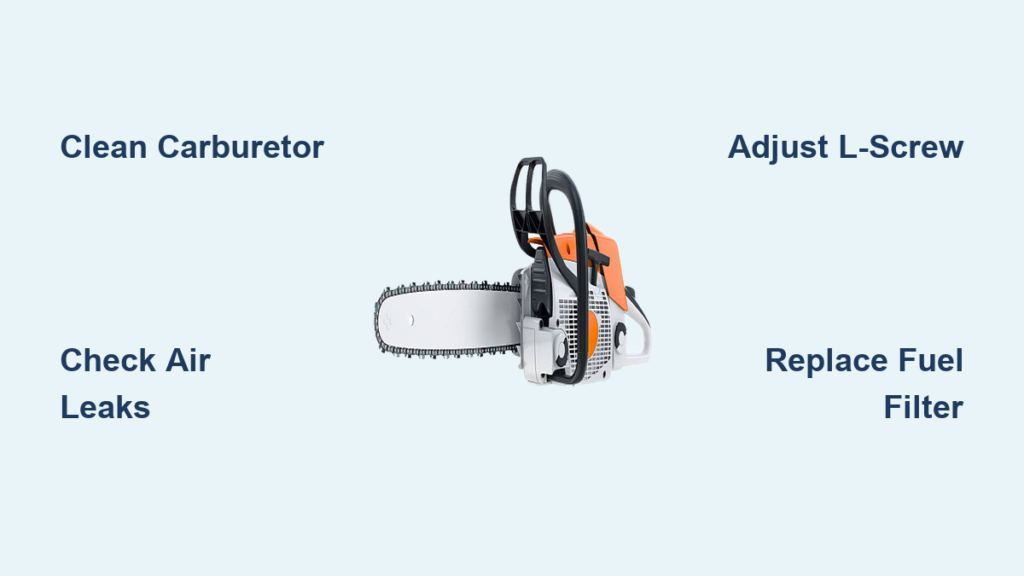
You pull the starter cord, the engine fires up, but the moment you release the throttle, it sputters and dies. No idle. No steady hum. Just silence. If your chainsaw not idling is the problem you’re facing, you are not alone. This is one of the most common issues across all brands and models, from Husqvarna to Echo to Stihl. The good news? In most cases, it is fixable with basic tools and a systematic approach.
The root cause usually lies in fuel delivery, air intake, or engine breathing, not catastrophic engine failure. Whether your saw stalls immediately, runs rough, or only dies after cutting, the problem often traces back to a clogged carburetor, air leak, or failed seal. This guide delivers a clear, step-by-step path to diagnose and fix a chainsaw that will not idle.
Identify Your Exact Idle Symptom
Before grabbing tools, identify your specific symptom pattern. Each points to a different cause.
Immediate Stall After Throttle Release
If the engine dies the second you let go of the trigger, suspect idle circuit blockage or lean fuel mixture. This is the hallmark of a clogged low-speed jet or L-screw misadjustment. The carburetor is not delivering enough fuel at low RPM.
What to check:
- Is the L-screw responsive?
- Does the engine run if you barely release the throttle?
If adjusting the L-screw does nothing, the idle passage is likely plugged.
Rough or Surging Idle
Engine RPM fluctuates up and down, lumpy and unstable. This often means air leaks or partial fuel restriction. Unmetered air enters the system, leaning the mix, or fuel flow is inconsistent.
Common culprits:
- Loose carburetor mounting nuts
- Cracked intake gasket
- Weak fuel pump diaphragm
Dies Only After Wide Open Throttle
Saw runs fine when cold, idles normally, cuts well, but will not return to idle after full throttle. This points to nozzle check valve failure or heat-induced air leak. Fuel continues spraying after throttle closure, flooding the engine.
Model alert: Common in Echo CS-350TES under 20 hours due to faulty check valve in carburetor.
Requires Constant Throttle Pulsing
You have to feather the throttle to keep it alive. This suggests T-screw set too low or mixture imbalance. The idle speed is not high enough to sustain combustion.
Quick test: Turn the T-screw counterclockwise slightly. If idle stabilizes, speed was too low.
Fix the L-Screw for Stable Idle
The L-screw controls fuel at idle. If it is ignored or misadjusted, idle fails.
Locate and Adjust the L-Screw
On most carburetors, three screws are labeled L for low-speed, H for high-speed, and T for idle speed. The L-screw is usually at the bottom of the carburetor.
Never tune a cold engine. Warm it up first.
- Start the saw and let it run at full throttle for 10 seconds.
- Release throttle and observe idle.
- Turn the L-screw clockwise in 1/8-turn increments. This leans the mixture. Stop when the engine starts to lose RPM or stall.
- Now turn counterclockwise in 1/8-turn steps. This enriches the mixture. Find the point where idle is smoothest and highest.
- Final setting: Slight clockwise turn from peak RPM to prevent over-rich condition.
Goal: Smooth idle, no smoke, no hesitation when throttle applied.
L-Screw Has No Effect? Clog Confirmed
If turning the L-screw does nothing, the idle jet or low-speed circuit is blocked. Fuel cannot flow, so adjustment fails. Next step: remove and clean the carburetor.
Clean the Carburetor Thoroughly
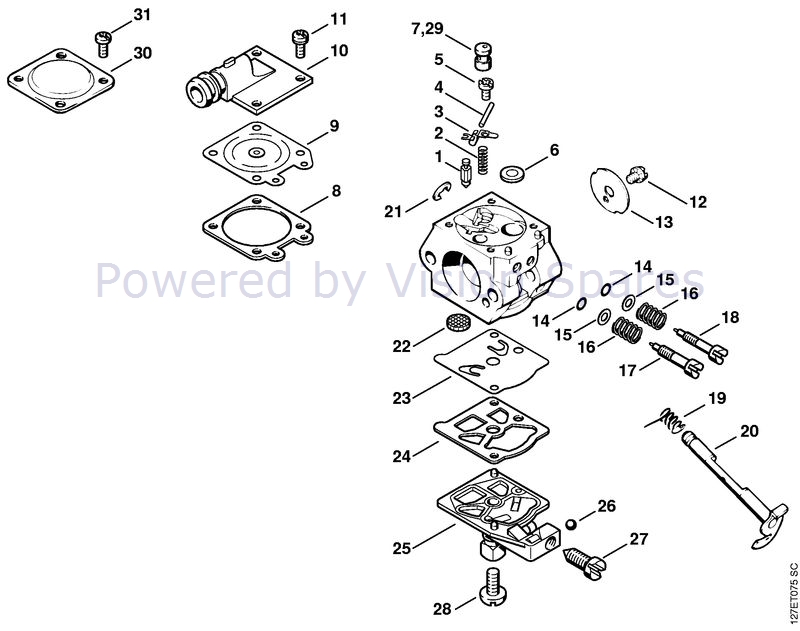
A clogged idle jet is the number one cause of chainsaw not idling issues, especially with ethanol-blended fuel.
Remove the Carburetor
- Drain fuel from tank.
- Disconnect fuel lines. Mark inlet versus return if two lines.
- Remove air filter housing.
- Unscrew carburetor mounting nuts. Usually two.
- Lift out carburetor carefully.
Disassemble and Clean
Use a carburetor rebuild kit that includes gaskets, O-rings, and needles.
- Remove cover screws and diaphragms.
- Locate the idle jet and main jet.
- Spray carburetor cleaner through all passages, especially the tiny hole in the L-jet.
- Use a fine wire like a guitar string to gently clear blockages.
- Soak in ultrasonic cleaner if available. Thirty minutes is ideal.
- Blow dry with compressed air.
Warning: Never use a drill bit or metal pick. You can enlarge or damage jets.
Reassemble and Reinstall
- Replace all gaskets and O-rings.
- Reattach diaphragms without stretching.
- Reinstall carburetor and tighten mounting nuts evenly.
- Reconnect fuel lines.
Now adjust the L and T screws as described.
Test for Air Leaks
Even small air leaks can kill idle. They are often invisible and only detectable under load or heat.
Common Leak Points
- Carburetor base gasket
- Cylinder base bolts
- Intake manifold
- Crankshaft seals, especially rear seal
Leaks often open when the engine warms up, explaining why idle works cold but fails hot.
Propane or Starting Fluid Test
- Start the saw and let it idle if possible.
- Spray carburetor cleaner or propane around suspected areas, where carb mounts to engine, base of cylinder, and around flywheel.
- If RPM increases suddenly, air is being drawn in. Leak confirmed.
Best method: Use a smoke tester or vacuum gauge for precision.
Fix the Leak
- Tighten mounting hardware to spec. Do not over-tighten.
- Replace intake gasket if cracked or hardened.
- Replace crankshaft seals if leak persists. This requires partial engine disassembly.
Low-hour saws under 20 hours with idle failure under heat likely have crank seal failure, not carb issue.
Check the Nozzle Check Valve
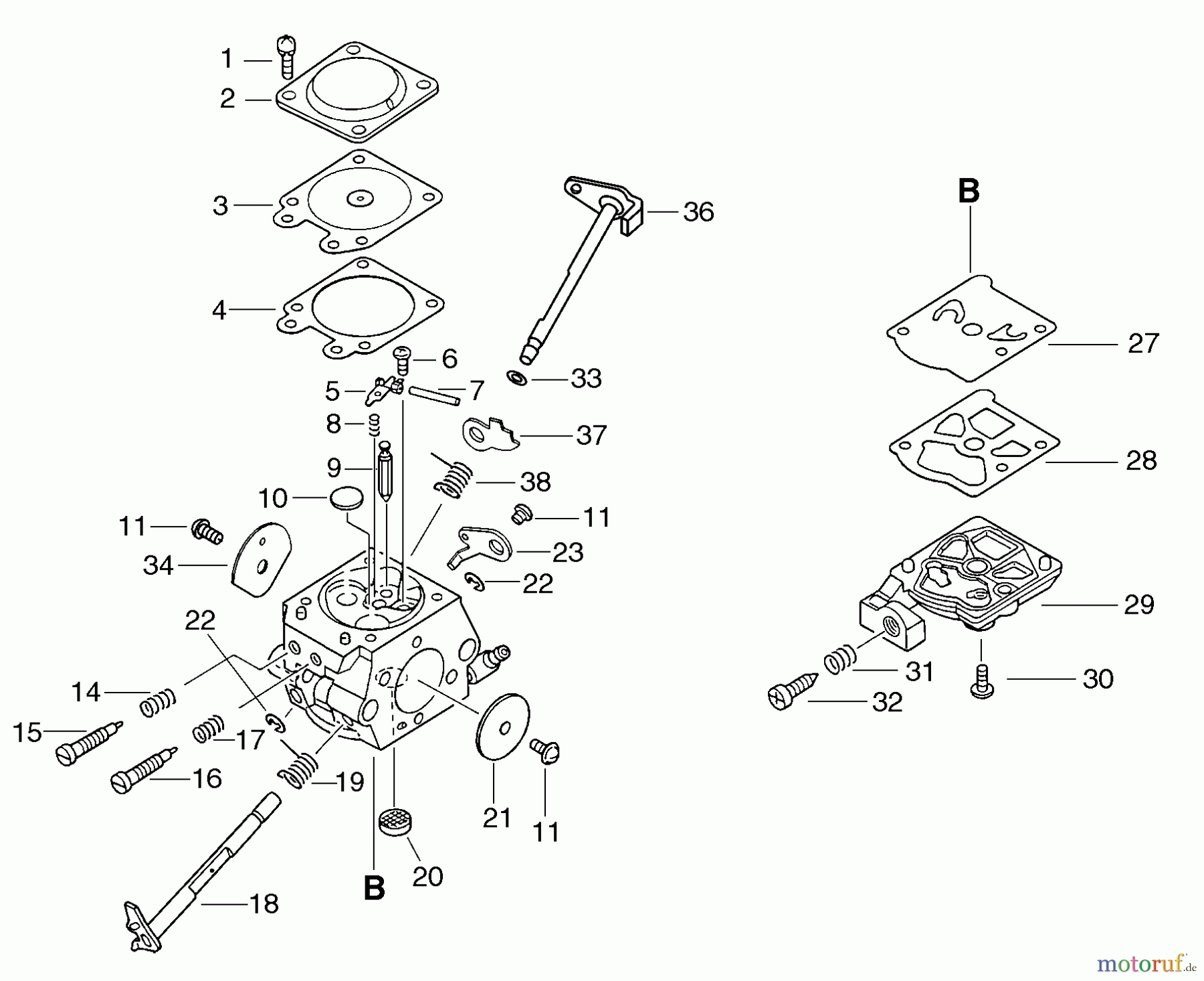
In diaphragm carburetors, a nozzle check valve stops fuel flow when throttle closes.
How It Fails
- Valve does not close after wide open throttle
- Fuel sprays into intake during deceleration
- Engine floods and stalls at idle
Symptom match: Saw runs fine until you stop cutting, then it will not idle.
Diagnosis and Repair
This valve is not serviceable separately. Fix requires replacing the entire carburetor or ultrasonic cleaning to restore function. Common in Echo CS-350TES, Husqvarna 435, and similar models. Aftermarket carburetors are available on eBay for $25 to $40 and are plug-and-play replacements.
Inspect Fuel Delivery System
Even with a clean carburetor, fuel must reach it consistently.
Replace the Fuel Filter
Located inside the fuel tank, submerged in gas.
- Drain fuel.
- Remove fuel line from tank.
- Pull out old filter.
- Install new one. Cost is under $10.
Signs of failure:
- Black, slimy appearance
- Brittle or cracked housing
- Restricted flow when blown through
Replace every 25 hours or annually.
Check Fuel Lines
Ethanol degrades rubber lines. Look for cracks, softness, hardening, or collapse under suction. Replace both lines as a set. Use ethanol-resistant fuel line.
Test the Primer Bulb
On models with a primer, the bulb should be firm, not cracked or squishy. A leaking bulb draws air into the system. Replace bulb assembly if damaged.
Clear Air and Breathing Passages
Your chainsaw needs clean air in and exhaust out to idle properly.
Clean the Air Filter
For foam filters, wash with soapy water, rinse, dry, and re-oil lightly with air filter oil. For paper filters, replace rather than clean. Maintenance schedule is every 5 to 10 hours of use.
Unclog the Air Breather
This small vent equalizes pressure in the crankcase.
- Locate near carburetor or behind flywheel.
- Remove cover.
- Blow compressed air from inside out.
- Reinstall.
A clogged breather creates vacuum, restricting piston movement and can stall engine at idle.
Clean the Spark Arrester
Located in the muffler.
- Remove muffler screws.
- Extract the metal screen.
- Clean with wire brush or soak in solvent.
- Replace if corroded.
A blocked arrester causes backpressure, reducing engine efficiency and preventing idle.
Verify Fuel Cap Venting
A clogged fuel cap creates vacuum lock, and fuel cannot flow to carburetor.
Quick Test
- Loosen the fuel cap slightly.
- Start the saw.
- If it idles normally, the vent is blocked.
Solutions: Clean vent holes in cap with wire or replace cap if non-venting or damaged. Never operate with loose cap during cutting. Use this only for diagnosis.
Set Correct Heat Transfer Mode
Some models have a winter and summer carburetor heat setting.
How It Works
Winter mode opens the heat passage to warm the carburetor and prevent icing. Summer mode closes the passage to avoid overheating. If set wrong in cold weather, fuel can condense and cause idle issues.
Check Your Model
Husqvarna models have a rubber plug or punched hole near the carburetor. Stihl models have a lever or flap between cylinder and carb. Echo models may require removing a tab for winter use. Set according to outside temperature.
Replace the Spark Plug
A weak or fouled plug can cause misfires at idle.
Inspect the Plug
Remove and check for carbon fouling, oil fouling, cracked porcelain, or worn electrodes. Replace immediately if damaged.
Test for Spark
- Reconnect plug to wire.
- Ground metal base to cylinder.
- Pull starter cord.
- Look for strong blue spark.
No spark means check ignition coil or flywheel. Replace every 25 to 50 hours or annually. Cost is $4 to $8.
Test Engine Compression
Low compression means the engine cannot sustain combustion at idle.
How to Test
- Remove spark plug.
- Install compression tester.
- Pull starter cord 5 to 6 times.
- Read gauge.
Compression Benchmarks
Small homeowner models should read above 70 PSI. Professional-grade saws should read above 100 PSI. Below threshold indicates worn piston rings, cracked piston, or cylinder scoring. Repair cost may exceed saw value. Consider replacement.
Adjust the T-Screw
The T-screw controls how far the throttle plate opens at idle.
Set Proper Idle
- Warm up engine.
- Turn T-screw clockwise to lower RPM. Throttle plate closes slightly.
- Turn counterclockwise to raise RPM. Plate opens more.
- Goal: Engine runs without stalling, but chain does not move.
Typical idle is 2,500 to 3,000 RPM, above stall speed but below clutch engagement. If T-screw does nothing, check for throttle cable binding, throttle plate stuck closed, or severe air leak.
Model-Specific Fixes
Echo CS-350TES: Will Not Idle After Cutting
Despite correct tuning and carb rebuild, this model often fails due to faulty nozzle check valve or failing crankshaft seal. This saw is under a 5-year consumer warranty if registered. Stop DIY repairs and take to authorized Echo service center.
Husqvarna 435: L-Screw Does Nothing
High chance of idle jet clog from old fuel. Clean carb thoroughly. If no improvement, replace carburetor. Aftermarket units cost about $30 on eBay and are direct swaps with no tuning needed.
Prevent Future Idle Problems
Use Fresh, Ethanol-Free Fuel
Mix with 50:1 synthetic oil unless specified otherwise. Never store fuel more than 30 days. Add fuel stabilizer if storing longer. Ethanol attracts moisture, degrades rubber, and forms varnish.
Store with Empty Carburetor
After use, run saw until it dies. This ensures no fuel remains to gum up jets.
Annual Maintenance Checklist
- Replace spark plug
- Clean air filter and breather
- Inspect fuel lines and filter
- Clean spark arrester
- Check carburetor gaskets
When to Stop and Seek Help
If you have cleaned the carburetor, replaced fuel system parts, tested for leaks, checked compression, and the saw still will not idle, the issue is likely internal. Crankcase seal failure, piston damage, or worn bearings may be the cause.
For low-hour saws, do not continue disassembly. Contact manufacturer-authorized service. You may void warranty with improper repairs. Expert advice: tuning an engine by ear is hard for an untrained person. Take it to a shop if unsure.
Frequently Asked Questions About Chainsaw Not Idling
Why does my chainsaw die immediately after releasing the throttle?
This typically indicates a clogged idle jet or lean fuel mixture at low speeds. The L-screw may need adjustment, or the idle circuit in the carburetor could be blocked. Try adjusting the L-screw counterclockwise in small increments to enrich the mixture.
Can a bad spark plug cause idle problems?
Yes. A weak or fouled spark plug can cause misfires specifically at idle RPM. Inspect the plug for carbon deposits, cracked porcelain, or worn electrodes. Replace every 25 to 50 hours or annually.
How do I know if my chainsaw has an air leak?
Use the starting fluid test. Spray carburetor cleaner around the carburetor base, cylinder base, and crank seals while the engine idles. If RPM increases suddenly, you have found an air leak. Tighten mounting hardware or replace gaskets.
Should I replace or rebuild the carburetor?
If the idle jet is clogged and cleaning does not restore function, replacement is often the better choice. Aftermarket carburetors are available for $25 to $60 and are plug-and-play for many models. Rebuild kits work well for minor clogs but may not fix damaged diaphragms or check valves.
Why does my saw idle fine when cold but stall after warming up?
This points to a heat-induced problem. As the engine heats up, metal expands and opens small air leaks. Common culprits are failing crankshaft seals or degraded intake gaskets. Test with starting fluid while the engine is warm.
What is the correct idle RPM for a chainsaw?
Most chainsaws should idle between 2,500 and 3,000 RPM. This is high enough to prevent stalling but low enough to keep the clutch disengaged so the chain does not move.
Final Takeaways for Fixing Chainsaw Not Idling
A chainsaw not idling is rarely a lost cause. Start with simple checks: fresh fuel, clean air filter, new spark plug, and fuel cap vent test. Most idle problems stem from clogged carburetor circuits or small air leaks that are easy to fix.
Work systematically through fuel delivery, air intake, and engine breathing systems. Adjust the L-screw to balance the mixture, then set the T-screw to achieve proper idle speed. If basic fixes fail, deep-clean or replace the carburetor. Persistent issues after full diagnosis often point to internal problems like crank seals or low compression.
Most fixes take under an hour and cost less than $20. But know when to stop. If your saw is under warranty or shows signs of internal damage, professional service is the smarter choice.