Your chainsaw starts fine and idles smoothly, but the moment you pull the trigger to cut, it bogs down, sputters, or feels like it’s running out of breath. That sudden loss of power is one of the most common and frustrating problems chainsaw owners face. Whether you’re cutting firewood or clearing storm debris, a weak saw slows you down and strains the engine.
The good news? In most cases, “chainsaw loses power” isn’t a sign of catastrophic failure. It’s usually caused by simple, fixable issues in the fuel, air, exhaust, or lubrication systems. This guide cuts through the noise with a step-by-step breakdown of every possible cause, how to diagnose it, and exactly what to do to restore full power.
Diagnose H-Screw Fuel Mixture

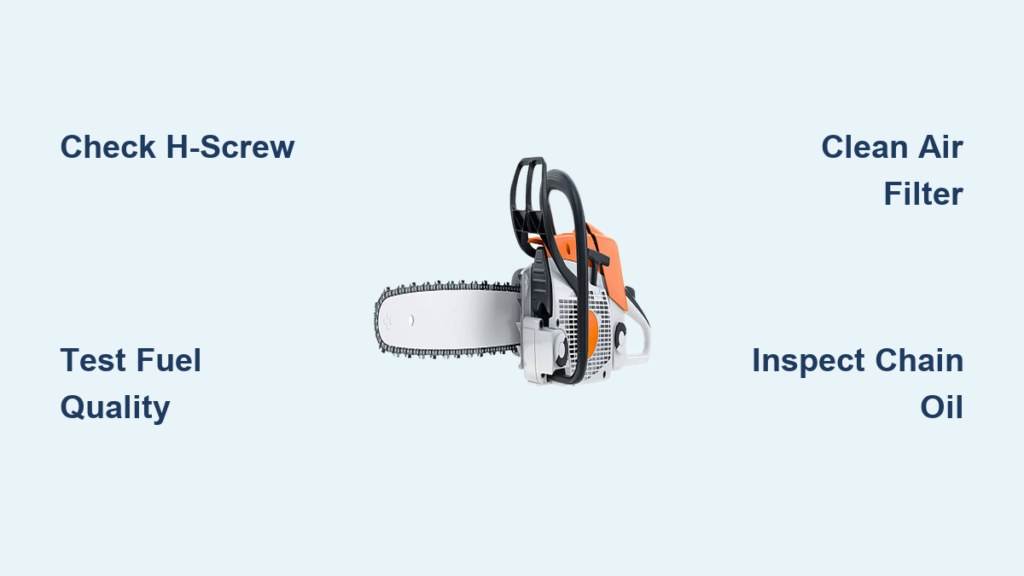
If your chainsaw idles well but bogs when you pull the throttle, the H-screw on the carburetor is likely set too tight. This screw controls fuel delivery at high RPM. When over-tightened, it starves the engine of fuel under load, creating a lean mixture that kills power.
Check H-Screw Position
Locate the H-screw, usually marked “H” on the carburetor. It regulates the main jet, which supplies fuel during full-throttle operation. If it’s turned too far clockwise, fuel flow is restricted.
• Normal setting: Typically 1 to 1.5 turns out from gently seated
• Symptom of lean mix: Engine revs up, then bogs or stalls under load
• Visual clue: Spark plug may show white or blistered electrode
Adjust for Maximum RPM
Follow this safe adjustment procedure:
- Start the saw and let it warm up for 2 to 3 minutes
- Run at wide open throttle
- Turn the H-screw counter-clockwise in 1/8-turn increments
- Wait 5 seconds after each turn to assess performance
- Stop when the engine reaches its highest, smoothest RPM without surging
Pro Tip: Always reset the L-screw first. Turn it gently in, then back out 1.5 turns. This ensures a stable idle before adjusting high-speed performance.
Test Fuel Quality and Flow
Old, contaminated, or poorly mixed fuel is a leading cause of power loss. Two-stroke engines are extremely sensitive to fuel condition. If the gas has been sitting more than 30 days, it may have degraded, forming varnish that clogs the carburetor and fuel lines.
Drain Old Fuel Mix
Ethanol-blended gasoline attracts moisture, which leads to phase separation and corrosion. This disrupts combustion and reduces power.
• Symptoms: Hard starting, surging, intermittent power loss
• Fix: Drain all old fuel from the tank
• Refill with fresh 50:1 mix using high-quality TC-3 or ISO-L-EGD two-stroke oil
Verify Oil-to-Gas Ratio
An incorrect mix ratio can mimic power loss. Too little oil causes a lean mix that leads to overheating and piston damage. Too much oil leads to carbon buildup, fouled spark plugs, and sluggish performance. Use a calibrated measuring bottle and never eyeball the ratio.
Inspect Fuel Lines and Filter
Restricted fuel flow starves the engine under load. Remove the fuel line from the carburetor and blow air through it, or check for kinks, cracks, or sludge. Pull out the in-tank fuel filter and inspect for debris. Replace fuel lines and filter every 1 to 2 years.
Clean or Replace Air Filter

A dirty air filter restricts airflow, creating a rich fuel mixture that fouls the spark plug and robs power. This is one of the easiest and most overlooked fixes for chainsaw loses power issues.
Inspect Filter Condition
Foam filters collect dust and oil residue. Paper filters cannot be cleaned and must be replaced when dirty.
• Symptoms: Black smoke, hard starting, engine runs rich
• Check after every 5 hours of use, especially in dusty conditions
Clean Foam Filters Properly
- Remove the filter from the housing
- Wash in warm, soapy water
- Rinse thoroughly and let dry completely
- Re-oil lightly with air filter oil
Warning: Never operate the saw without an air filter. Dust ingestion causes rapid cylinder wear and engine failure.
Clear Clogged Spark Arrestor
The spark arrestor screen in the muffler prevents hot particles from escaping, but carbon buildup can block exhaust flow, increasing backpressure and reducing power.
Identify Blockage Signs
• Engine runs fine at idle but bogs under load
• Gradual power loss over time
• Muffler feels excessively hot
Remove and Clean Screen
- Unscrew the muffler or remove the access panel
- Extract the metal mesh screen
- Soak in carburetor cleaner for 15 to 30 minutes
- Scrub with a wire brush to remove carbon
- Reinstall securely
Critical: Never run the saw without the spark arrestor. It’s a fire hazard and illegal in many areas.
Check Bar and Chain Lubrication
A dry chain creates massive friction, forcing the engine to work harder. Even with full RPM, the saw cuts poorly, feeling like power loss.
Test Oil Flow
Hold the saw near scrap wood and run at wide open throttle for 10 to 15 seconds. Look for a fine mist or visible oil stream from the chain tip. No oil indicates the lubrication system is blocked or failing.
Clear Oil Passages
Drain the oil reservoir and flush the oil line with diesel fuel or mineral spirits. Use a copper wire or small drill bit to clear the oil hole in the bar. Clean the oil pump pickup filter inside the tank.
Note: Diesel is safe for short-term flushing. Just don’t use it as a lubricant.
Inspect for Overheating Damage
• Blue discoloration on the bar: Metal heated past 500 degrees due to lack of oil
• Smoke from chain: Oil burning off dry metal
• Stuck chain: High friction from dry rails
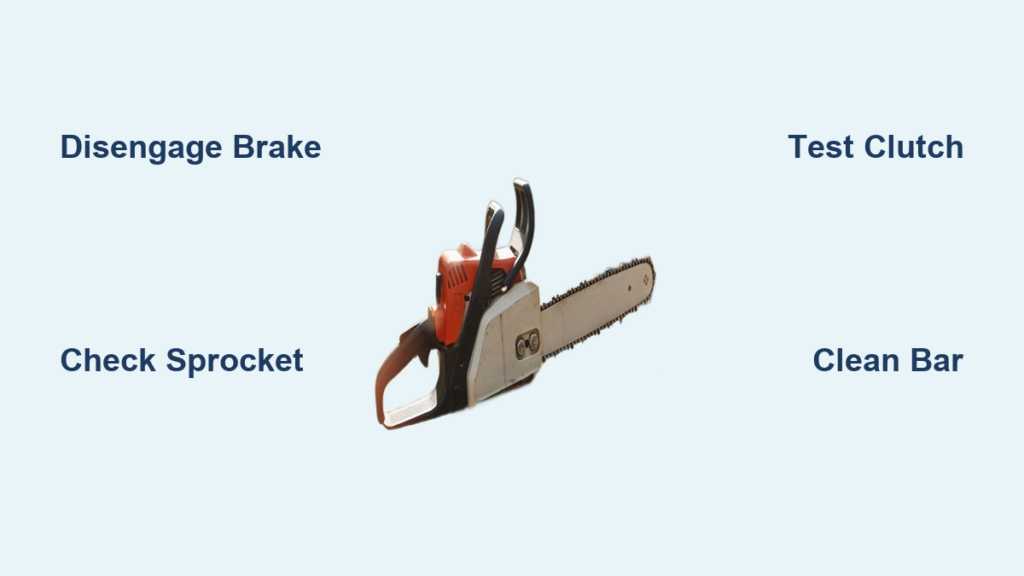
Inspect Clutch for Slippage
If the engine revs but the chain slows or stops during cutting, the clutch is slipping. This isn’t engine power loss. It’s drivetrain failure.
Recognize Slippage Symptoms
• Engine maintains high RPM
• Chain stops or drags under load
• Burnt smell from clutch area
• Clutch drum shows blue or scored marks
Examine Clutch Assembly
- Remove the side cover, bar, and chain
- Inspect clutch shoes for worn friction material or exposed rivets
- Check the drum for deep grooves or glazing
- Spin the drum by hand. It should rotate freely when disengaged
User Insight: The telltale sign is the saw isn’t losing RPM. The engine sounds strong, but the chain isn’t moving.
Test Ignition System

A weak spark causes misfires and power loss. This is often overlooked when diagnosing chainsaw loses power symptoms.
Inspect Spark Plug
Remove with a socket wrench and check for:
• Black soot: Rich mixture or clogged air filter
• Wet plug: Flooding
• White electrode: Lean mix or overheating
• Worn gap: Should be 0.020 inches
Clean lightly fouled plugs with a wire brush. Replace if cracked or heavily carbonized.
Check for Spark
Reconnect the plug and ground it to the cylinder. Pull the starter and look for a strong blue spark. No spark indicates possible ignition coil failure. Replace the coil if no spark is present.
Rule Out Internal Engine Damage
If all external systems check out, the problem may be inside the engine. Worn pistons or cylinders reduce compression, leading to permanent power loss.
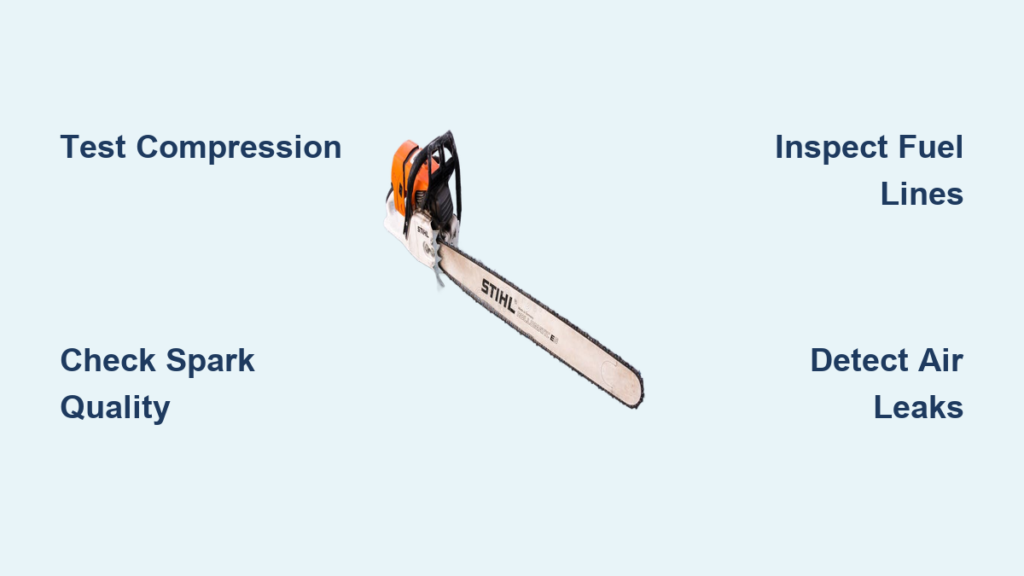
Perform Compression Test
Use a chainsaw compression tester. Screw it into the spark plug hole and pull the starter rope 5 to 6 times with throttle locked. Normal reading is 110 to 150 psi. Below 90 psi indicates serious wear or damage.
Look for Physical Damage
Remove the muffler and inspect the piston through the exhaust port. Check for scoring, pitting, or carbon buildup. A smooth, intact piston rules out internal failure.
Prevent Overheating Issues
Overheating accelerates wear and reduces performance. It often stems from multiple small issues combining.
Clean Cooling Fins
Located on the cylinder and flywheel, these fins clog with sawdust and debris, blocking airflow. Use a brush or compressed air to clean every 10 hours.
Allow Cool-Down Periods
Run no more than 30 minutes continuously. Take a 5-minute break to let the engine cool.
Maintain Proper Lubrication
Keep air filter clean, ensure bar oil is flowing, and use the correct fuel mix. Overheating signs include bluing on metal parts, smoke from engine, and sticky pull cord.
Evaluate Operator Technique
Sometimes the saw isn’t the problem. The operator is.
Avoid Forcing the Cut
Let the chain’s teeth do the work. Applying too much downward pressure increases resistance. The chain binds in the kerf, making the engine labor.
Keep Chain Sharp
Dull teeth require more force and generate heat. File at 30-degree angle with proper depth gauge setting, typically 0.025 inches.
Match Saw to Task
A homeowner-grade saw struggles with large logs. For heavy jobs, use a professional model.
Frequently Asked Questions About Chainsaw Power Loss
Why does my chainsaw lose power only when cutting?
This typically indicates a lean fuel mixture at high RPM, clutch slippage, or insufficient bar oil. The engine runs fine at idle because demand is low. Under load, these issues surface as power loss or bogging.
Can a dull chain cause power loss?
Yes. A dull chain requires more engine power to cut. The engine labors under the increased resistance, which feels like power loss. Keep your chain sharp and properly tensioned.
How often should I replace the fuel filter in my chainsaw?
Replace the fuel filter every 1 to 2 years, or sooner if you notice fuel flow problems. Old fuel and ethanol blends accelerate filter degradation.
Why does my chainsaw run rich and lose power?
A rich mixture fouls the spark plug and restricts combustion. Common causes include a dirty air filter, incorrect fuel mix ratio, or H-screw set too loose. Check the air filter first.
Should I rebuild or replace my chainsaw if compression is low?
If compression tests below 90 psi and you see visible piston damage, rebuilding may cost more than replacing. Many owners find a new saw is more economical than an engine rebuild.
Key Takeaways for Fixing Chainsaw Power Loss
A chainsaw that loses power is rarely one broken part. It’s usually a chain of small failures: dirty filter, old fuel, dry chain, misadjusted carb, or worn clutch. Tackle each system in order. Start with oil flow and air filter, then move to fuel, carburetor, clutch, and compression. Most fixes take less than 30 minutes and cost nothing. Keep your saw sharp, clean, and properly tuned, and it’ll cut strong for years. If you’ve ruled out every external cause and compression is low, the engine may need professional rebuild or replacement.