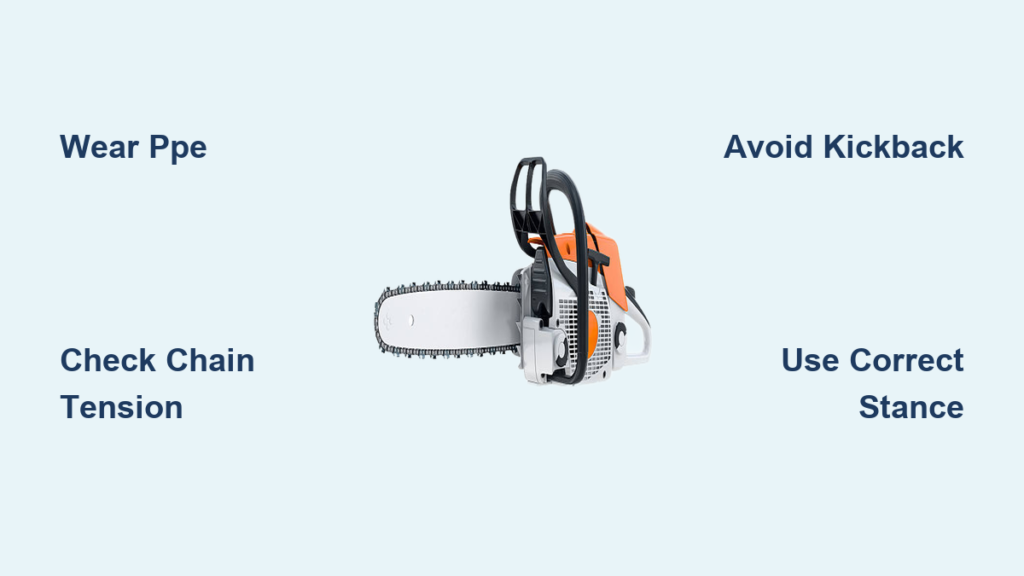
A chainsaw is one of the most powerful and dangerous tools in any homeowner or professional’s arsenal. When used correctly, it can efficiently cut wood, clear storm damage, or prepare firewood. But how to handle a chainsaw improperly can lead to life-altering injuries in seconds. Over 36,000 people visit emergency rooms annually due to chainsaw accidents, most involving the legs and hands. The good news? Nearly all of these injuries are preventable with proper technique, protective gear, and respect for the machine.
This guide breaks down every critical step, from pre-start checks and correct grip to cutting techniques, kickback prevention, and maintenance. Whether you are a first-time user or an experienced operator looking to sharpen your safety habits, this comprehensive walkthrough ensures you know exactly how to handle a chainsaw with confidence and control.
Assess the Job Before Starting
Before touching the starter cord, evaluate whether using a chainsaw is the right choice for your task.
Know Your Limits
Not every tree or log requires a chainsaw. Call a certified arborist if the task involves trees over 10 inches in diameter, work near power lines, cutting above shoulder height, or unstable terrain. Even experienced users should never underestimate environmental risks.
Inspect the Wood
Examine logs and trees for knots, cracks, or decay that can cause unpredictable splitting. Check for hidden objects like nails, wire, or stones. Hitting metal can cause instant chain failure and severe injury.
Clear the Work Area
Create a 10-foot safety radius around the operation zone. Remove people, pets, and tripping hazards like roots, tools, and hoses. For tree felling, extend this zone to twice the tree height.
Wear Full Protective Gear
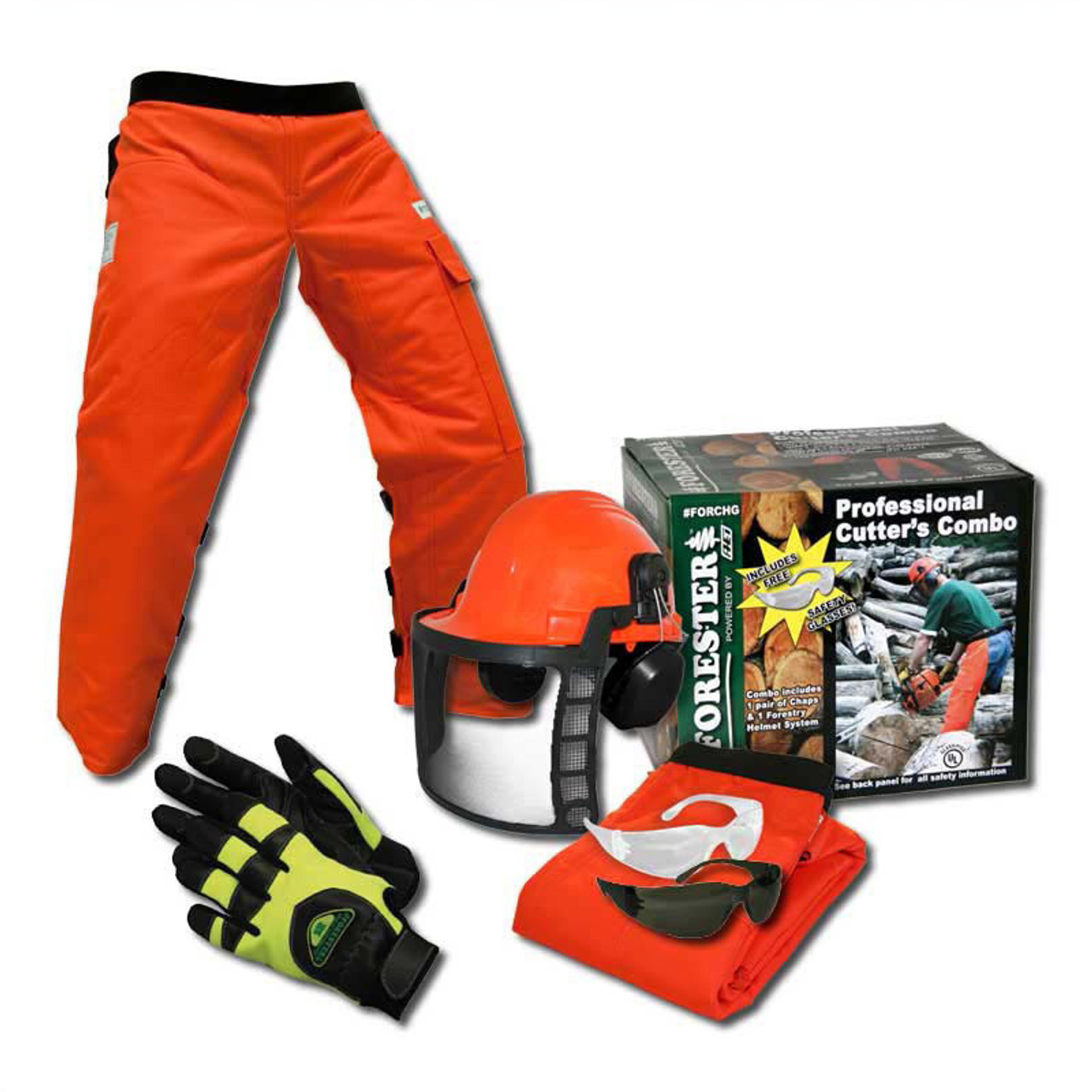
No amount of skill replaces proper personal protective equipment. A running chainsaw can slice through denim in under a second.
Essential Safety Equipment
Chainsaw Chaps or Pants
Made with Kevlar or intex fibers that clog the sprocket on contact. Must be worn over regular pants, not as a standalone layer. Wash before first use to puff protective layers and improve cut resistance.
Helmet with Face Shield and Hearing Protection
Full helmet systems include a face shield, earmuffs with NRR 25+ dB reduction, and a sun peak with neck guard. Chainsaws produce 100-120 dB, and permanent hearing loss occurs after just 2 minutes at 110 dB.
Cut-Resistant Gloves
Reinforced backs protect against stray debris and slips while improving grip without restricting movement.
Steel-Toe Boots
Prefer chainsaw-rated boots with built-in cut protection and non-slip soles. Keep chaps tucked over the top, never dragging on the ground.
Perform Pre-Use Inspection
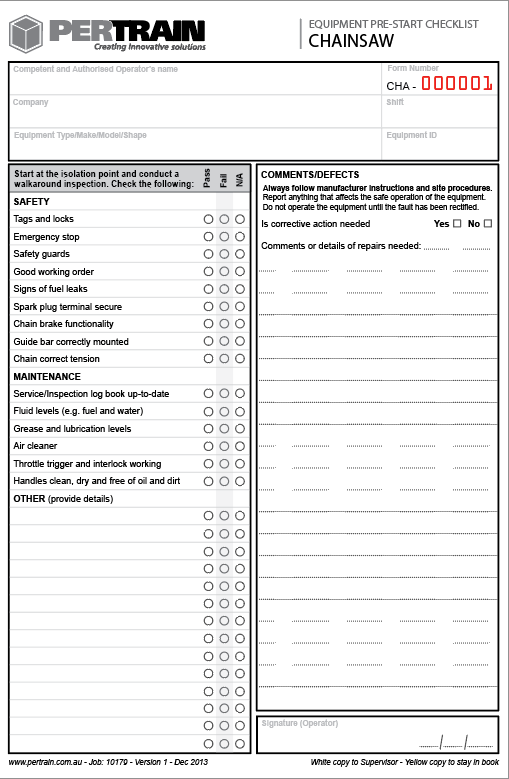
Check your saw before every use. A 2-minute inspection prevents costly failures.
Quick Safety Checklist
• Chain tension: Lift chain at bar center; it should snap back, not sag
• Chain condition: Look for dull, chipped, or missing teeth
• Guide bar: Check for warping, cracks, or clogged oil holes
• Chain brake: Engage and verify chain does not move when pulled by hand
• Trigger interlock: Press interlock, then try throttle; it should not engage
• Air filter: Clean with compressed air; replace annually
• Spark plug: Inspect for carbon buildup; replace if fouled
• Bar oil level: Refill with high-tack bar oil every time you refuel
• Fuel and oil caps: Ensure both are tightly sealed
Fuel and Oil Requirements
Using the wrong fuel or skipping lubrication damages your saw and risks fire.
Two-Stroke Fuel Mix
Use a standard 50:1 ratio (50 parts gas to 1 part oil). Older models may require 32:1, so check your manual. Use certified two-stroke oil like JASO-FB or ISO-L-EGD. Never use automotive motor oil, as it causes engine damage.
Avoid Ethanol-Blended Fuel
Ethanol attracts moisture, degrades fuel lines and seals, and causes carburetor clogs. Use ethanol-free fuel like Aspen Alkylate or TruFuel for storage up to 5 years.
Bar and Chain Oil
Never run dry. Lack of oil destroys bar and chain in minutes. Use tackified oil to reduce fling and improve adhesion. Test oil flow by running the saw near cardboard and looking for visible spray.
Start the Chainsaw Safely
There are only two safe ways to start a chainsaw. Never drop-start it.
Ground Start Method
- Place saw on a flat, stable surface
- Engage chain brake (push front guard forward)
- Press primer bulb 5-6 times if equipped
- Set choke: Cold engine gets full choke, warm engine gets half or no choke
- Hold front handle with left hand, thumb underneath
- Place right foot through rear handle loop for stability
- Pull starter cord fully and smoothly with right hand
- After first fire, move choke to half and pull again
- Squeeze throttle slightly to exit high-idle
- Pull front guard back to release chain brake
Never stand over the saw while pulling. This drop-start method causes severe leg injuries.
Use Correct Grip and Stance
Proper body mechanics give you control and reduce fatigue.
Two-Handed Control
Left hand goes on the front handle with thumb wrapped underneath for kickback resistance. Right hand controls the throttle and power switch on the rear handle. Never release either handle while the engine is running.
Ideal Stance
Left foot should be forward for right-handed users. Keep feet shoulder-width apart with knees slightly bent. Weight should be balanced with your back straight. Stand to the left side of the saw to avoid the kickback path. Keep the saw close to your body for maximum leverage and control.
Master Safe Cutting Techniques
Let the chain do the work. Do not force it.
Best Cutting Height
Ideal range is knee to shoulder level. Never cut above shoulder height because loss of control increases risk. Avoid cutting below knee level because contact with dirt dulls the chain fast.
Bucking Logs
Support the log on saw bucks, a stump, or a deck. Cut three-quarters of the way through, roll the log, then finish from the opposite side. Use bar spurs as a fulcrum for downward pressure.
Limbing Branches
Cut from the opposite side of the trunk from where you are standing. Work top-down to avoid pinched cuts. Never limb directly above or below yourself.
Felling Trees
Use the notch and back-cut method. Cut a wedge-shaped notch on the fall side, one-third of trunk depth. Make the back cut on the opposite side, slightly above the notch base. Leave a 1-2 inch hinge to guide the fall. Always plan two escape routes at 45-degree angles from the fall path, at least 13 feet long.
Prevent and React to Kickback
Kickback causes over 75% of serious chainsaw injuries.
What Triggers Kickback
Kickback occurs when the bar tip contacts an object, gets pinched in wood, or when you cut with the upper quadrant of the bar tip.
Prevent Kickback
Never cut with the bar tip. Use the top of the bar where the chain pulls material in. Keep the chain sharp and properly tensioned. Use bumper spikes to anchor the saw. Maintain two-hand grip and left-side stance.
Use the Chain Brake
Push the front guard forward during kickback for manual activation. Many modern models have inertia-activated brakes that auto-engage on sudden upward force. Always engage the brake when releasing the throttle. Never use the front hand guard as a handle because it disables brake function.
Sharpen and Maintain the Chain
A sharp chain cuts faster, safer, and with less vibration.
Sharpening Steps
- Secure bar in vise and engage chain brake
- File every other tooth in one direction, then reverse
- Use push stroke only, no back-and-forth motion
- Maintain 25-35 degree angle matching the embossed line on the tooth
- Apply 1-2 strokes for light dulling, 3-4 for heavy wear
- Clean the gullet (space behind tooth) to maintain chip clearance
Adjust Depth Gauges
After 3-4 sharpenings, file down the rakers. They should sit 0.8-1.6 mm below the cutting edge. Lower rakers create more aggressive cuts for softwood, while higher rakers are safer for hardwood. Sign of sharpness: the chain produces coiled wood shavings, not dust.
Install and Tension the Chain
Improper installation leads to poor performance and safety hazards.
Toolless Tensioning
- Wear gloves
- Loosen side cover and remove it
- Place chain on bar with teeth forward, links aligned with sprocket
- Reattach cover and tighten nuts slightly
- Hold bar nose up and turn tensioner until it stops
- Fully tighten the cover
- Test: Chain rotates freely, brake stops it completely
Manual Tensioning
Use a scrench (combo wrench and screwdriver). Turn the tensioning screw until chain lifts at the nose. Pull down on the bottom of the chain; it should snap back up. Tighten cover while holding bar nose up.
Never operate with mismatched components. Bar, chain, and sprocket must be compatible.
Choose the Right Saw for the Job
Using the wrong chainsaw increases risk and reduces efficiency.
Bar Length Guide
12 inches or less works for pruning and small limbs. 14-18 inches suits homeowner tasks and firewood. 24-28 inches is best for moderate felling and storm cleanup. 30 inches or more is for professional logging. Bar should be at least 2 inches longer than wood diameter.
Gas vs. Battery-Powered
Gas saws offer high power but are heavier, noisier (100-115 dB), and require more maintenance. They excel at heavy, prolonged work. Battery saws are lighter and quieter, ideal for pruning, storm cleanup, and firewood. They have minimal maintenance but limited runtime.
Store Properly for Longevity
Proper storage prevents corrosion and starting issues.
Gas-Powered Storage
Drain fuel or use stabilized ethanol-free gas. Run the engine until it stops to clear the carburetor. Remove the spark plug and add oil to the cylinder to prevent rust. Cover the bar with a scabbard.
Battery-Powered Storage
Store the battery at 50% charge. Remove it from the saw if storing over 3 months. Keep in a cool, dry place.
Know When to Call a Pro
Some jobs are beyond DIY safety. Call a certified arborist if the tree is near power lines, exceeds 10 inches in diameter, you are on uneven or unstable ground, you lack confidence or experience, or you need to cut above head level.
Frequently Asked Questions About Handling a Chainsaw
What is the most common chainsaw injury?
Kickback causes over 75% of serious chainsaw injuries. It occurs when the bar tip contacts an object or gets pinched, jerking the saw violently upward and backward toward the operator.
How often should I sharpen my chainsaw chain?
Sharpen the chain when you notice decreased cutting efficiency, more vibration, or sawdust instead of chips. Typically, this means sharpening after every few hours of use, or immediately if you hit a nail or stone.
Can I use my chainsaw in the rain?
Avoid operating a chainsaw in wet conditions. Water can damage the engine, create electrical hazards (especially with electric models), and make ground surfaces slippery, increasing fall risk.
What should I do if my chainsaw binds during a cut?
Stop cutting immediately. Do not try to force the saw free while it is running. Turn off the engine, then use a plastic or metal wedge to open the kerf and free the bar. Forcing a bound saw causes loss of control and severe injury.
How do I know if my chain tension is correct?
Lift the chain at the bottom center of the bar. It should snap back into place without sagging. If it sags or you can pull the chain away from the bar significantly, the tension is too loose. Conversely, if the chain does not rotate freely, it is too tight.
Is it safe to cut trees near power lines?
No. Never attempt to cut trees near power lines. Contact with electrical lines can cause electrocution. Call a professional arborist or utility company for trees near power lines.
Key Takeaways for Safe Chainsaw Handling
A chainsaw is not a weekend warrior toy. It is a precision industrial tool that cuts flesh as easily as wood. By learning how to handle a chainsaw the right way, you protect yourself, your property, and those around you. Always wear full PPE without exception, inspect your saw before every use, and use correct fuel and bar oil. Maintain two-hand grip and proper stance, never cut above shoulder height, and stay out of the kickback zone by avoiding the bar tip. Keep the chain sharp and well-tensioned, and let the saw do the work with light pressure. Respect the tool, stay alert, and never rush the job. Safety is not optional. It is essential.