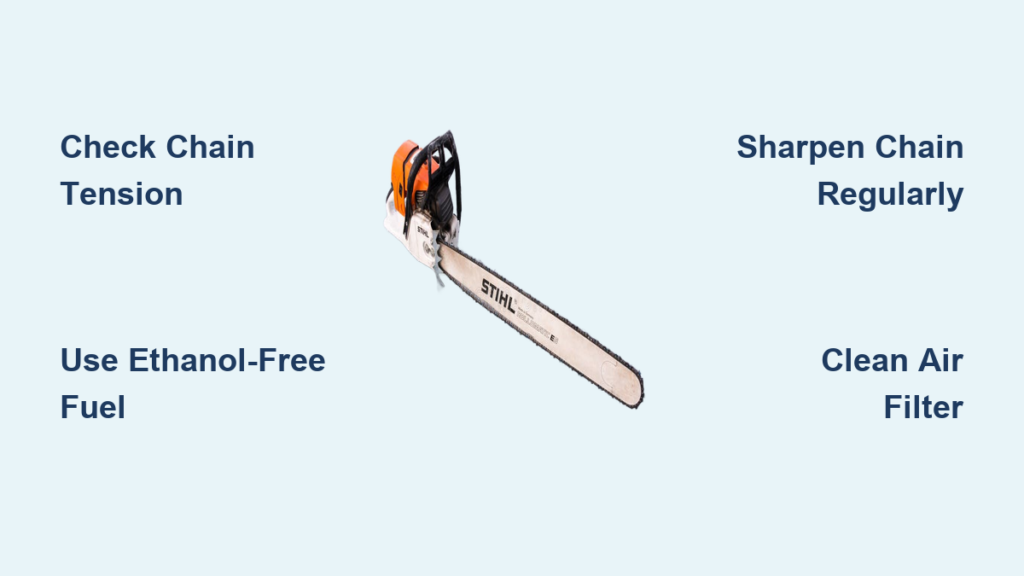
A well-maintained STIHL chainsaw is safer, more efficient, and lasts years longer. Whether you’re cutting firewood, clearing storm debris, or working professionally, STIHL chainsaw maintenance is the key to peak performance. Neglect leads to poor starts, weak cutting power, increased wear, and even dangerous kickback. This guide delivers a complete, step-by-step breakdown of every essential maintenance task.
You’ll learn how to inspect, clean, sharpen, lubricate, and store your saw like a pro. From pre-use checks to seasonal storage, each section gives you actionable steps, pro tips, and critical safety notes. Follow this routine, and your STIHL will start fast, cut clean, and run reliably for seasons to come.
Pre-Use Inspection Checklist
Before pulling the starter rope, perform a quick but thorough inspection. This 3-minute check prevents breakdowns, accidents, and costly repairs.
Verify Safety Components
Test the chain brake by snapping it forward by hand. It should lock the chain instantly and release smoothly. If it sticks or fails to engage, do not operate the saw. Check the spark arrestor located in the muffler. Remove it and clean with a wire brush if clogged.
Inspect all controls. Ensure the on/off switch clicks clearly, the throttle trigger locks out when released, and the decompression valve moves freely if equipped. Examine anti-vibration mounts for cracks or separation. Worn mounts increase fatigue and reduce control.
Scan for Damage and Wear
Look for loose nuts, bolts, or cracked housing. Pay special attention around the clutch cover and bar mount. Inspect the starter rope for frays, kinks, or weak recoil. Replace if damaged. Clear cooling fins and air intakes of sawdust and debris to prevent overheating.
Confirm the chain is sharp, not chipped or stretched, and properly tensioned. A dull chain wastes fuel and strains the engine.
Prepare Yourself and Gear
Wear full PPE including a helmet with face shield, hearing protection, gloves, chaps, and steel-toed boots. Read your model’s manual because every STIHL saw has unique features like purge bulbs, primer valves, or electronic ignition. Know your controls before starting.
Essential Tools for STIHL Maintenance
Skip the guesswork by using the right tools. STIHL chainsaws respond best to precision care with proper equipment.
Must-Have Maintenance Tools
A 5/32 inch round file is the standard size for most STIHL chains. Always verify the pitch in your manual. A file guide ensures consistent angle and depth during sharpening. You will also need a flat file for leveling depth gauges and cleaning burrs.
A depth gauge tool sets rakers to factory specs of 0.025 to 0.030 inch. A 13mm wrench fits bar nuts and the clutch cover. A spark plug socket removes spark plugs without damage. A stump vise or clamp holds the bar steady during chain work.
A small brush or toothbrush cleans oil passages and the sprocket. A guide bar dressing tool removes rail ridges and burrs. A compressed air canister blows out internal debris.
Recommended Cleaning and Lubricants
STIHL Resin Remover dissolves sap and pitch buildup. Warm water and mild dish soap safely clean foam air filters. Always use ethanol-free gasoline to prevent fuel system corrosion.
STIHL HP Ultra 2-cycle oil provides the ideal 50:1 mix. STIHL MOTO-MIX is pre-mixed and ethanol-free, making it the best choice for storage. Always use high-quality bar and chain oil. Never use motor oil or used oil.
Install and Tension the Chain Correctly

A loose or overtightened chain is dangerous and damages components. Do it right every time.
Chain Installation Steps
Disengage the chain brake first. Place the chain around the guide bar, aligning drive links with the sprocket. Slide the bar onto the bar studs. Replace the clutch cover and hand-tighten the bar nuts. Snug them with a 13mm wrench but do not over-tighten.
Tension the Chain on Side-Access Models
Loosen the bar nuts slightly. Lift the bar tip upward with your left hand. Turn the adjustment screw clockwise until the chain sits snug against the bar bottom rail. While holding the tip up, tighten the bar nuts fully.
Test the chain by rotating it freely by hand. You should be able to lift it slightly but not pull a drive link out of the groove. If the chain won’t turn, it’s too tight and will overheat. If it sags below the rail, it’s too loose and may derail.
Recheck After Warm-Up
Run the saw at idle for one to two minutes. Shut off and recheck tension because chains expand when hot. New chains stretch fast, so recheck every 10 minutes during the first few uses.
Maintain the Guide Bar for Long Life
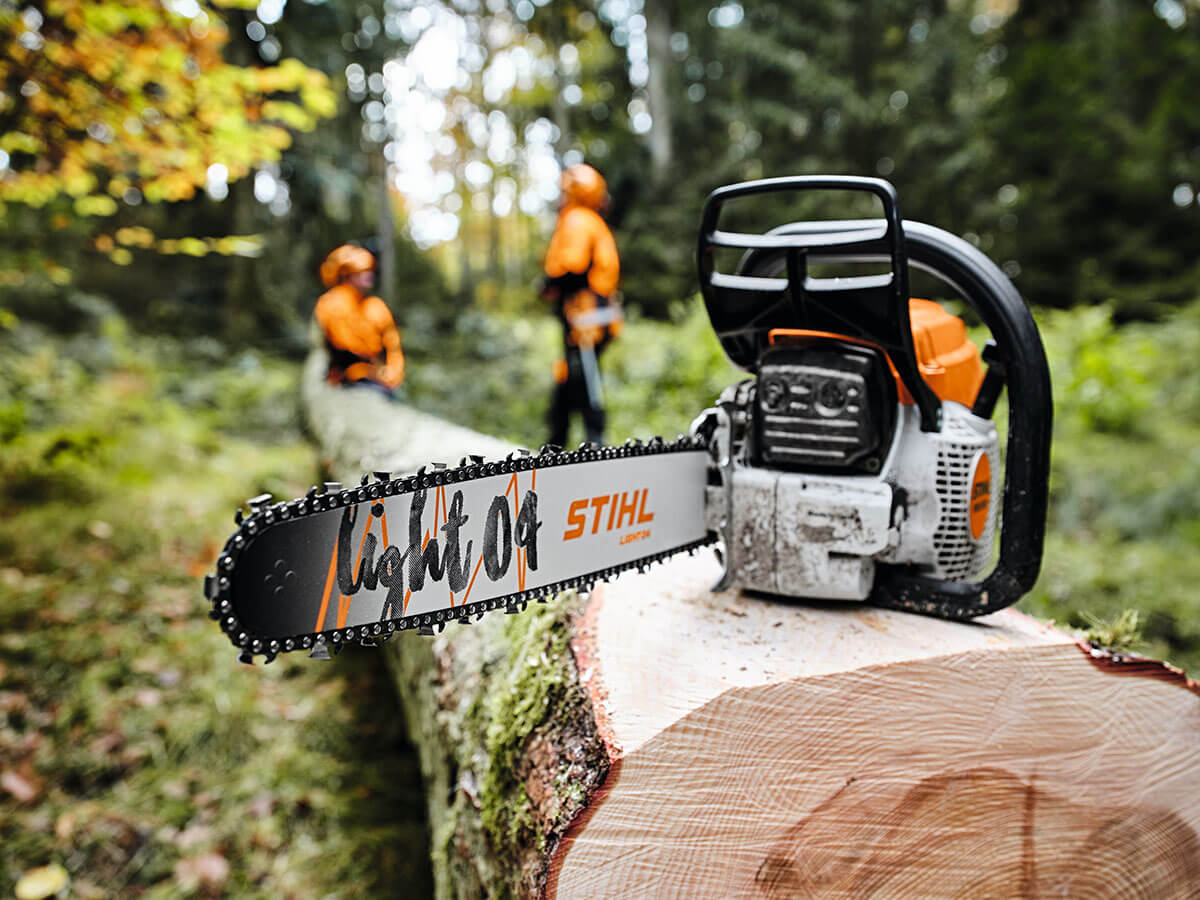
The guide bar wears faster than any other part. Rotate, clean, and inspect it every time you service the chain.
Flip the Bar Every Sharpening
Rotate the bar every time you sharpen or replace the chain. This evens out rail wear and extends bar life by up to 50 percent. When reinstalling, ensure the stamped letters face upward to align the oil channel correctly.
Clean Oil Passages and Rails
Remove the bar and chain. Use a small brush or file gauge to clean the oil inlet hole near the bar mount, the oil groove along the rail, and the adjustment pin area. Flush with resin remover or solvent. Clear the oil delivery hole on the saw body that feeds oil to the bar.
Inspect for Wear and Damage
Check for nose wear at the tip, which reduces cutting accuracy when excessive. Look for bent rails or cracked metal. Replace the bar if damaged. Spin the nose sprocket if equipped. It should turn freely. Stiffness means bearing failure.
Sharpen the Chain for Clean Cutting
A sharp chain cuts faster with less effort and lower kickback risk. Learn to sharpen it correctly.
Recognize When to Sharpen
A dull chain produces fine sawdust instead of wood chips. Watch for uneven cuts, increased vibration, or smoke from the bar. The chain pulling to one side during cutting indicates dull teeth.
Sharpening Procedure
Secure the saw in a stump vise or clamp. Engage the chain brake to lock the chain. Use a 5/32 inch round file or the correct size for your chain pitch. Place the file guide over the cutter.
File at 90 degrees to the bar, pushing outward in the direction of chain travel. Apply light pressure only on the push stroke. Use three to five strokes per tooth, counting for consistency. Alternate between right-hand and left-hand cutters. After finishing one side, flip the bar and repeat.
Set Depth Gauges to Prevent Kickback
Depth gauges control how deep each tooth bites. Too low means dangerous kickback. Too high means slow cutting.
Adjust Every Three to Five Sharpenings
Use a depth gauge tool or flat file. File the top of each raker until it is 0.025 to 0.030 inch below the cutting edge. Match the taper angle stamped on the cutter. Use a STIHL depth tool for precision measurement.
Why It Matters
Proper raker height ensures smooth, controlled cutting. It reduces operator fatigue and protects the engine from overload. This is critical when switching between hard and soft woods.
Clean and Replace the Air Filter
A clogged air filter starves the engine, causing poor performance and fuel waste.
Clean After Every Use
Remove the top cover and take out the foam filter. Wash in warm water and mild soap. Rinse thoroughly and air-dry completely. Never reinstall a wet filter.
Replace Annually or Sooner
Inspect for tears, hardening, or permanent compression. Replace at least once per year or more in dusty conditions. Use only STIHL-approved filters because generic ones may not seal properly.
Service the Spark Plug for Reliable Starts
A faulty spark plug causes hard starts, misfires, and poor idle.
Check When Engine Misfires
Symptoms include hard starting, rough idle, and loss of power. All STIHL gas saws use the same NGK spark plug type, typically BPMR7A or equivalent.
Replace Annually or Every 100 Hours
Remove the spark plug boot gently. Do not yank the wire. Use a spark plug socket to unscrew it. Inspect the electrode. Wet and black indicates rich fuel mix or fouling. White or blistered means overheating. Check that the gap is 0.020 inch or 0.5mm.
Install a new plug, hand-tighten, then give a quarter-turn with the wrench. Reattach the boot firmly.
Fuel and Oil: What to Use and Why
Using the right fuel and oil prevents carburetor clogs, engine wear, and starting issues.
Use Ethanol-Free Fuel
Ethanol attracts moisture, degrades fuel lines, and forms varnish in 30 days. Mix non-ethanol gasoline with STIHL HP Ultra 2-cycle oil at 50:1. The preferred option is STIHL MOTO-MIX, which is pre-mixed, ethanol-free, and ready to pour.
Refuel Safely
Never refuel a hot engine. Wait five minutes after shutdown. Refuel outdoors, more than 10 feet from ignition sources. Wipe spills immediately because fuel-soaked clothing is a fire hazard. Remove the cap slowly because pressure can build in the tank.
Lubricate the Bar and Chain
Use high-quality bar and chain oil formulated to cling at high speed. Refill the oil reservoir every time you refuel. Check oil flow by starting the saw near a light surface. If oil flings off the chain, it is working.
Deep Clean the Saw After Heavy Use
Buildup of sawdust, resin, and oil reduces performance and clogs critical systems.
Clean the Exterior and Housing
Turn off the saw and remove the battery or let it cool. Remove the clutch cover, bar, and chain. Use compressed air or a stiff brush to clean cooling fins, air intake slots, and the sprocket area. Wipe the body with a damp cloth but avoid water near the carburetor.
Clear Oil Passages and Sprocket
Use a small wire or brush to unclog the oil delivery hole. Clean around the drive sprocket because resin buildup increases wear. Inspect the oiler mechanism if the oil level does not drop during use.
Clean Chain and Bar Separately
Soak the chain and bar in resin solvent. Scrub the groove and oil channels with a file gauge. Rinse, dry, and spray with light oil before storage.
Store Your STIHL Saw Properly
Correct storage prevents corrosion, fuel damage, and hard starts next season.
For Gas-Powered Saws
Empty the fuel tank unless using MOTO-MIX, which can stay in. Run the engine at idle until it stops to clear the carburetor. Loosen the chain to relieve bar tension. Clean the air filter, spark arrestor, and sprocket. Store in a dry place with the scabbard on.
For Battery-Powered Saws
Remove the battery. Clean with a damp cloth but never submerge it. Store the battery at approximately 50 percent charge in a cool, dry place. Recharge to 50 percent every two to three months if unused.
General Storage Rules
Store the bar and chain separately. Keep everything in a dust-free, dry cabinet. Use protective covers for all components.
Maximize Performance and Lifespan
Small habits make a big difference in how long your STIHL lasts and how well it cuts.
Clean the Spark Arrestor Regularly
Remove the muffler cover and pull out the exhaust screen. Clean with a wire brush or compressed air. A clogged screen reduces power and increases engine heat.
Monitor Chain Stretch and Wear
Check tension before every use. Replace the chain when drive links are worn thin, cutters are chipped or rounded, or the chain derails easily.
Visit a STIHL Dealer for Pro Service
Get a full tune-up annually if used heavily. Services include carburetor cleaning, chain sharpening, air filter and plug replacement, and damage inspection.
Frequently Asked Questions About STIHL Chainsaw Maintenance
How often should I sharpen my STIHL chainsaw chain?
Sharpen the chain after every one to two fuel tanks or battery charges. You know it needs sharpening when you see fine sawdust instead of wood chips, notice increased vibration, or the chain pulls to one side.
Can I use regular gasoline in my STIHL chainsaw?
No. Always use ethanol-free gasoline. Ethanol attracts moisture, degrades rubber components, and forms varnish that clogs the carburetor within 30 days. Mix with STIHL HP Ultra oil at 50:1 or use pre-mixed STIHL MOTO-MIX.
How do I know if my chain tension is correct?
The chain should rotate freely by hand. You should be able to lift it slightly from the bar, but not pull more than one drive link fully out of the groove. If it binds, it’s too tight. If it sags below the rail, it’s too loose.
What happens if I run my chainsaw without bar and chain oil?
Metal-on-metal contact destroys the bar and chain in minutes. The chain will seize, the bar will overheat, and you risk severe injury. Always check oil levels before starting and refill every time you refuel.
How do I prepare my STIHL chainsaw for winter storage?
Empty the fuel tank or add MOTO-MIX. Run the engine at idle until it stops to clear the carburetor. Loosen the chain tension. Clean the air filter, spark arrestor, and sprocket. Store in a dry place with the scabbard on.
Should I take my STIHL to a dealer for maintenance?
Yes, for annual tune-ups, complex repairs, or if you notice performance issues you cannot resolve. Dealers can identify hidden problems before they become major repairs and have specialized tools for precise adjustments.
Key Takeaways for STIHL Chainsaw Maintenance Success

STIHL chainsaws are built tough, but they demand respect and routine care. The most critical habits are checking chain tension before every use, using only ethanol-free fuel and proper bar oil, and sharpening the chain when it produces sawdust instead of chips.
Regular bar rotation extends component life by up to 50 percent. Clean oil passages and air filters keep the engine running smoothly. Store your saw properly during off-seasons to prevent fuel system damage and corrosion.
A sharp, clean, well-tuned saw is not just more productive. It is safer. When in doubt, ask a STIHL Dealer. They are your best resource for long-term reliability and expert service.