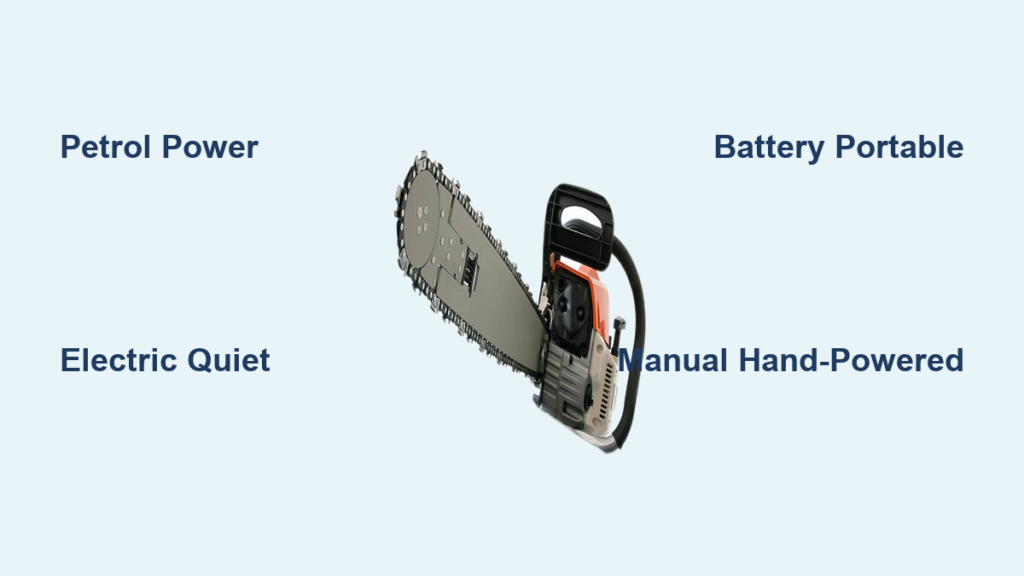
If you’re facing a pile of fallen branches, clearing land, or managing trees professionally, choosing the right type of chainsaw is critical. Not all chainsaws are built the same—each type serves different needs based on power source, size, and design. Whether you’re a homeowner trimming hedges or a logger felling massive oaks, understanding the types of chainsaws available helps you pick the right tool for safety, efficiency, and longevity.
This guide breaks down every major type of chainsaw, from petrol-powered beasts to compact battery models, and explains which ones suit specific tasks. You’ll learn how power sources affect performance, what specialized designs exist for unique jobs, and which models lead in durability and strength. By the end, you’ll know exactly which chainsaw fits your work without overspending or underperforming.
Petrol Chainsaws: Raw Power for Tough Jobs
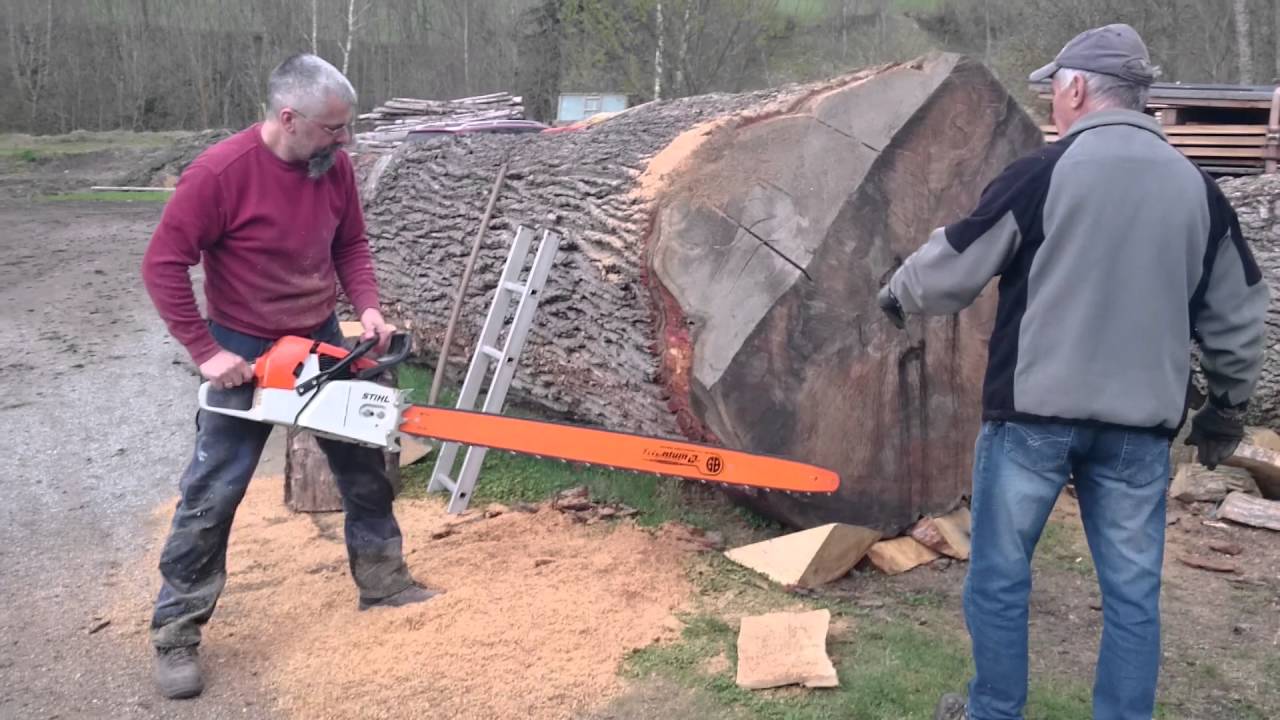
Petrol chainsaws deliver unmatched cutting force, making them the go-to for professionals and heavy-duty users. Fueled by a mix of gasoline and two-stroke oil, these machines operate independently of power outlets, ideal for remote forests, large properties, or storm cleanup.
High Power and Full Mobility
Petrol chainsaws offer the highest performance in terms of bar length, chain speed, and torque. They easily cut through thick hardwoods like oak or maple and handle tasks such as tree felling, bucking logs, and storm debris removal with ease. With engine sizes ranging from 30cc to over 100cc, larger models provide continuous power without battery drain or cord constraints.
These saws are completely self-contained with no cords or charging stations needed. That makes them perfect for extended use in rural areas or jobsites far from electricity. Their fuel tanks allow 30 to 60 minutes of runtime per fill-up, and refueling takes seconds.
Maintenance and Noise Trade-offs
However, this power comes with drawbacks. Petrol chainsaws are heavier than electric models, often weighing 10 to 15 pounds or more. They’re also louder, typically producing 100 to 115 decibels, which requires hearing protection. Regular maintenance is essential including mixing fuel, cleaning air filters, checking spark plugs, and lubricating the chain.
Emissions are another downside. Gas-powered saws release exhaust fumes, making them less eco-friendly and unsuitable for enclosed spaces or noise-sensitive neighborhoods.
Best for: Professional logging, land clearing, large tree felling, and rural property maintenance.
Electric Chainsaws: Quiet, Clean, Convenient
Electric chainsaws are ideal for light to medium tasks where noise, emissions, and weight matter. They come in two forms: corded and cordless (battery-powered). Both eliminate fuel mixing and reduce mechanical complexity, appealing to homeowners and urban users.
Corded vs Cordless: What’s the Difference?
| Feature | Corded Electric | Cordless (Battery) |
|---|---|---|
| Power Source | Direct AC power | Rechargeable lithium-ion battery |
| Runtime | Unlimited with outlet access | 15 to 45 minutes depending on battery |
| Mobility | Limited by cord length | Full mobility within battery life |
| Cutting Power | Moderate and consistent | Slightly less than corded or petrol |
| Best Use | Yard maintenance and pruning | Occasional cutting and small trees |
Corded models never lose power and are generally cheaper. But the cord restricts movement and poses trip hazards. Cordless versions offer freedom but require spare batteries for longer jobs.
Lightweight and Low Maintenance
Electric chainsaws are significantly lighter, with some models under 8 pounds, making them easier to control especially overhead or for extended periods. They start with a button or trigger pull, eliminating pull-cord struggles. With no engine tuning or fuel storage, upkeep is minimal: just check the chain tension and oil levels.
They operate at lower decibels, ranging from 75 to 90 dB, so neighbors won’t complain during weekend use. And with zero tailpipe emissions, they’re better for the environment.
Best for: Homeowners, gardeners, light pruning, cutting firewood, and small-diameter limbs.
Battery-Powered Chainsaws: Modern Mobility
Battery-powered chainsaws represent the evolution of electric models, combining portability with eco-friendly operation. Thanks to advances in lithium-ion technology, today’s battery saws rival small petrol models in performance.
Compact Design and Instant Start
These saws start instantly with a switch or safety lever, require no warm-up, and produce almost no vibration. Their brushless motors deliver efficient power delivery and longer runtime. A 36V or 40V battery can handle dozens of small cuts on a single charge.
Many models feature tool-free chain tensioning, automatic oiling, and transparent oil tanks for easy monitoring, all designed for user convenience.
Trade-offs in Runtime and Power
While improving rapidly, battery chainsaws still lag behind petrol models in sustained heavy-duty performance. Thick hardwoods or continuous use will drain batteries quickly. Cold weather also reduces battery efficiency.
However, for most residential users, the trade-off is worth it. No fuel, no emissions, quiet operation, and easy storage make them ideal for urban yards and eco-conscious buyers.
Best for: Urban homeowners, light tree work, hedge trimming, and eco-friendly yard care.
Manual Chainsaws: No Power Required
Manual chainsaws, also called hand-powered or survival saws, are human-operated tools with a bidirectional cutting chain and handles at both ends. They require no fuel, electricity, or batteries.
Emergency and Off-Grid Use
These compact saws excel in situations where power isn’t available: camping trips, survival scenarios, or remote cabins. Some models fold for easy packing. Though slow compared to motorized saws, they can cut branches up to 6 inches in diameter with steady effort.
They’re silent, lightweight, and virtually maintenance-free. Just keep the chain sharp.
Best for: Emergency preparedness, backpacking, off-grid living, and light bushcraft.
All-Purpose Chainsaws: Versatility You Can Rely On
All-purpose chainsaws strike a balance between power, weight, and usability. Designed for general yard work, they handle everything from pruning to felling small trees without being overly complex or expensive.
Mid-Sized Bars for Multiple Tasks
Typically featuring 14 to 20 inch guide bars, these saws offer enough reach for logs and trees while remaining manageable for DIY users. They’re often petrol-powered for maximum flexibility, though some electric models fit this category.
Features like ergonomic grips, anti-vibration systems, and automatic chain lubrication enhance comfort during prolonged use. Many include air filtration systems to extend engine life in dusty environments.
Ideal for Homeowners and Seasonal Users
If you only need a chainsaw occasionally for storm cleanup, firewood, or property maintenance, an all-purpose model offers the best value. It avoids the complexity of pro-grade tools while delivering reliable performance.
Recommended models:
• Husqvarna 135 Mark II for beginners and light tasks
• Husqvarna 450e II for regular yard work
• Husqvarna 455 Rancher for serious homeowners needing more power
Best for: General property upkeep, firewood processing, small tree removal, and storm recovery.
Top-Handle Chainsaws: Built for Working at Height

Top-handle chainsaws are engineered for one-handed use, primarily by professional arborists who climb trees or work on elevated platforms.
Designed for Vertical Work
Unlike standard rear-handle chainsaws, top-handle models place the handle on top of the engine, allowing users to grip the tree with one hand and operate the saw with the other. This design improves balance and control when cutting overhead limbs or working from ladders.
Despite their compact size, usually 12 to 16 inch bars, they pack enough power for precise pruning, limbing, and branch removal.
Safety and Professional Use Only
Due to kickback risks and reduced stability, top-handle chainsaws are not recommended for ground use or beginners. In many countries, they’re restricted to certified professionals because of safety regulations.
They often include enhanced safety brakes, durable construction, and optimized weight distribution for vertical handling.
Recommended model: Husqvarna T540XP II, a professional-grade top-handle saw with advanced safety features ideal for tree surgeons and climbers.
Best for: Arborists, tree climbers, and certified professionals doing aerial pruning.
Pole Chainsaws: Reach High Branches Safely
Pole chainsaws, or pole saws, extend your reach, letting you trim tall branches without a ladder. The chainsaw head attaches to a long telescoping pole, typically 6 to 14 feet.
Extendable Reach and Angled Cuts
Most pole saws have adjustable poles and rotating heads, allowing angled cuts on high limbs. Guide bars are short, usually 6 to 10 inches, designed for branches up to 8 inches thick.
They’re powered by petrol, electricity, or battery. Battery models dominate the consumer market due to their quiet, cordless operation.
Reduce Fall Risks
By eliminating the need to climb, pole chainsaws greatly reduce fall hazards. They’re excellent for routine tree maintenance, removing deadwood, or shaping tall hedges.
Some models include brush cutter attachments, increasing versatility.
Recommended model: Husqvarna 525PT5S, a premium battery-powered pole saw with excellent balance, reach, and durability for pros and serious homeowners.
Best for: Trimming tall trees, hedge shaping, and safe overhead cutting.
Mini Chainsaws: Precision in Tight Spaces
Mini chainsaws are compact tools with guide bars between 4 and 10 inches. They’re designed for detail work where full-sized saws are too bulky.
Lightweight and Easy to Control
Weighing as little as 3 to 5 pounds, mini chainsaws reduce fatigue during extended use. Their small size makes them ideal for cutting in tight spots like between branches or near structures.
Most are battery-powered, offering quiet, clean operation. Some plug into USB ports for emergency charging.
Not for Heavy-Duty Cutting
While convenient, mini chainsaws lack the power for large logs or hardwoods. They’re best suited for green wood, small branches, and light pruning.
They’re popular among gardeners, campers, and DIYers who want a portable cutting tool.
Recommended model: Husqvarna 120i, a compact battery-powered mini saw with smooth operation and easy handling for occasional use.
Best for: Light pruning, shaping shrubs, camping, and small yard jobs.
Best Chainsaw for Beginners: Safe and Simple
Choosing the right chainsaw for beginners means prioritizing safety, ease of use, and manageable power. The right beginner saw can build confidence and skills without overwhelming new users.
Why the Husqvarna 120 Mark II Stands Out
The Husqvarna 120 Mark II is a top beginner-friendly chainsaw because it’s lightweight, easy to start, and packed with safety features.
Key features include:
• Inertia-activated chain brake that engages automatically during kickback, reducing injury risk
• Simple starting system requiring minimal effort, no flooded engines or complex priming
• Easy chain tensioning without tools
• Air-injection system that keeps the air filter cleaner longer, reducing maintenance
Despite its simplicity, it handles light to medium tasks like pruning, cutting firewood, and trimming small trees.
It’s not the most powerful saw, but that’s the point. Beginners benefit from controlled power and predictable handling.
Best for: First-time users, casual yard work, and learning safe chainsaw operation.
Longest-Lasting Chainsaw: Built to Endure

When longevity matters, the Husqvarna 372XP stands above the rest. This professional-grade saw is built for years of heavy-duty use in forestry and logging.
Robust Construction for Heavy Work
The 372XP features:
• Magnesium crankcase for strength and heat resistance
• Three-piece crankshaft for durability under high RPMs
• Air-injection pre-cleaning system that removes 80% of debris before it reaches the filter
• LowVib anti-vibration system to protect both operator and machine
These features reduce wear, extend service intervals, and ensure reliable starts even after months of hard use.
With proper care including regular cleaning, chain sharpening, and timely part replacement, this saw can last decades.
Best for: Loggers, arborists, and landowners needing a long-term, high-performance tool.
Strongest Chainsaw: Maximum Cutting Force
For sheer power, the Husqvarna 3120XP is the strongest chainsaw available. With a massive 118.8cc engine, it’s built for extreme tasks like cutting massive trunks or milling large slabs.
Professional-Grade Performance
The 3120XP delivers:
• Unmatched torque for cutting dense hardwoods
• High chain speed under load
• Durable components designed for continuous operation
• Anti-vibration system to reduce operator fatigue
Despite its size, it includes ergonomic features for better handling during long shifts.
It’s not meant for casual use. It’s a specialist tool for commercial forestry, firewood production, and large-scale land clearing.
Best for: Professional loggers, mill operators, and heavy industrial applications.
Final Thoughts on Choosing the Right Types of Chainsaws
Understanding the types of chainsaws helps you choose wisely based on your needs. Petrol models offer raw power and mobility for professionals. Electric and battery-powered saws bring quiet, clean operation for homeowners. Specialized designs like top-handle, pole, and mini chainsaws solve specific problems like height access or precision cutting.
For beginners, ease of use and safety matter most. Choose a lightweight, well-balanced model like the Husqvarna 120 Mark II. For longevity, the Husqvarna 372XP sets the standard. And when power is everything, the Husqvarna 3120XP reigns supreme.
No matter your task, there’s a chainsaw designed for it. Match the tool to the job, maintain it well, and you’ll get years of reliable service safely and efficiently.
Frequently Asked Questions About Types of Chainsaws
What are the main types of chainsaws?
The main types of chainsaws include petrol chainsaws, electric chainsaws (both corded and cordless), battery-powered chainsaws, and manual chainsaws. Each type serves different needs based on power source, weight, and intended use.
Which type of chainsaw is best for homeowners?
Electric or battery-powered chainsaws are best for most homeowners. They’re lighter, quieter, and require less maintenance than petrol models. Battery-powered options offer the best combination of convenience and performance for yard work.
Are petrol chainsaws more powerful than electric ones?
Yes, petrol chainsaws are generally more powerful than electric models. They deliver higher torque and can handle thicker hardwoods and longer continuous use. However, they require more maintenance and are heavier.
What is the difference between a pole chainsaw and a regular chainsaw?
A pole chainsaw has an extendable pole with a chainsaw attached at the end, allowing you to reach high branches without a ladder. Regular chainsaws are designed for ground-level use and offer more power for larger cutting tasks.
Can beginners use top-handle chainsaws?
No, top-handle chainsaws are not recommended for beginners. They’re designed for professional arborists working at height and require specialized training. Beginners should start with a rear-handle chainsaw like the Husqvarna 120 Mark II.
How long do battery-powered chainsaws last on a single charge?
Battery-powered chainsaws typically run for 15 to 45 minutes depending on the battery size and the type of cutting being done. Larger 40V batteries can handle dozens of small cuts on a single charge.