
Your machinery relies on the precise interaction between chain and sprocket to transmit power without slippage. When these components of chain sprockets wear out or mismatch, your entire drive system suffers from inefficiency and potential failure.
This guide details every critical part of the sprocket and chain assembly to help you diagnose issues and select the right replacements. You will learn how specific elements like rollers and pins interact with tooth profiles to ensure smooth operation.
Why Chain and Sprocket Wear Occur Together
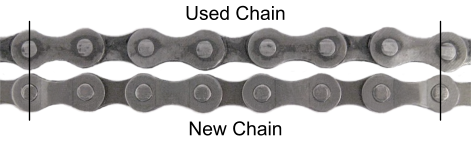
Chains and sprockets function as a single mechanical unit rather than independent parts. As the system operates, the chain elongates slightly due to internal wear while the sprocket teeth begin to erode at the tips. This simultaneous degradation means that installing a new chain on worn sprockets can reduce the new chain’s life by up to 50 percent.
Industry experts strongly advise replacing both components at the same time to avoid immediate rework. The small additional cost of a new sprocket protects your investment in the more expensive chain. Ignoring this relationship guarantees premature failure and increased downtime for your equipment.
How Pitch Mismatch Causes System Failure
The term “pitch” refers to the exact distance between teeth on the sprocket and links in the chain. These measurements must align perfectly to allow the teeth to mesh securely with the chain rollers. Even a minor mismatch causes uneven loading that accelerates wear on both parts.
When pitch does not match, the chain may jump or skip under heavy loads. This skipping creates violent impact forces that damage surrounding machinery components. Proper alignment ensures zero slippage and maximizes the mechanical efficiency of your drive system.
The Danger of Hooked Tooth Profiles
Worn sprocket teeth often develop a curved shape that resembles a shark fin or a hook. This “hooking” occurs as the material erodes unevenly during years of engagement with the chain rollers. A hooked profile forces the chain to ride higher on the tooth than intended.
This elevated position increases stress on the chain links and pins significantly. You can identify this issue by visually comparing your sprocket teeth to a new unit or using a specialized gauge. Replacing sprockets before severe hooking occurs saves money on costly chain replacements.
Critical Roller Chain Elements That Engage Sprockets
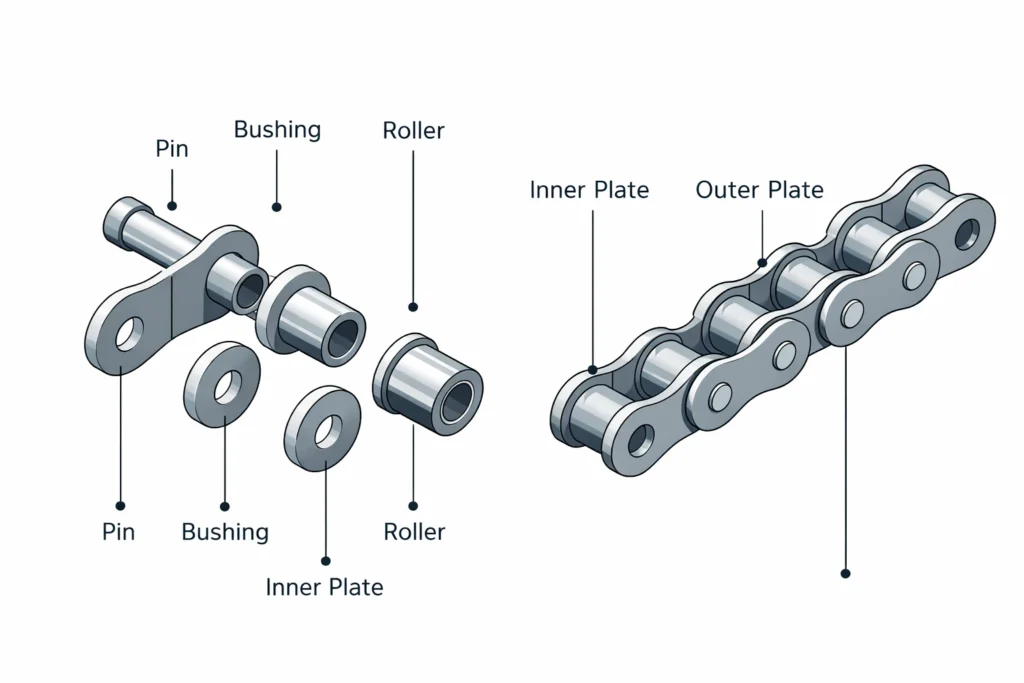
Understanding the specific parts of the roller chain helps you appreciate how sprocket teeth are engineered. The sprocket design directly accommodates the physical dimensions of link plates, rollers, bushings, and pins.
Link Plates and Tensile Strength
Link plates are the flat metal strips that form the outer and inner structure of the chain. They bear the full tensile load when the system transmits power from the motor to the driven shaft. The thickness and spacing of these plates dictate the required width of the sprocket teeth.
If link plates are worn or misaligned, they place lateral stress on the sprocket. This stress accelerates tooth wear and increases the risk of the chain derailing completely. Sprockets must have precise gaps between teeth to accommodate these plates without binding.
Rollers and Friction Reduction
Rollers are cylindrical sleeves located between the inner link plates that contact the sprocket teeth directly. Their primary function is to roll over the tooth surface rather than slide across it. This rolling action significantly reduces friction and heat buildup during operation.
The diameter of the roller determines the curvature of the sprocket tooth valley. If the roller is flattened due to wear, it no longer rolls cleanly against the tooth. This condition leads to increased noise, vibration, and rapid erosion of the sprocket material.
Bushings and Internal Support
Bushings are hardened metal sleeves that surround the pins and support the rollers within the chain assembly. They provide a smooth surface for rotation as the chain flexes around the sprocket curve. Without bushings, direct metal-to-metal contact would cause rapid failure.
In high-load environments, the interaction between the bushing and the sprocket tooth flank is a critical wear point. Inadequate lubrication here causes pinching forces that stretch the chain pitch. This stretching throws off timing and causes poor meshing with the sprocket teeth.
Pins and Structural Integrity
Pins act as the rivets that hold the entire chain assembly together while allowing flexibility. They pass through the bushings and link plates to form hinge-like joints that transmit torque. The diameter and strength of these pins must resist shear forces during power transfer.
As pins wear down, they create slack in the chain joints that contributes to overall pitch elongation. This elongation creates a mismatch with the fixed spacing of the sprocket teeth. The result is often skipping or jumping, especially when the machine encounters sudden load changes.
Selecting the Right Sprocket Type for Your Application

Not all sprockets are designed the same, and choosing the wrong type leads to poor performance. You must match the sprocket category to your specific chain type and operational environment.
Standard Roller Chain Sprockets
These are the most common sprockets found in manufacturing and automotive systems. They are designed to work with standard roller chains and come in single, double, triple, or quadruple strand configurations. Single-strand versions handle light to medium loads effectively.
Multi-strand sprockets distribute torque across parallel chains to enable higher power transmission in compact spaces. They are typically made from steel or cast iron and often feature heat-treated teeth. This treatment adds durability for continuous industrial use.
Engineered Chain Sprockets for Heavy Duty Use
Engineered sprockets are built for extreme conditions found in mining and large agricultural machinery. They are thicker and stronger than standard models, often utilizing alloy steels or abrasion-resistant materials. These sprockets withstand impact loads, dirt, and high torque levels.
Standard sprockets would fail quickly in these harsh environments due to shock loading. The tooth profiles on engineered sprockets are reinforced to handle massive stresses. Oversized hubs are common to manage the greater shaft stresses associated with heavy equipment.
Silent Chain Sprockets for Noise Control
Silent chain sprockets, also known as inverted tooth sprockets, work with chains that have flat toothed links. The engagement involves a smooth sliding motion rather than the rolling impact of roller chains. This design significantly reduces noise and vibration levels.
Facilities with indoor operations or equipment near operators benefit greatly from this technology. While more expensive initially, silent chain systems offer higher speed capabilities. They provide smoother operation compared to traditional roller chain setups.
Specialty Sprockets for Specific Functions
Idler sprockets maintain chain tension without driving the system themselves. They are mounted on adjustable arms to prevent slack and ensure consistent engagement. Quick-disconnect sprockets feature removable hubs for fast replacement without shaft disassembly.
Quick-disconnect models are ideal for production lines where minimizing downtime is critical. The split bushing mechanism allows technicians to swap sprockets in minutes. This feature justifies the slightly higher cost through labor savings and increased uptime.
Material Choices and Design Specifications
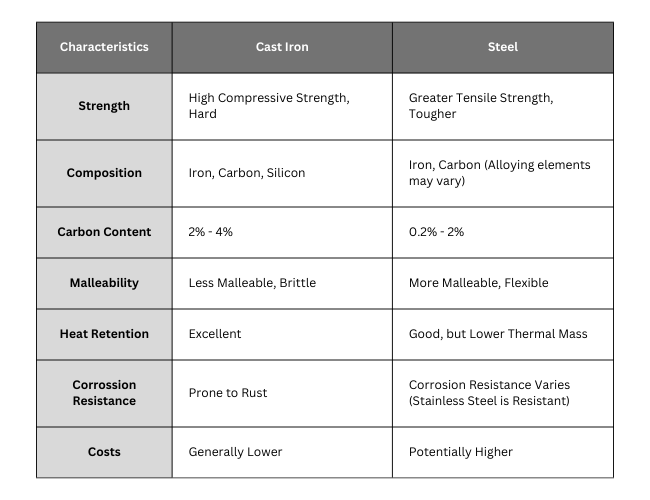
The material composition of a sprocket determines its lifespan and suitability for your environment. Steel and cast iron are the two primary materials used in industrial applications.
Steel Versus Cast Iron Properties
Steel is the preferred material for high-speed and high-load applications due to its toughness. Many steel sprockets undergo heat treatment or case hardening to increase surface durability. Stainless steel variants are available for corrosive environments like food processing.
Cast iron offers excellent vibration damping and good wear resistance for slow-moving machinery. It is often used in large industrial drives where noise reduction is a priority. However, cast iron is more brittle and can crack under sudden impact loads.
Tooth Profile Accuracy Standards
The shape of sprocket teeth follows strict ANSI, ISO, or DIN standards to ensure compatibility. A precise tooth profile ensures smooth engagement and even load distribution across multiple teeth. This accuracy reduces impact stress and operational noise significantly.
Poorly machined or worn teeth develop irregular shapes that cause the chain to climb. This climbing action increases the risk of skipping and catastrophic failure. Regular inspection using gauges helps catch profile deviations early.
Hub and Bore Configuration Options
The hub connects the sprocket to the shaft and must transmit torque without slipping. Finished bores with keyways are standard for fixed installations requiring set screws. Taper-lock bushings allow for easy installation and removal with consistent torque transmission.
Quick-disconnect hubs enable tool-free changes for maintenance-heavy environments. The bore size must match the shaft diameter exactly to prevent wobbling. Proper alignment is critical to avoid uneven wear patterns on the teeth.
Maintenance Best Practices for Longevity
Proper maintenance extends the life of your drive system and prevents costly unplanned stops. Regular attention to lubrication and inspection yields the best return on investment.
Lubrication Requirements
Lubrication reduces friction between rollers, pins, and sprocket teeth effectively. It also washes away dirt and grit that accelerate wear on metal surfaces. You should use the lubricant recommended for your specific chain type and environment.
Apply lubricant while the chain is running to ensure penetration into the pin-bushing interface. Dry film lubricants work well in dirty environments while oil suits high-speed systems. Consistent lubrication schedules prevent metal-to-metal contact.
Inspection Protocols for Wear
Check sprocket teeth monthly for signs of hooking, thinning, or pitting. Hooked tips indicate advanced wear that requires immediate replacement. Thinning at the base of the tooth suggests the material is fatigued.
Use a sprocket gauge or compare the unit against a new sprocket to assess wear accurately. Visible deformation means the sprocket can no longer support the chain properly. Delaying replacement risks damaging the entire chain assembly.
Frequently Asked Questions About Chain Sprockets
Can I install a new chain on my old sprockets?
No, you should never install a new chain on worn sprockets. Doing so can reduce the new chain’s life by up to 50 percent because the worn tooth profile damages the fresh links. Always replace both components simultaneously.
How do I know if my sprocket teeth are worn out?
Look for a “hooked” or curved shape on the tips of the teeth. You may also notice thinning at the base or pitting on the surface. If the chain rides higher on the teeth than usual, the sprocket likely needs replacement.
What is the difference between steel and cast iron sprockets?
Steel sprockets offer higher strength and toughness for high-speed or high-load applications. Cast iron provides better vibration damping and is suitable for heavy, slow-moving machinery. Steel is less brittle and handles shock loads better than cast iron.
Why is pitch matching important for sprockets?
Pitch is the distance between teeth and must match the chain links exactly. A mismatch causes uneven loading, accelerated wear, and potential chain skipping. Precise pitch alignment ensures smooth power transmission and longevity.
What causes a chain to skip on the sprocket?
Skipping usually results from pitch elongation due to worn pins and bushings. It can also occur if the sprocket teeth are hooked or if the pitch does not match. Sudden load changes exacerbate skipping in worn systems.
Key Takeaways for Maintaining Chain Sprocket Systems

The components of chain sprockets work in unison with chain elements to deliver reliable power transmission. Your system depends on the precise interaction between rollers, pins, and tooth profiles to function efficiently. Neglecting any single part compromises the entire drive assembly.
Always replace chains and sprockets together to maximize component life and minimize downtime. Select materials like steel or cast iron based on your specific load and environmental needs. Regular inspection and lubrication are your best defenses against premature failure.
Take action today by inspecting your current drive systems for signs of hooked teeth or pitch mismatch. Implementing a proactive replacement strategy saves money and keeps your machinery running smoothly.