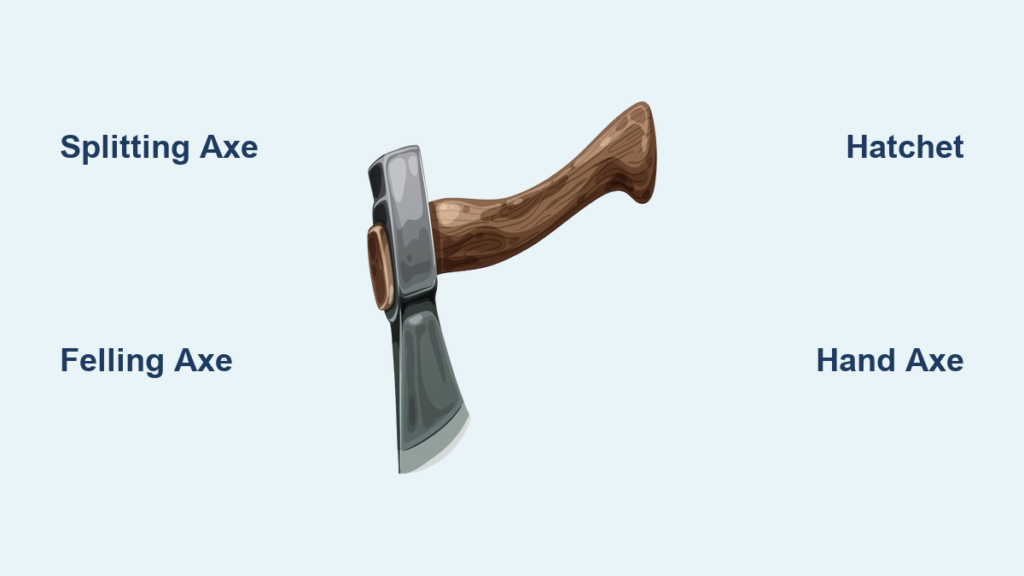
If you’ve ever stood in a hardware store aisle staring at rows of axes wondering why there are so many shapes and sizes, you’re not alone. The truth is, different axe types exist for specific tasks, each designed with a unique balance, weight, and blade geometry to excel in its intended role. Whether you’re splitting wood, felling trees, carving logs, or camping in the wilderness, using the wrong axe can make the job harder, less efficient, and even dangerous.
Understanding the different axe types helps you choose the right tool for your needs. From the heavy-duty splitting maul to the nimble hatchet, every axe serves a purpose. This guide breaks down the most common axe types, what they’re built for, how they differ, and which one you should reach for depending on your task. No fluff, no guesswork, just clear, practical information to help you make an informed decision.
Splitting Axe vs Maul: Which One Do You Need?
What a Splitting Axe Does Best
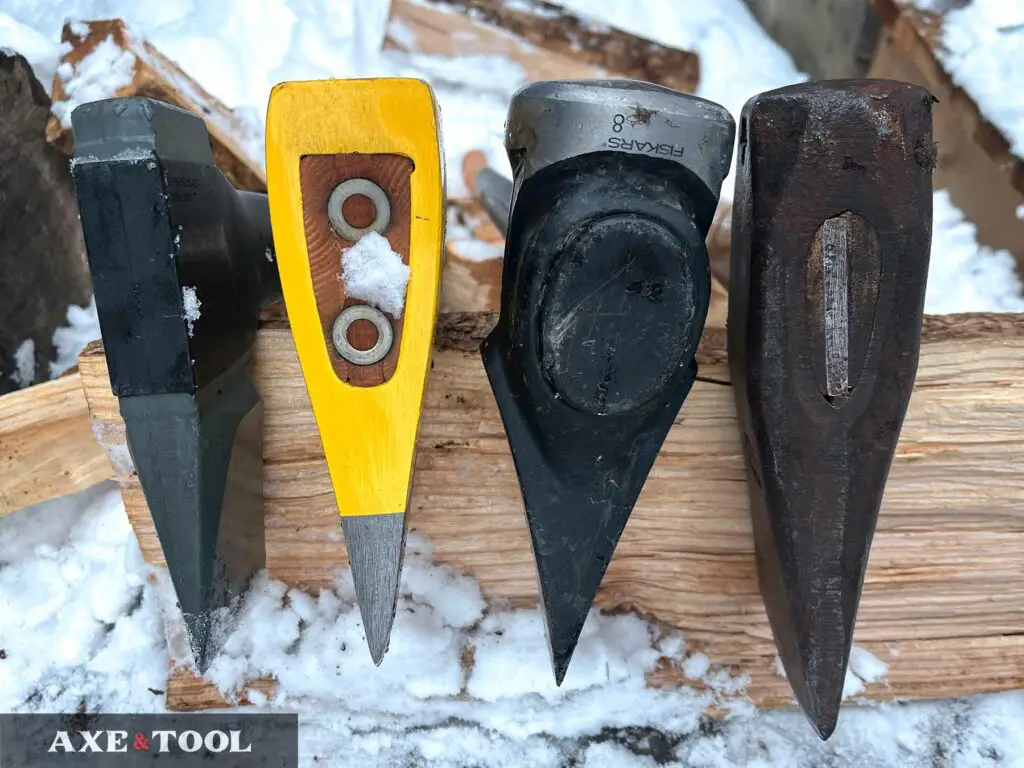
A splitting axe is designed to split logs along the grain, making it ideal for turning large rounds into firewood. It typically weighs between 3 and 6 pounds, with a narrow, wedge-shaped head that drives deep into the wood. The sharper edge cuts through fibers efficiently, while the tapered design helps prevent the axe from getting stuck.
Unlike a chopping axe, a splitting axe is not meant for felling trees. Its geometry focuses on splitting force rather than slicing action. It works best when used with a steady swing and proper stance, often paired with a splitting block or stump.
When a Maul Outperforms a Splitting Axe
A splitting maul looks similar to a splitting axe but is heavier, usually 6 to 8 pounds, and built like a sledgehammer with a wide, blunt wedge. The head is thicker and less sharp, relying on sheer mass to force logs apart. Because of its weight and design, it handles dense, knotty wood that resists regular splitting axes.
While a maul won’t get as stuck in tough grain, it requires more strength and precision. It’s slower than a splitting axe but more effective on stubborn logs. Choose a maul when dealing with green wood, twisted grain, or large-diameter rounds.
Key Design Differences at a Glance
| Feature | Splitting Axe | Splitting Maul |
|---|---|---|
| Weight | 3–6 lbs | 6–8 lbs |
| Edge Sharpness | Sharper cutting edge | Blunt, wedge-shaped head |
| Best For | Seasoned, smaller logs | Green, knotty, large logs |
| Swing Speed | Faster | Slower |
| Risk of Getting Stuck | Moderate | Low |
Use a splitting axe for speed and control on manageable wood. Reach for a maul when brute force is needed.
Felling Axe for Tree Cutting
Anatomy of a Felling Axe
A felling axe is built for chopping down trees. It usually has a 28- to 36-inch handle and weighs 3.5 to 5 pounds, offering a balance between power and maneuverability. The blade is thin and sharply honed, allowing it to slice through wood fibers cleanly with each swing.
The head is often slightly curved, enabling deeper bites into the trunk. High-carbon steel blades hold an edge longer, reducing the need for frequent sharpening in the field. The long handle increases leverage, giving you more power per swing.
Proper Felling Technique Step by Step
To fell a tree safely:
1. Assess the fall direction by looking at the tree’s natural lean, branch distribution, and obstacles.
2. Cut a V-shaped notch on the side facing the desired fall, one-third of the way through.
3. Make a back cut on the opposite side, slightly above the bottom of the notch.
4. Insert a plastic or wooden wedge if the cut starts to close.
Always maintain a clear escape path at a 45-degree angle from the expected fall line.
Essential Safety Tips for Felling
- Wear cut-resistant chaps, steel-toe boots, and eye protection.
- Keep bystanders at least twice the tree’s height away.
- Never use a dull axe; loss of control causes accidents.
- Inspect the axe head and handle before each use for cracks or looseness.
- Avoid working on slopes or in high winds.
A sharp, well-maintained felling axe gives you precision and reduces fatigue during extended use.
Hatchet: Compact and Versatile

Best Uses for a Hatchet
A hatchet is a small, lightweight axe, usually 1 to 2 pounds, ideal for light chopping, limbing, and camp tasks. It’s perfect for backpackers, campers, and DIYers who need a portable cutting tool. Common uses include:
– Cutting small branches
– Splitting kindling
– Driving tent stakes
– Carving wood
– Emergency situations
Because of its size, it fits easily in a pack or belt sheath.
Choosing the Right Hatchet
Look for these features when shopping:
– A full tang where metal extends through the handle for durability
– A grip that fits your hand comfortably
– A sharp, drop-forged blade
– A sheath for safe storage
Popular models include the Estwing Camper’s Axe and the Gransfors Bruks Wildlife Hatchet, both known for balance and craftsmanship.
How to Maintain a Hatchet Properly
- Wipe the blade after each use to prevent rust.
- Sharpen regularly with a file or whetstone.
- Treat wooden handles with linseed oil to prevent drying and cracking.
- Store in a dry place, preferably inside a sheath.
A well-cared-for hatchet can last decades and become a trusted outdoor companion.
Hand Axe: The Middle Ground Between Hatchet and Axe
Design and Balance Features
A hand axe is slightly larger than a hatchet but smaller than a full-sized axe, typically 2 to 3 pounds with a 14- to 18-inch handle. It strikes a balance between portability and power, making it useful for medium-duty tasks in the woods or backyard.
The head is often symmetrical, with a refined edge that allows for controlled chopping. Many traditional hand axes are designed for one-handed use, though two hands can be used for tougher jobs.
Tasks Suited for a Hand Axe
- Limbing fallen trees
- Processing firewood
- Building bushcraft shelters
- Chopping green wood
- Wood carving and shaping
It’s a favorite among bushcraft enthusiasts for its versatility and precision.
Hand Axe vs Hatchet: What’s the Difference?
| Feature | Hand Axe | Hatchet |
|---|---|---|
| Weight | 2–3 lbs | 1–2 lbs |
| Handle Length | 14–18 inches | 10–14 inches |
| Primary Use | Medium chopping, carving | Light chopping, portability |
| Power Output | Higher | Lower |
| Portability | Good | Excellent |
Choose a hand axe when you need more power than a hatchet offers but don’t want to carry a full-sized axe.
Camping Axe Essentials

Why Campers Need a Dedicated Axe
Even if you plan to use a saw, having a camping axe adds value. It helps process found wood, build fire pits, clear small brush, and create tools in survival scenarios. A compact axe boosts self-reliance in the wild.
Unlike bulky axes, camping models are designed for packability and multi-use functionality.
Top Features to Look For
- Lightweight design under 2.5 lbs for easy carrying
- Durable full tang construction with a solid head-to-handle connection
- Multipurpose design including hammer pommels or saws
- Included sheath for safe transport and storage
- Corrosion-resistant coating for damp environments
Brands like Opinel, Fiskars, and Hults Bruk offer excellent camping-specific models.
Recommended Camping Models Worth Considering
- Fiskars X7: Lightweight, sharp blade, durable composite handle
- Hults Bruk Kisa: Classic Swedish design, hand-forged, great balance
- Gränsfors Scout Axe: Precision tool for bushcraft, lifetime warranty
Each delivers reliability and performance in rugged outdoor conditions.
Firewood Processing Axes
Choosing the Right Tool for the Job
Processing firewood involves multiple steps: felling, limbing, bucking, and splitting. No single axe does it all, but you can optimize your toolkit based on volume and wood type.
For light use, a hatchet or hand axe suffices for small logs and kindling.
For moderate use, a felling axe and splitting maul combo covers most needs.
For heavy use, consider a log splitter alongside hand tools.
Step-by-Step Firewood Preparation
- Fell the tree with a felling axe or chainsaw.
- Limb branches with a hatchet or pruning saw.
- Buck into rounds using a crosscut saw or axe.
- Split logs with a splitting axe or maul.
- Stack and season for at least 6 to 12 months.
Using the right axe at each stage saves time and energy.
Efficiency Tips That Save Time
- Split wood when it’s green; it’s easier than dry hardwood.
- Use a splitting block elevated off the ground.
- Rotate logs to find grain direction before striking.
- Keep all tools sharp; dull blades waste effort.
Matching the axe to the task ensures smooth, efficient firewood production.
Tactical and Rescue Axes

Features That Define Tactical Axes
Tactical axes are rugged, compact tools designed for military, law enforcement, or survival use. They often include:
– Hammered or serrated back spikes
– Glass-reinforced nylon or metal handles
– Aggressive grip textures
– MOLLE-compatible sheaths
– Built-in seatbelt cutters or window breakers
Examples include the Gerber Paradox and Cold Steel Tactical Axe.
Rescue Scenarios and Applications
These axes excel in emergency situations:
– Breaking through doors or walls
– Cutting seatbelts or trapped limbs in vehicles
– Clearing debris after storms
– Self-defense as a last resort
Their durability and multi-functionality make them valuable in crisis response.
Why Civilians Carry Tactical Axes
While marketed to professionals, civilians use tactical axes for:
– Home defense
– Bug-out bags
– Overlanding and off-road recovery
– Disaster preparedness
They combine utility with reliability in high-stress environments.
Historical and Specialized Axes
Types You Might Encounter
Some different axe types have historical or niche uses:
– Poleaxe: Long-handled medieval weapon with axe, spike, and hammer
– Board axe: Used in sawmills to split planks along the grain
– Pickaxe: Often grouped with axes; used in mining and breaking rock
– Double-bit axe: Two blades, one sharp and one for heavy work, popular in forestry
These are less common today but still used in reenactments, traditional crafts, or specialized industries.
Collecting Vintage Axes
Collectors seek brands like:
– Plumb
– Collins
– Hudson Bay
– Council Tool
Look for original markings, minimal pitting or damage, and intact handles for the best value. Vintage axes can be restored and used, but many are kept as display pieces.
Modern Niche Variants Worth Knowing
- Throwing axe: Balanced for flight, used in sport axe-throwing
- Carpenter’s axe: Fine edge for precision timber framing
- Firefighter’s Halligan bar: Hybrid tool with pry, spike, and adze
These serve highly specific roles beyond general woodcutting.
Frequently Asked Questions About Different Axe Types
What is the most versatile axe type for general use?
A hand axe offers the best balance of power and portability for most users. It handles medium chopping tasks like limbing, firewood processing, and basic carving without the bulk of a full-sized axe.
Can one axe handle both splitting and felling?
While possible in a pinch, using a splitting axe for felling or a felling axe for splitting reduces efficiency and increases wear. Each type is optimized for its specific task through head geometry and weight distribution.
What axe weight is best for beginners?
Beginners should start with a 3- to 4-pound axe with a 28- to 32-inch handle. This weight provides enough power for most tasks while remaining controllable and reducing fatigue during learning.
How do I know when my axe needs sharpening?
If your axe fails to bite into wood cleanly or requires extra force per swing, it needs sharpening. A properly sharp axe should create clean chips and penetrate wood with minimal effort.
Are expensive axes worth the investment?
Premium axes from brands like Gransfors Bruks and Hults Bruk offer superior steel, craftsmanship, and durability. For occasional use, budget options work fine, but frequent users benefit from the longevity and performance of quality tools.
What safety gear should I wear when using an axe?
Always wear cut-resistant gloves, safety glasses, steel-toe boots, and hearing protection. For felling, add cut-resistant chaps and a hard hat. Proper gear prevents most common axe-related injuries.
Key Takeaways for Choosing Among Different Axe Types
Understanding the different axe types empowers you to pick the right tool for safety, efficiency, and longevity. Whether you’re splitting firewood, camping in the backcountry, or preparing for emergencies, there’s an axe designed for that specific job. Avoid the temptation to use one axe for everything; each type excels in its specialty.
Final tips for axe selection and care:
– Match the axe to the task, not just convenience.
– Maintain sharp edges and solid handles.
– Store axes dry and sheathed.
– Practice proper technique to avoid injury.
Start by identifying your most common tasks, then invest in one or two quality axes that match those needs. With the right knowledge, your axe becomes more than a tool; it becomes an extension of your skill.